Glacial Collapse Unleashes Deadly Flash Flood at Nepal
A glacial collapse triggered a flash flood at the Nepal-China border on August 26, destroying infrastructure and leaving hundreds missing, impacting a vital…
Lauren Collins ·
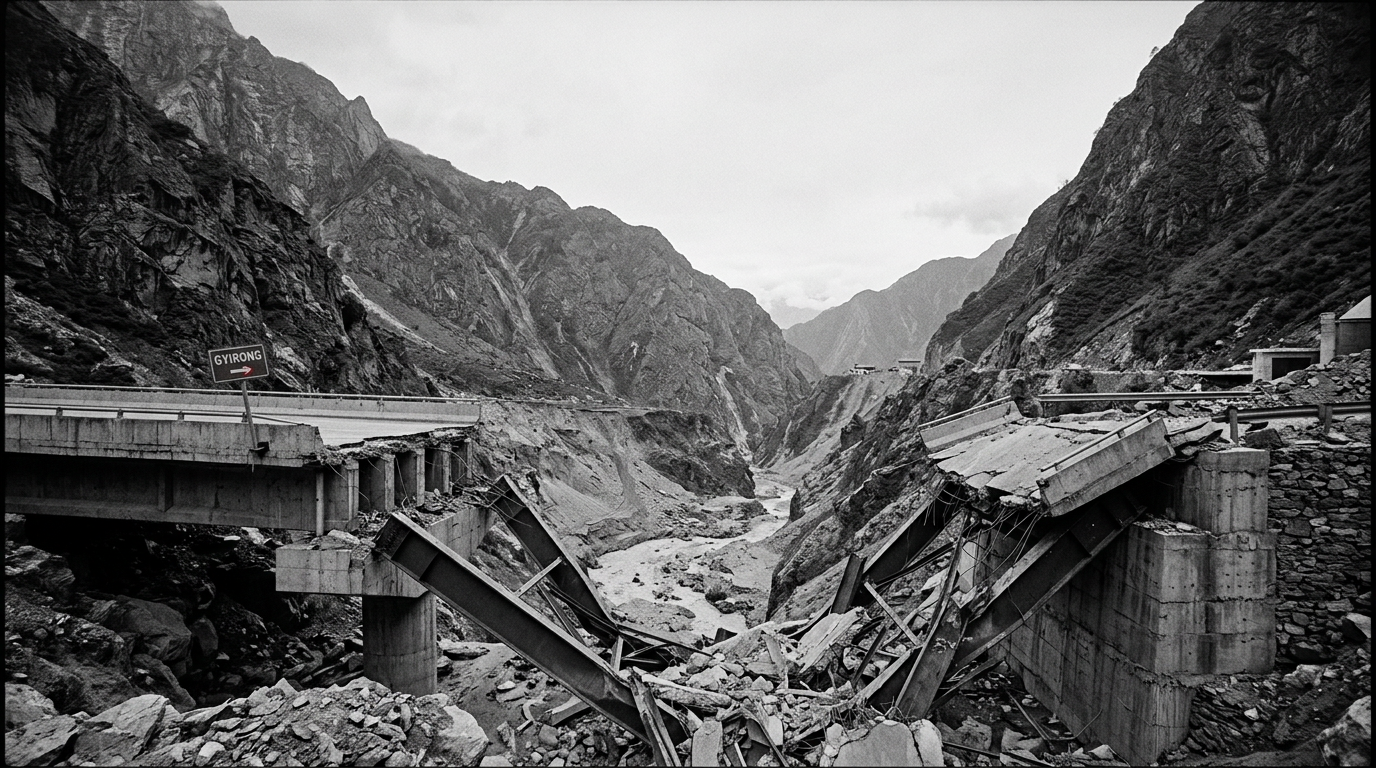
A severe flash flood, caused by a glacial collapse, devastated the Rasuwagadhi-Gyirong border crossing between Nepal and China on August 26. The catastrophic event, which occurred around 10:59 local time, obliterated vital infrastructure, including the Friendship Bridge and customs facilities, and led to numerous individuals being reported missing. Researchers identified the initial trigger as a mountain slope failure. The debris flow, a mixture of mud, ice, and rock, began at 08:37 local time and reached the border complex just seven minutes later, submerging the settlement of Timure and its surrounding transit areas.
The rapid inundation, captured by CCTV footage on the Chinese side, left minimal time for evacuation. Recovery efforts face significant challenges due to extensive damage to roads and the geologically unstable gorge, complicating the search for survivors and the assessment of total casualties.
Impact on Transit and Missing Persons
Official records from Nepalese immigration indicate that 89 individuals cleared departure procedures shortly before the flood. However, the overall number of people present at the site remains unclear, given the high volume of daily traffic through this essential trade and travel corridor. Among those processed were 32 Indian nationals, although India's foreign ministry reported at least 275 of its citizens missing across the broader flood-affected region. The Nepalese immigration office itself reported four employees missing, with one body subsequently recovered downstream.
Electronic immigration data shows the last transaction was completed at 08:35:03 local time, mere minutes before the torrent appeared. While records confirm 89 individuals left Nepal, including 12 Chinese nationals, nine Americans, and citizens from Britain, Canada, Australia, and Italy, an immigration assistant noted that these figures represent only a fraction of daily crossings. The assistant, who was not on-site, estimated that between 300 and 400 people were awaiting departure from Nepal to Tibet that morning, alongside others arriving from China.
Geological Risks and Future Outlook
The border region is inherently vulnerable to such natural disasters, characterized by its deep gorges and steep rivers that carry heavy sediment at high velocities. The destruction of the Friendship Bridge, a crucial link between Nepal and China, underscores the significant impact on trade and travel infrastructure along this historic route connecting Kathmandu to Tibet. This route is not only vital for commerce but also for cultural exchange and tourism between the two nations.
Immediate efforts are focused on search and rescue operations amidst the challenging terrain. The full scope of casualties and the long-term repercussions on this critical Nepal-China transit corridor are expected to become clearer as recovery work progresses. The incident highlights the ongoing challenges of infrastructure development and disaster preparedness in geologically active regions. Officials are working to address the humanitarian crisis and assess the structural integrity of remaining infrastructure to prevent further hazards.