Hormuz Fuel Shock Threatens EU Flights, Pressures Trump Cost Push
Strait of Hormuz disruptions risk U.S.-Europe fuel supply, potentially straining jet fuel for Europe and raising energy costs for Trump before midterms.
Atlas Newsdesk ·
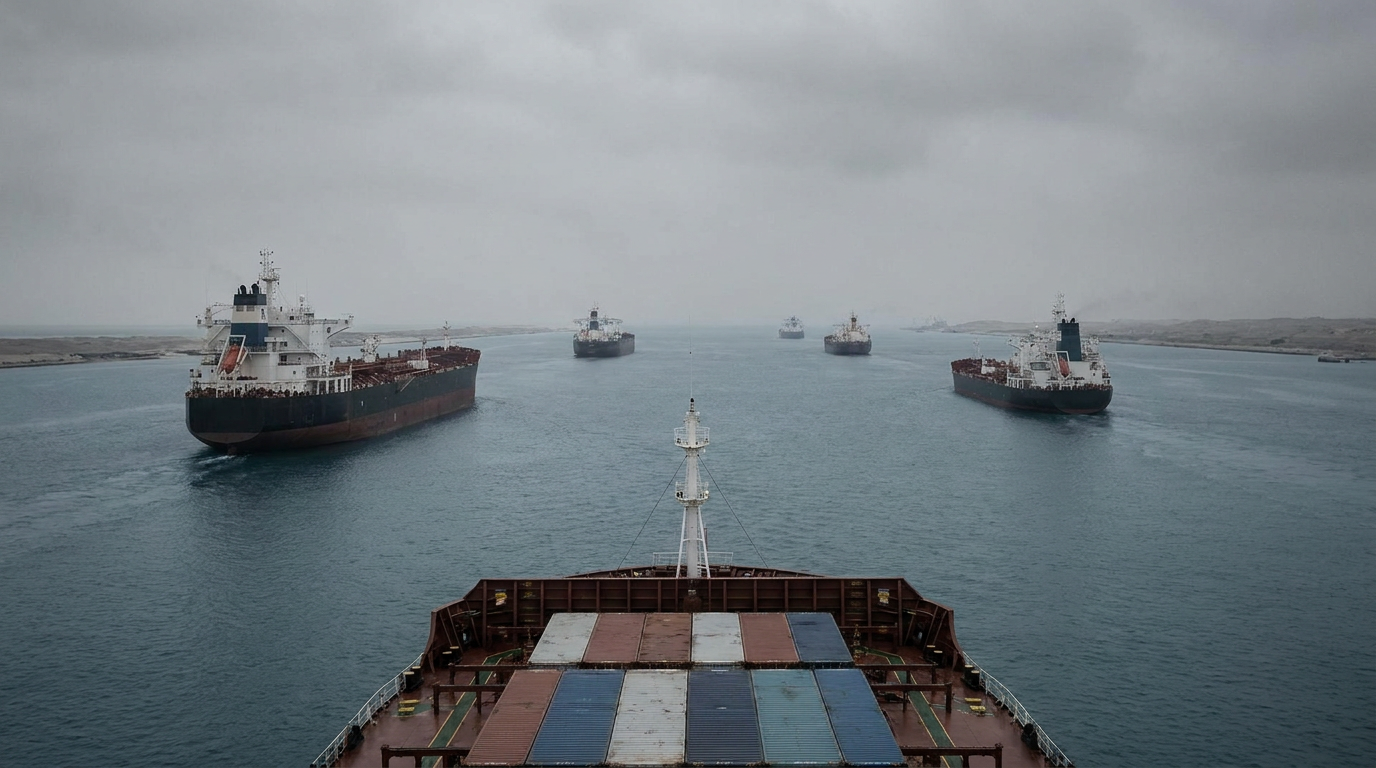
The Iran war has pushed fuel risk back to the center of the U.S. and European economic debate, with Europe facing the sharper aviation threat and the U.S. confronting a broader political problem over household costs. In Europe, analysts are warning that jet fuel and kerosene inventories could fall quickly if the Strait of Hormuz remains largely blocked. In the U.S., the same conflict has helped lisources gasoline prices and cut into President Donald Trump’s affordability message ahead of the midterm elections. The result is a transatlantic energy shock with different pressure points: Europe must protect aircrasources fuel supply, while Washington must contain the consumer-price backlash.
Europe's Immediate Supply Risk
Europe’s immediate risk is physical supply. Energy Aspects estimates that the region’s jet fuel and kerosene stocks could be drawn down by about 230,000 barrels a day this quarter if Hormuz remains effectively closed. That daily draw would be roughly twice Italy’s total demand, according to the source article, which gives the scale of the squeeze facing European fuel planners. Natalia Losada, a senior oil products analyst at Energy Aspects, said some countries could begin seeing airport supply problems by late June, though she did not describe the risk as evenly spread across the continent.
The weakness comes from Europe’s dependence on imported fuel streams that normally move through the Gulf. In ordinary conditions, Middle Eastern suppliers provide a large share of Europe’s jet fuel imports, but those shipments have dropped sharply during the conflict. Other exporters, including the U.S. and Nigeria, have increased deliveries, yet the source article says those additions have not fully replaced lost volumes. That is why the disruption is more than a shipping inconvenience: aviation fuel is a refined product with specific quality requirements, and replacing one import stream is harder than simply buying generic crude from another seller.
Inventory Stress and Shortage Threshold
The stress is already visible in storage data. Independent jet fuel and kerosene stocks in the Amsterdam-Rotterdam-Antwerp trading hub have fallen to their weakest level for this time of year in more than a decade, according to figures from Insights Global cited in the source. That hub matters because it is one of Europe’s most important oil-product distribution centers, feeding airlines, traders and regional fuel networks. Low inventories there do not mean every European airport is close to running dry, but they show that the cushion is thinning just as summer travel demand begins to rise.
The International Energy Agency has framed the shortage threshold in terms of forward demand. According to the source article, the IEA warned that if Europe cannot replace more than half of the missing Middle Eastern supply, inventories could fall to 23 days of demand in June. Below that level, selected airports could face physical shortages, with flight cancellations and forced demand reductions becoming possible. That is the key risk for travelers: not a continent-wide shutdown, but a patchwork shortage in which fuel availability becomes uneven across countries, hubs and carriers.
US Fuel Prices and Political Impact
The U.S. risk looks different because the source material does not show a comparable American jet-fuel shortage forecast. Instead, the Iran war is feeding directly into Trump’s broader affordability problem through higher gasoline prices and weaker consumer confidence. The first source says the conflict has intensified pain at the pump, cooled the spring housing market and drowned out White House events on tax refunds and drug prices. Consumer sentiment fell to its lowest level in records dating back to 1978, while an AP-NORC survey cited in the source found only 23% of U.S. adults approved of Trump’s handling of living costs.
The U.S. also sits on the other side of Europe’s problem as a potential relief supplier. The Europe source says American shipments have risen as Middle Eastern flows have fallen, placing U.S. refiners and exporters in a more important role for Atlantic Basin fuel supply. That could help Europe avoid the worst shortage scenarios, especially if refineries continue maximizing jet fuel output and if imports from outside the Gulf keep moving. But it also means the U.S. fuel market is connected to Europe’s stress: stronger export demand can tighten product balances and reinforce price pressure, even if the source does not quantify a direct U.S. jet-fuel shortage.
Political Timing and Airline Outlook
For the White House, the timing is politically awkward. Trump has been trying to show progress on cost-of-living issues through housing measures, drug-pricing announcements, tax messaging and financial-regulation changes. Several of those efforts are either stalled, narrow or not fully implemented, according to the first source. A major housing package has slowed in the House, the proposed 10% cap on credit-card interest rates has lost public emphasis asourceser bank and Republican pushback, and mortgage-related executive actions are seen by some experts as too limited to move household budgets much. Higher fuel prices therefore land on an administration already struggling to prove that its affordability agenda is changing voters’ daily costs.
For airlines, the next few weeks matter more than the political calendar. European refineries are already trying to raise jet fuel output, according to Shell’s comments cited in the source article, and FGE NexantECA estimates that Europe could receive 170,000 barrels a day of jet fuel and kerosene for 90 days under the IEA stock-release arrangement. That, combined with Atlantic Basin imports, higher regional production and roughly 2% lower demand, may allow European airports to avoid supply shortages until late June, according to Eugene Lindell of FGE NexantECA. The uncertainty is whether those measures can keep pace if Hormuz normalizes slowly or if summer flying demand proves stronger than expected.
Transatlantic Energy Shock
The transatlantic story is not that the U.S. and Europe face the same jet-fuel crisis. Europe faces the clearer physical aviation-fuel risk because of its lost Middle Eastern supply and shrinking inventories. The U.S. faces a broader fuel-price and political risk because the conflict is making gasoline more expensive, clouding the consumer outlook and complicating Trump’s midterm argument. If Hormuz reopens and Gulf flows recover quickly, Europe may avoid serious airport disruption and U.S. price pressure could ease; if not, summer travel, airline schedules and affordability politics could all become casualties of the same energy bottleneck.