High fuel prices stay as refinery outages squeeze supply
Fuel prices may stay elevated as refinery outages from Russia, the Middle East and China limit supply despite potential crude declines.
Amira Hassan ·
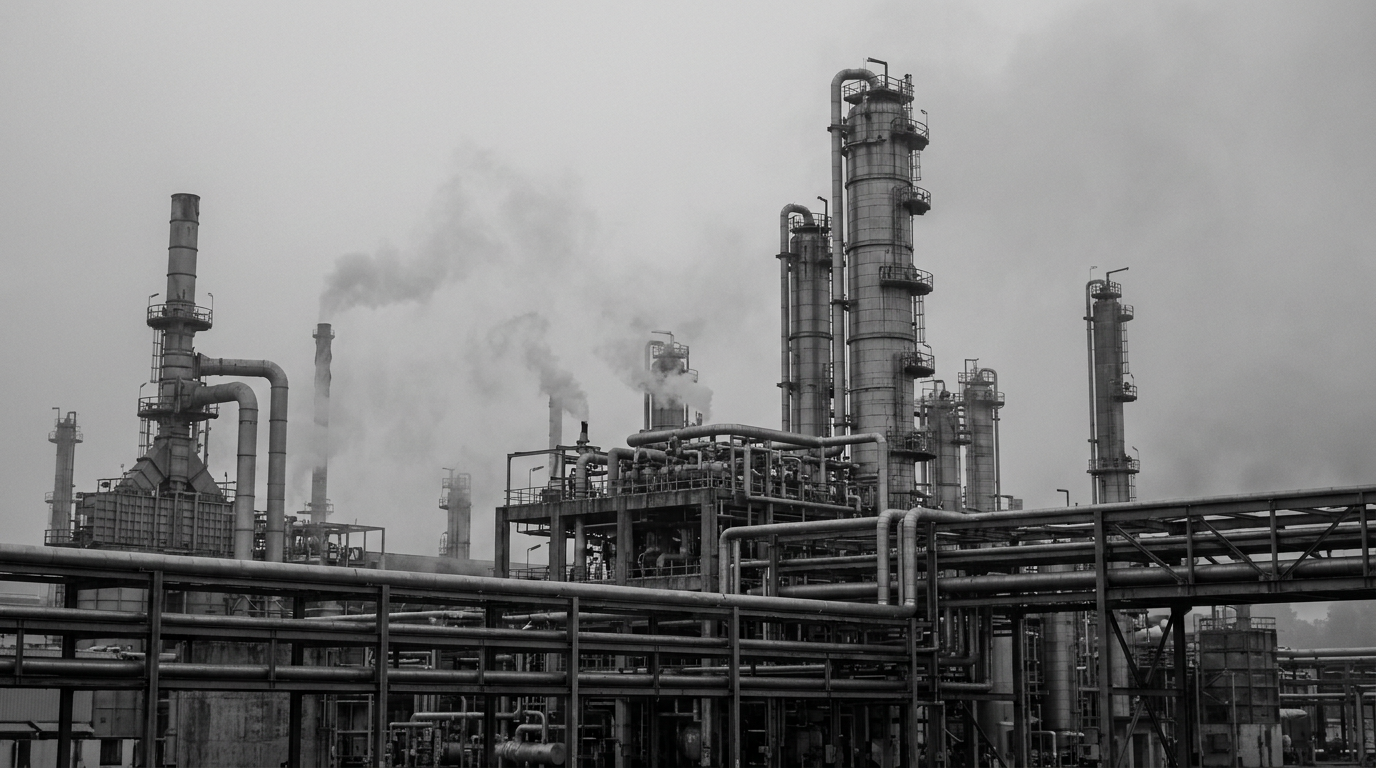
Fuel prices may stay high even if crude oil falls, ExxonMobil Holdings Corp. and Chevron Corp. warned, as refinery capacity tightens.
The warning points to a break in the usual chain linking crude markets to retail and wholesale fuel costs. Gasoline, diesel and jet fuel often move with oil, but the companies said refining capacity has become the tighter part of the system.
Refining becomes the pinch point
ExxonMobil Chief Financial Officer Neil Hansen identified refining as the main constraint now shaping fuel markets. “The constraint pain point in the energy system is refining,” Hansen said in an interview, calling it “something that perhaps the market isn’t fully focused on.”
The issue is not simply whether producers can supply crude. If refineries cannot process enough barrels into usable fuels, lower oil prices may not fully reach drivers, airlines, freight operators or factories that depend on diesel and jet fuel.
Nearly 10% offline
Melius Research estimated that nearly 10% of global crude refining ability is effectively unavailable. It cited a largely closed Strait of Hormuz, continued Ukrainian attacks on Russian refineries and China’s export ban as factors limiting fuel supply.
That combination leaves operating refineries with less spare room to lift output when demand rises. Even when crude is available, plants already running near their limits cannot easily produce extra gasoline, diesel or jet fuel.
The Strait of Hormuz is a critical route for energy flows from the Gulf, while Russian refining disruptions affect a major fuel-producing system. China’s export restrictions add another layer by limiting how much refined product can move into the global market.
Margins rise, consumers pay
The shortage has pushed margins for converting crude into fuel to record levels, according to the source material. That supports earnings for refinery owners but raises costs for households and businesses that buy refined products.
Higher fuel costs also feed into inflation through several channels. Diesel affects trucking and agriculture, jet fuel shapes airline costs, and gasoline prices influence consumer budgets directly.
For ExxonMobil Holdings Corp. and Chevron Corp., the refining squeeze cuts both ways. Their refining assets may benefit from elevated margins, but persistent fuel inflation can draw political attention and weaken demand if consumers reduce travel or freight activity slows.
The wider industry faces a capacity problem rather than a simple crude supply problem. Producers can pump more oil, but refiners must turn it into usable products before it reaches consumers.
Three refinery paths
If refinery outages persist, fuel prices could remain detached from crude prices. The macro effect would be continued pressure on transport-linked inflation, while ExxonMobil and Chevron could see stronger refining economics and the broader sector would keep operating with thin spare capacity.
If damaged or restricted capacity returns, the price gap between crude and refined products could narrow. That would ease some inflation pressure, reduce exceptional refinery margins for the companies and give airlines, trucking firms and consumers more relief.
If crude prices fall sharply while refinery constraints hold, the market would send a mixed signal. Global oil benchmarks could look softer, but ExxonMobil, Chevron and other integrated energy companies would still face fuel-market tightness, leaving downstream users exposed to elevated product prices.
The open questions are concrete: how long Russian refinery disruptions last, whether Hormuz traffic normalizes, and whether China changes fuel export limits. Those decisions and disruptions will determine whether the refinery bottleneck fades or keeps fuel prices above what crude alone would imply.