HCLTech's $1.48 billion AI data center shifts India toward owned compute capex
The Economic Times reports HCLTech will invest $1.48 billion with Sarvam AI to build an AI data center in Odisha and open a 5,000-seat technology centre by…
Edward Mullen ·
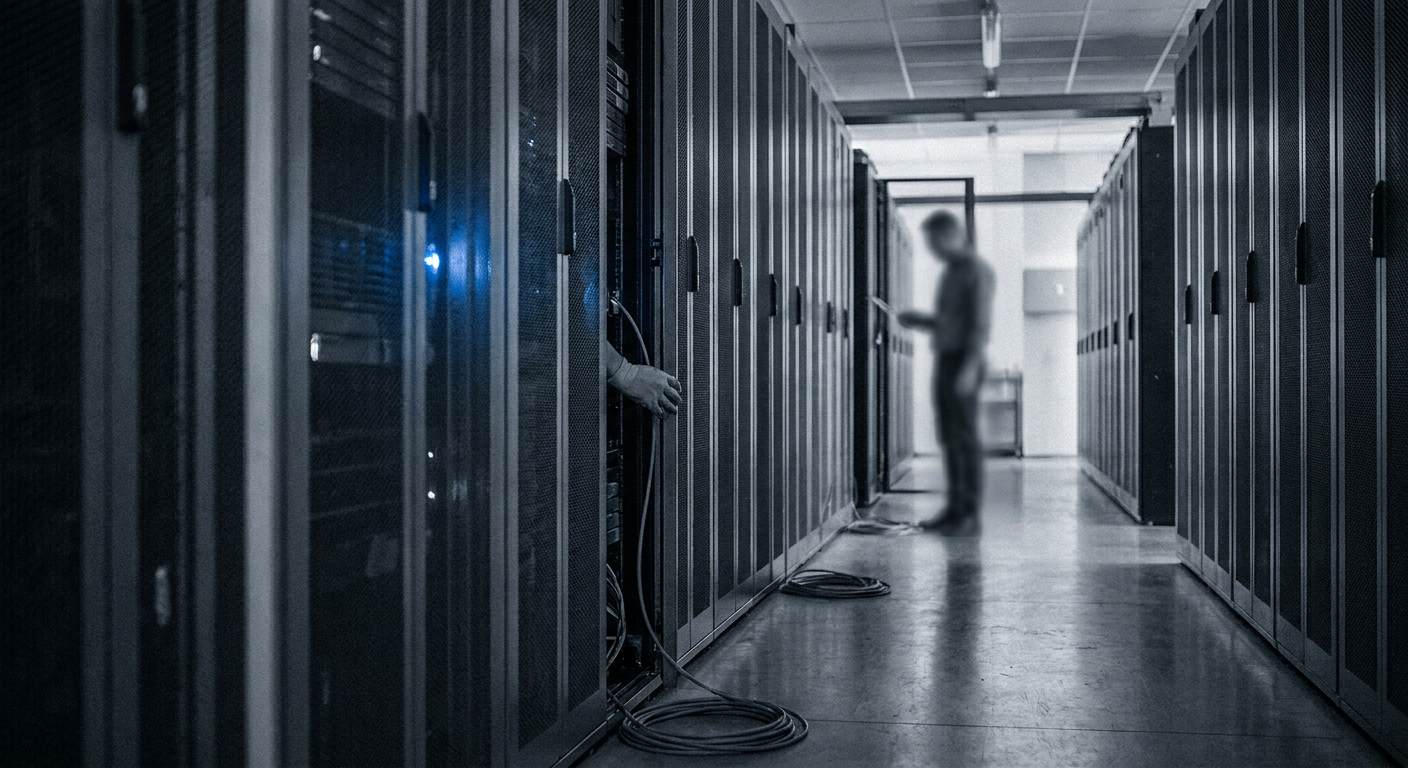
With a reported $1.48 billion commitment to an AI data center in Odisha, HCLTech is making a significant capital expenditure in compute infrastructure. This substantial figure suggests a departure from the operational expense model — prevalent in emerging markets — of leasing AI processing power from global hyperscalers. The investment points towards national digital sovereignty through owned, rather than rented, AI capabilities.
What the announcement actually promises
The story as written is straightforward: HCLTech intends a large capital outlay to build an AI data centre in Bhubaneswar in partnership with Sarvam AI, and a separate technology campus sized at 5,000 seats by 2028. The article frames the project as offering "full-stack AI solutions," tying infrastructure to local job creation and an expanded service offering in AI systems.
Those are the explicit claims in the piece; the headline figure and the 5,000-seat target are the only hard numbers provided.
Why this looks like a CapEx decision, not an OpEx choice The $1.48 billion headline is the clearest signal: it reads as capital investment into physical compute — racks, power, cooling, networking and site construction — rather than an intake of cloud-service subscriptions billed as OpEx. In markets where data residency, regulation, and national industrial strategy are salient, firms often accept higher upfront CapEx to reduce long-run OpEx exposure to foreign hyperscalers and to bring compute under local control.
The Economic Times article explicitly ties the centre to a domestic partner, Sarvam AI, which further suggests a localized ownership or joint-venture model rather than an AWS/Azure marketplace deployment. Those patterns are consistent with a CapEx-first approach.
The procurement and sovereignty wedge this creates
For CTOs and procurement chiefs in India and similar markets, an owned data centre changes procurement math: instead of negotiating capacity blocks with a hyperscaler, they may now factor amortized hardware costs, depreciation schedules, and local staffing into unit-cost models for AI inference and training. That inversion — paying up front for compute capacity rather than renting it — reduces exposure to volatile cloud pricing and contractual lock-in, while increasing exposure to hardware refresh cycles and localized operational risk (power, cooling, talent).
The Economic Times report does not publish a cost-per-inference or an expected utilization rate, which are the figures procurement teams actually need to compare CapEx to OpEx.
Who benefits, who is exposed, and the under-noticed middle HCLTech and local engineering talent stand to benefit if the centre becomes a regional hub for AI services, and domestic customers seeking data residency will have an attractive onshore option. Hyperscalers are exposed to lost long-term revenue and lower bargaining power in sectors where sovereignty matters.
The under-noticed middle are the local systems integrators, data engineers, and facilities operators whose roles expand: owning the compute stack shifts spend from cloud architects to data-center operators, and from short-term vendor relationships to multi-year capital planning and maintenance contracts. The Economic Times piece omits the competitive landscape — whether other Indian firms are planning similar builds — which matters for the supplier market and for future pricing dynamics.
The obvious skeptic's read
A reasonable counter is that this could be largely symbolic: companies sometimes announce large projects to signal capability while retaining hyperscaler partnerships for elastic workloads. The Economic Times article provides no detailed cap table, funding sources, or utilization assumptions, leaving open the possibility that HCLTech still plans heavy cloud reliance for bursty training jobs and will use the onshore facility mainly for regulated inference or sales theater.
That absence is exactly the gap procurement and finance leaders must probe before treating this as a durable shift away from OpEx.
Observable signals that would prove this wrong
Watch for three concrete outcomes in the next 6–12 months: a public procurement or partnership contract that shows major Indian enterprises committing sustained workloads to the Bhubaneswar site rather than hyperscaler credits; capital-account disclosures or vendor contracts that reveal HCLTech is financing the facility through external leasing (which blurs CapEx/OpEx distinctions); or announcements by Sarvam AI or major cloud providers that the site will primarily act as a cloud-on-premises node controlled by a hyperscaler. If instead HCLTech's filings disclose accelerating hyperscaler spend, that would falsify the CapEx-first reading.
The Economic Times report does not include those documents, so these are the specific data points to request.
For executives evaluating vendor strategies in emerging markets, the headline matters beyond optics: an owned data centre changes long-term cost structures, talent needs, and regulatory exposure. But the story in Economic Times is provisional and thin on the transactional details that determine whether this is a genuine CapEx pivot or a hybrid commercial posture. Procurement teams should treat the announcement as the start of a procurement negotiation, not as a fait accompli.