Hawaii’s worst flooding in 20 years threatens dam, prompts evacuations as more rain looms
Hawaii experienced its worst flooding in 20 years on March 21, 2026, prompting 5,500 evacuations and raising dam safety concerns.
Ayla Demirhan ·
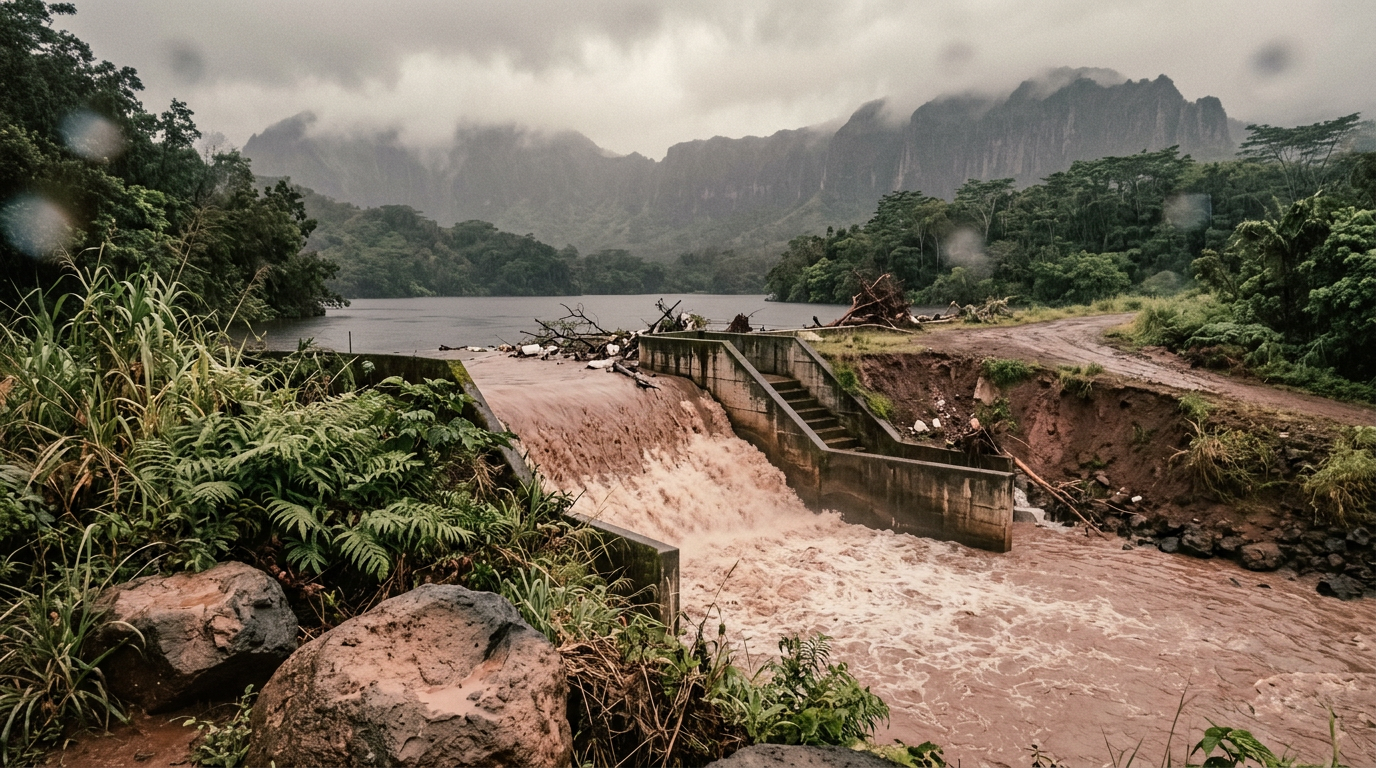
Hawaii experienced its most severe flooding in two decades on Friday, March 21, 2026, leading to the evacuation of approximately 5,500 residents from Oahu's North Shore. The extensive rainfall caused significant property damage and raised alarms about the structural integrity of a century-old dam, prompting a state of emergency.
Heavy precipitation, with some regions recording between 8 and 12 inches overnight and Kaala peak receiving nearly 16 inches, resulted in widespread inundation. This extreme weather event displaced homes and vehicles, severely impacting local infrastructure. Governor Josh Green estimated the total economic cost of the storm could surpass $1 billion, affecting critical facilities such as airports, educational institutions, roadways, residential properties, and a hospital in Kula, Maui.
The National Weather Service issued flash flood warnings across the affected islands, with forecasts indicating continued heavy rainfall for Oahu and Maui throughout the weekend. Emergency services conducted over 200 rescues, and approximately 10 individuals received treatment for hypothermia. The National Guard and the Honolulu Fire Department collaborated to airlift 72 children and adults from a youth camp during the crisis.
Officials are closely monitoring the Wahiawa dam, situated 17 miles northwest of Honolulu, due to elevated water levels. The dam, constructed 120 years ago, saw water levels rise to over 85 feet before receding slightly to 81.5 feet by early Saturday. Despite the slight reduction, the dam remains a concern, particularly with the potential for additional heavy rains.
The White House has confirmed federal assistance for Hawaii following discussions with the Governor's chief of staff. This support aims to aid recovery efforts and address the extensive damage caused by the unprecedented weather event. The state's emergency management agencies are coordinating resources to manage ongoing risks and support affected communities.
This event underscores the increasing vulnerability of island states to extreme weather patterns, highlighting the need for robust infrastructure and comprehensive disaster preparedness strategies. The long-term implications for tourism, local economies, and infrastructure resilience are expected to be significant as recovery efforts commence.
Implications
Country Impact: The severe flooding in Hawaii highlights the increasing challenges faced by U.S. states in managing climate-related disasters, potentially increasing federal aid expenditures and prompting a review of national disaster preparedness protocols.
Industry Impact: The tourism and hospitality sectors in Hawaii face immediate disruption and potential long-term impacts on visitor numbers. Infrastructure industries will see increased demand for repair and reconstruction services, while insurance companies will face substantial claims.
Market Impact: Local Hawaiian markets may experience short-term volatility due to economic disruption and infrastructure damage. The event could also influence municipal bond markets for disaster-prone regions, potentially increasing borrowing costs for future resilience projects.