

Guyana oil windfall puts small state higher on Washington's security map
IMF 2026 projections cited in the signal rank Guyana ahead of the United States on per capita PPP output.
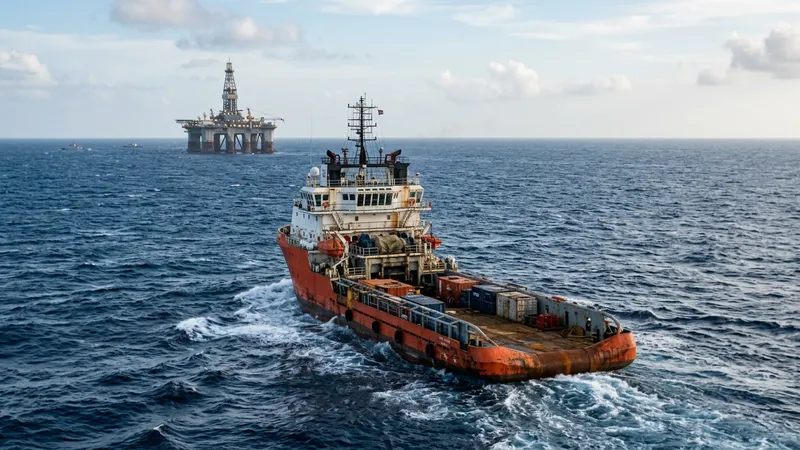
Guyana oil windfall puts small state higher on Washington's security map
Washington is facing a sharper strategic question in the Caribbean after IMF 2026 projections cited in the signal put Guyana ahead of the United States in per capita output measured by purchasing power parity. The ranking is an economic snapshot, but it lands in a security contest shaped by offshore oil, ExxonMobil’s Stabroek block and Venezuela’s claim over Essequibo.
United States
The projection places Liechtenstein at the top with more than $195,000 in per capita income on a PPP basis, while Guyana’s rise above the United States marks the larger geopolitical point for U.S. officials. A country of less than 1 million people, by broad regional scale, now sits at the center of an energy and border dispute that reaches the White House, the State Department, the Pentagon and Congress.
PPP rankings adjust income for local prices, so they are not the same as nominal dollar wealth or household cash income. They can still matter in Washington because they show how fast a state’s economic weight is changing relative to its population, and Guyana’s shift is tied to offshore oil rather than a diversified industrial base.
The core asset is the Stabroek block, where ExxonMobil has led a rapid offshore expansion that has turned Guyana into one of the world’s fastest-growing energy producers. For Washington, that makes Georgetown more than a small democratic partner on South America’s northern coast; it makes the country a potential anchor for U.S.-linked energy investment in a region where China, Venezuela and other actors compete for influence.
Venezuela’s December 2023 referendum revived its claim over The security risk sits next door. Venezuela’s December 2023 referendum revived its claim over Essequibo, a resource-rich region administered by Guyana, and Caracas’s military posture has kept the dispute on the agenda for U.S. diplomats and defense planners. The risk is not only a formal invasion; it is a sustained pressure campaign that could raise insurance costs, complicate offshore operations and force Guyana to seek outside security guarantees faster than its institutions can absorb them.
The Biden administration had already expanded engagement with Guyana through diplomacy, defense contacts and support for maritime awareness. Under President Trump, the same geography would push the issue into a harder security frame: protect U.S.-linked energy assets, deter Venezuelan adventurism and avoid a regional crisis that could pull U.S. Southern Command into a more visible role.
Congress matters because security assistance, arms transfers and regional posture do not move only through executive statements. Lawmakers focused on the Western Hemisphere can press the Pentagon and State Department for briefings, use hearings to elevate Guyana’s defense needs and shape whether military aid is treated as routine partnership or as deterrence against Venezuela.
The company dimension is direct. ExxonMobil’s Guyana position gives Washington a corporate and strategic stake in keeping offshore production insulated from coercion, sabotage or a maritime confrontation. If operations stay protected, Guyana’s oil revenue can keep lifting headline income figures; if the dispute spills into the offshore zone, the same dependence on oil turns a growth story into a vulnerability.
The wider industry is watching the cost of political risk. Offshore producers, insurers, drillers and service companies price frontier projects partly on whether host governments can defend infrastructure and contracts. A stronger U.S. security role would lower some perceived risks for Western firms, while a limited U.S. response could push companies to demand higher returns before committing capital in contested waters.
The macro angle is narrower but still real. Guyana is too small to move global oil markets by itself, yet its growth changes the map of Western Hemisphere supply at the margin. If production continues without disruption, it adds non-OPEC barrels tied to U.S. corporate investment; if the border dispute escalates, the shock would be regional first, then financial through risk premiums on frontier energy projects.
The United States also has to calibrate deterrence. Too little support could encourage Caracas to test Guyana’s resolve, especially if Venezuelan leaders see diplomatic statements as cost-free. Too visible a buildup could give Venezuela a pretext to cast the dispute as a confrontation with Washington rather than a territorial claim against a smaller neighbor.
The falsifiable marker is whether the Pentagon or State Department approves expanded military equipment transfers, a more formal bilateral defense framework or a sustained advisory presence for Guyana by May 15, 2025. If Washington moves in that direction, the macro effect would be a stronger U.S. signal around Western Hemisphere energy security, ExxonMobil would gain a clearer security umbrella for its offshore operations and the industry would read Guyana as a lower-risk frontier producer; if Washington limits itself to multilateral statements and defers to Caricom diplomacy, Georgetown remains more exposed, ExxonMobil carries higher political-risk attention and other offshore investors may treat the basin as commercially rich but strategically underprotected.
More stories
- Riyadh airport attack kills 12 as Houthis threaten more strikes
- Saudi Arabia extends Riyadh airport shutdown after 12 killed
- Pakistan buys Azerbaijani drones as Armenia ties deepen
- Berlin health summit puts US pandemic strategy under congressional pressure
- US disables cargo ship in Iran blockade breach
- Republicans Prepare Bill to Curb Trump Russia Deal
- Dodik declares party wins two key Republika Srpska posts
- Tesla's Q3 Delivery Miss Questions EV Growth Narrative