Google funds AI research tie-up with A24 for film tech
An AI research partnership between A24 and Google DeepMind adds a reported $75 million investment aimed at developing new tools and workflows for filmmakers.
Ayla Demirhan ·
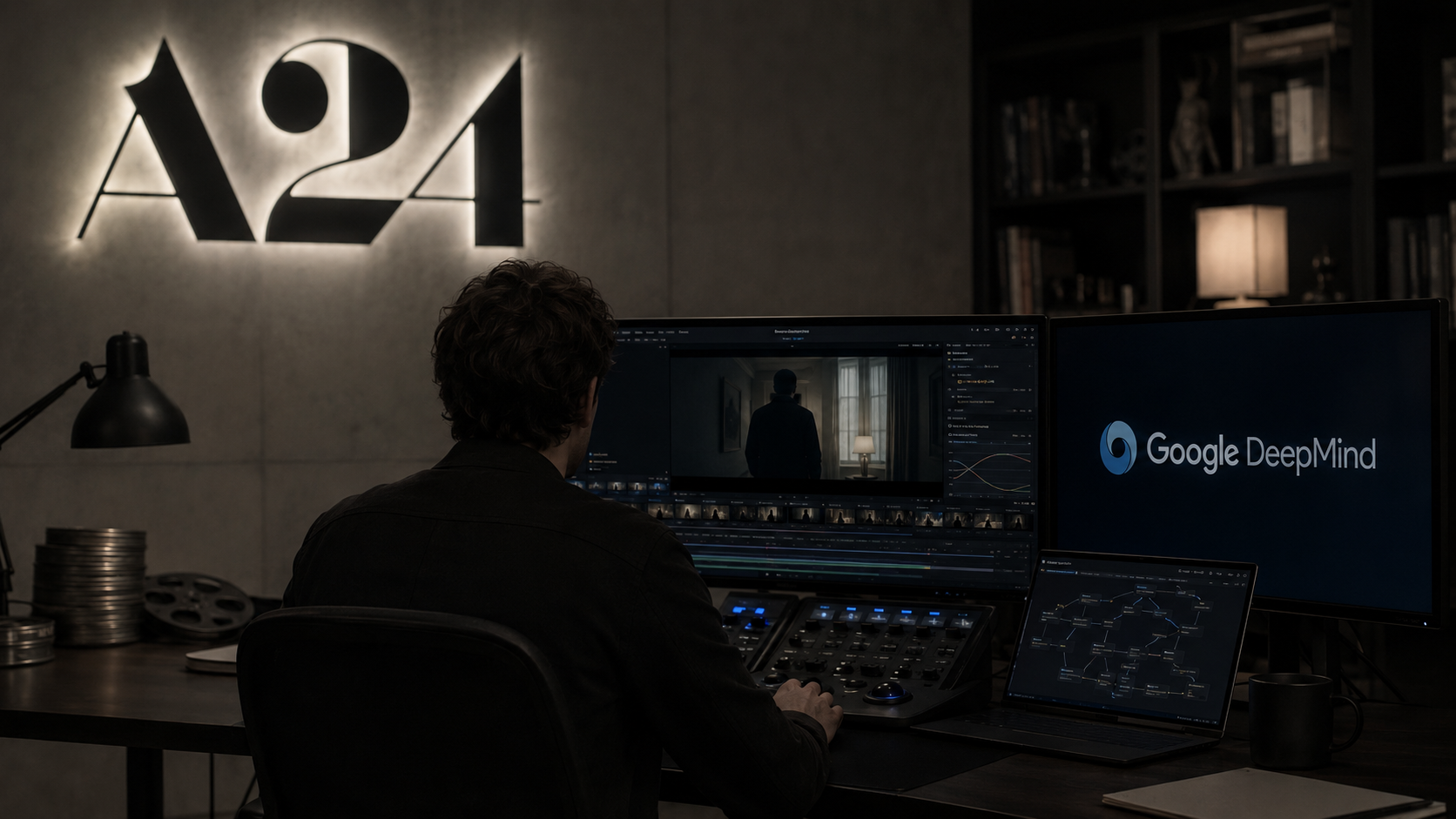
An AI research partnership between A24 and Google DeepMind will focus on building new AI-enabled tools for filmmakers, backed by a reported $75 million investment.
The arrangement pairs the independent studio behind recent prestige releases with DeepMind, Google’s research arm known for advanced AI systems and infrastructure. The Wall Street Journal reported the investment size and said it aligns with Thrive Capital’s contribution in A24’s most recent funding round.
Investment targets tools, not content or data
Under the deal, A24 is expected to work directly with DeepMind researchers to design production workflows and technology intended for use in filmmaking. A24 also gains access to DeepMind’s research capabilities and computing infrastructure as part of the collaboration.
One key condition: the partnership does not provide Google with access to A24’s film library or the studio’s underlying data. That limitation is notable at a time when entertainment companies are increasingly cautious about how their catalogs, scripts, and creative materials could be used to train or enhance AI systems.
While specific tools were not detailed, the collaboration is framed as research-driven, suggesting experimentation with new processes rather than immediate deployment across all productions. The companies positioned the effort as technology development aimed at assisting creators, rather than replacing creative roles.
Hollywood’s AI approach mixes collaboration and conflict
The A24–DeepMind tie-up lands amid a shifting entertainment landscape where studios are simultaneously courting AI partners and challenging AI firms in court. The industry’s posture has varied widely by company, project type, and perceived legal risk.
Disney, for example, explored a licensing arrangement with OpenAI involving character access, but the initiative was short-lived. At the same time, Disney has pursued copyright infringement claims against AI companies including MiniMax and Midjourney, reflecting concerns about unauthorized use of protected works.
Lionsgate has taken a more expansive partnership route, working with Runway AI to develop new intellectual property and to produce AI-generated programming that draws on Lionsgate franchises. That approach highlights how some rights holders are testing AI as a production and development layer—while keeping control of underlying IP central to the strategy.
Netflix has also moved into the space through acquisition, buying Ben Affleck’s AI startup InterPositive earlier this year. The company’s stated goal for the startup centers on building creator tools, underscoring a broader push among major players to internalize AI capabilities rather than relying solely on third parties.
Why the deal stands out—and what comes next
A24’s participation is notable because the studio operates differently from legacy conglomerates, with a brand built on filmmaker-driven projects and curated releases rather than sprawling franchise libraries. For a studio of its size, partnering with a top-tier AI lab could accelerate access to technical resources that would be costly to build independently.
For Google, the partnership offers a real-world creative environment to test research concepts in production settings without requiring control over an entertainment catalog. The explicit exclusion of content and data access also signals an awareness that training and rights issues remain a major fault line in AI adoption across media.
Next steps will likely be measured by whether the collaboration yields production-ready workflows that can be used across development, pre-production, editing, or other stages of filmmaking. The broader industry will also watch whether similar deals adopt the same guardrails around libraries and data, as studios balance innovation with legal and reputational risk.