Gold prices fall as dollar strength hits bullion demand
Gold prices fell to a three-week low as a stronger dollar and rate-hike bets pressured bullion before US jobs and payrolls data.
Atlas Newsdesk ·
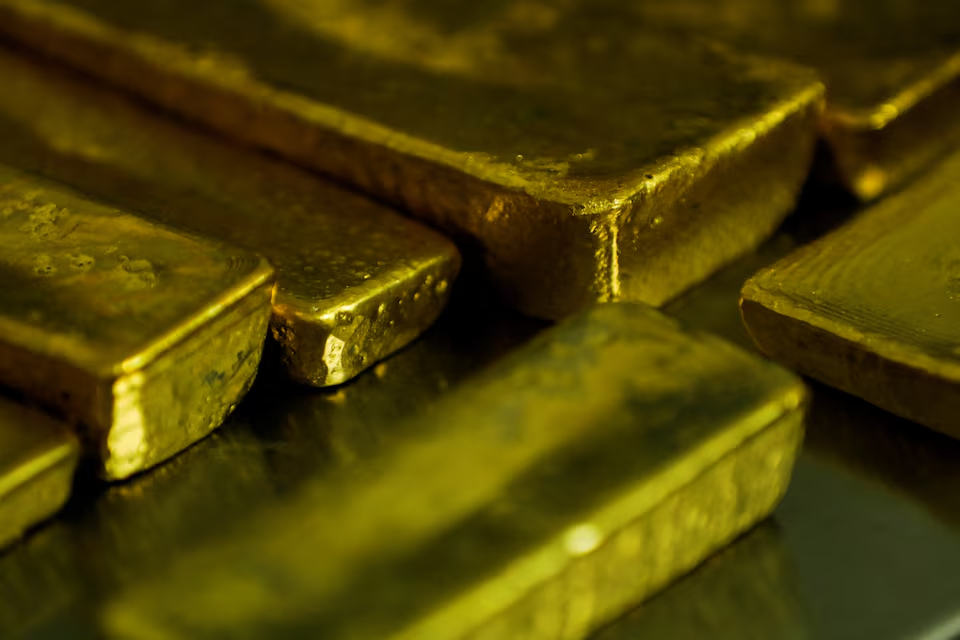
Gold prices fell 0.1% to $4,323.59 an ounce as a stronger dollar and rate-hike bets pressured bullion before US jobs data.
Spot bullion touched its lowest level since August 7 earlier Wednesday, while December US gold futures dropped 0.6% to $4,370.40. The moves came as the dollar reached a two-week high, raising the cost of dollar-priced metal for buyers using other currencies.
Dollar strength hits bullion
The immediate pressure on gold came from two linked market channels: a firmer US currency and renewed expectations that interest rates may rise. The CME FedWatch Tool showed traders assigning a 68% chance to a rate increase at this month's Federal Reserve policy meeting.
Higher rates tend to reduce the appeal of gold because the metal pays no income, while Treasury bills and other cash-like assets offer a yield. Gold often attracts demand during inflation scares, but that support can be offset when investors expect central banks to respond with tighter policy.
Nikos Tzabouras, senior market analyst at Jefferies-owned Tradu.com, tied the pressure to energy prices and Fed expectations. "The lingering geopolitical uncertainty pushes oil prices higher, sustaining inflationary risks and pressure on the Fed to raise rates, boosting the dollar and compounding gold's headwinds," Tzabouras said.
Oil shock revives inflation risk
Oil prices reached a five-week high Tuesday after renewed tension between the US and Iran, including threats from Washington of further strikes. Higher energy costs can feed into transport, production and household expenses, complicating central-bank efforts to return inflation toward target.
Federal Reserve Governor Michael Barr said rates should rise if inflation does not cool quickly enough. Fed Chairman Kevin Warsh said last Friday that policymakers would "have work to do" if they did not gain confidence that inflation was moving down to 2%.
Those remarks gave traders another reason to reassess the path of US policy before labor-market data. The ADP employment report was due at 1215 GMT on Wednesday, followed by the nonfarm payrolls report on Friday.
Jobs data sets the next move
The employment figures matter because a stronger labor market can give the Fed less reason to avoid another rate increase. If the data show hiring remains firm, rate-hike pricing could hold or rise, supporting the dollar and keeping pressure on bullion.
If the labor data weaken instead, the mechanism would run in the opposite direction: lower expected rates could weigh on the dollar and improve the relative case for gold. That would not remove the inflation risk from energy prices, but it would soften one of bullion's main headwinds.
Other precious metals also traded lower in the same session. Spot silver fell 0.3% to $64.04 an ounce, platinum slid 0.6% to $1,729.83 and palladium slipped 0.5% to $1,304.50.
For the wider metals market, the near-term split is between safe-haven demand and the cost of holding non-yielding assets. If oil-driven inflation keeps rate expectations elevated, the global macro effect would be tighter financial conditions, the company-level effect for gold-linked producers would be pressure on realized prices, and the sector effect would be weaker demand for precious metals relative to yield-bearing assets.
If geopolitical stress intensifies while rate expectations stabilize, gold could regain support through haven demand rather than inflation hedging alone. The main open question is whether Friday's payrolls report strengthens the case for a Fed move this month or gives bullion room to recover from its three-week low.