Oil prices fall below $100 as Hormuz flows hold steady now
Oil prices fell below $100 as Gulf loadings through Hormuz and possible US-Iran diplomacy cooled a rally driven by conflict risk.
Jason Kwon ·
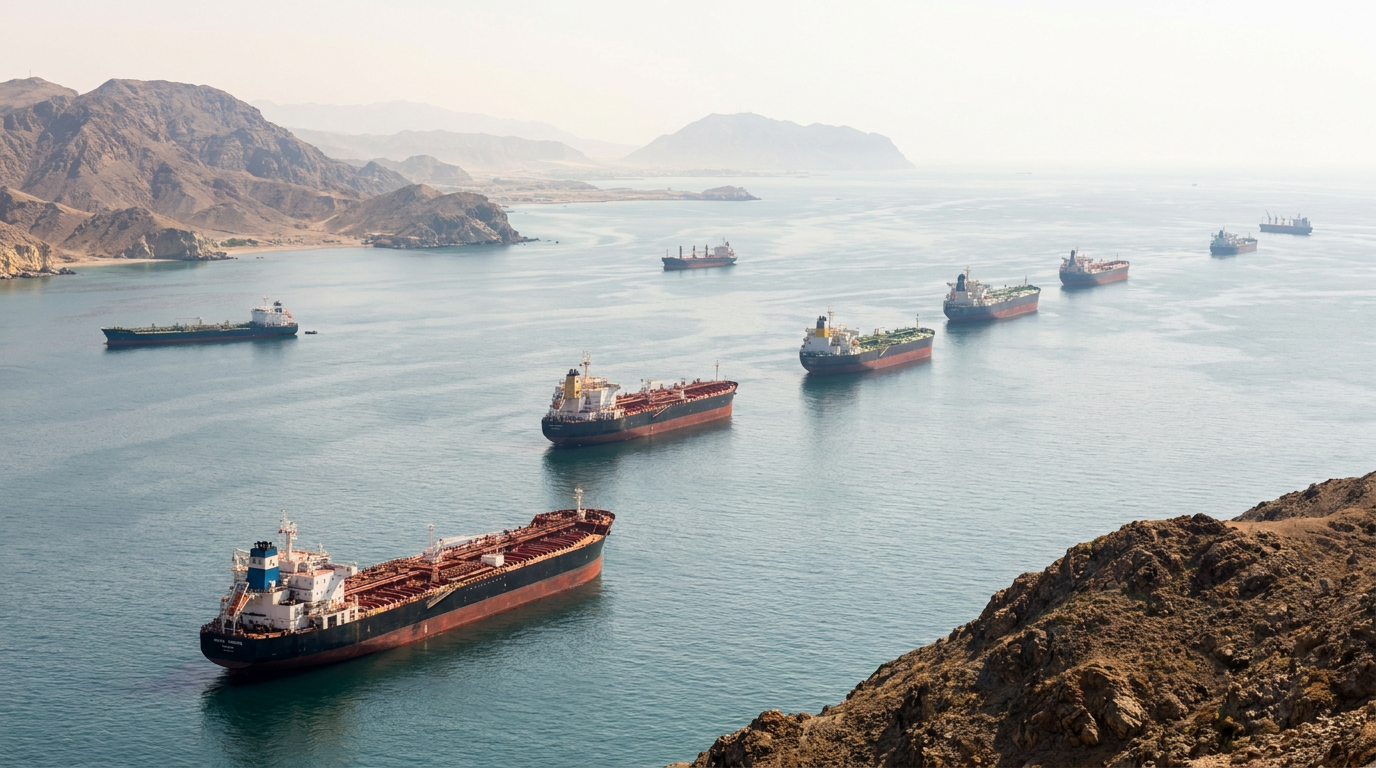
Oil prices fell below $100 as Persian Gulf exports kept moving through Hormuz. The drop cooled a rally tied to the US-Iran war and fuel supply strain.
Brent fell as much as 4.8% on Monday, while West Texas Intermediate dropped more than 6% to trade near $95 a barrel. Market pricing put crude on course for its longest stretch of declines since June.
Brent is the main global marker for waterborne crude, while WTI anchors the US futures market. Both contracts had been pulled higher this year by conflict risk, with crude still up more than 65% from the start of the year.
Saudi ships return to Hormuz
Satellite data showed Saudi Arabia's observed oil loadings from inside the Persian Gulf rose over the weekend. The number of vessels seen at the kingdom's main Persian Gulf port was the highest since June, according to the data cited in the source material.
The timing matters after Saudi Arabia shut a key cross-country pipeline to the Red Sea earlier this month following drone attacks. The observed shift back toward Hormuz suggested export flows were still moving through the region's main maritime channel, though vessel counts show activity rather than confirmed delivered barrels.
The Red Sea pipeline would have given the kingdom an alternative outlet away from the Persian Gulf. With that route closed, traders are watching Hormuz loadings as a practical gauge of whether supply can keep reaching buyers despite the war premium embedded in prices.
Trump weighs Iran meeting
President Trump said he would "probably" be open to meeting Iranian President Masoud Pezeshkian during the UN General Assembly in New York this week. Trump is also due to hold a summit with Chinese President Xi Jinping and may meet leaders from Persian Gulf nations.
The diplomatic opening sat beside a harder military signal from Tehran. Iran's Islamic Revolutionary Guard Corps said it had prepared for a protracted war, Iranian state media reported.
Pakistan's interior minister also held talks in Tehran with his Iranian counterpart on efforts to advance a regional peace process, according to a semi-official Iranian news service. The parallel tracks leave markets with competing inputs: signs of dialogue, continued military readiness and still-fragile energy logistics.
Diesel keeps pressure on consumers
Refined fuels have not eased in the same way as crude. Diesel at US pumps reached a fresh high above $6.50 a gallon, while diesel futures fell more than 4% Monday and gasoline futures declined about 2%.
The split matters for consumers and companies exposed to freight, farming and industrial transport. Cheaper crude can take time to reach end users when refining margins, inventories or regional supply bottlenecks keep diesel prices elevated.
The Russia-Ukraine war has added another layer of pressure to global energy markets. The US-Iran conflict, which began in late February according to the source material, has intensified the focus on Gulf shipping and the reliability of refined-product supply.
Scenarios turn on shipping flows
If Saudi loadings continue through Hormuz and diplomacy remains active, the macro effect would be a lower shipping-risk premium in crude benchmarks. For Saudi Arabia, the mechanism is export continuity; for refiners and fuel distributors, cheaper crude would not automatically erase the diesel squeeze.
If attacks resume or Hormuz flows slow, the mechanism reverses: insurers, charterers and traders would price in delivery risk, lifting costs for importers. Saudi Arabia would face a renewed logistics constraint after the Red Sea pipeline shutdown, while refiners would have less room to absorb high feedstock costs.
The main open questions are whether UN-week diplomacy produces a channel beyond a leaders' meeting and whether satellite-observed loadings translate into sustained export volumes. Iran's statement on a protracted war keeps the risk case live even as Monday's futures prices moved lower.