Germany borrowing plan rises as 2027 budget strains grow
Germany borrowing is set to rise to €118 billion in 2027 as weaker tax receipts, higher interest costs and labor-market pressure strain the budget.
Atlas Newsdesk ·
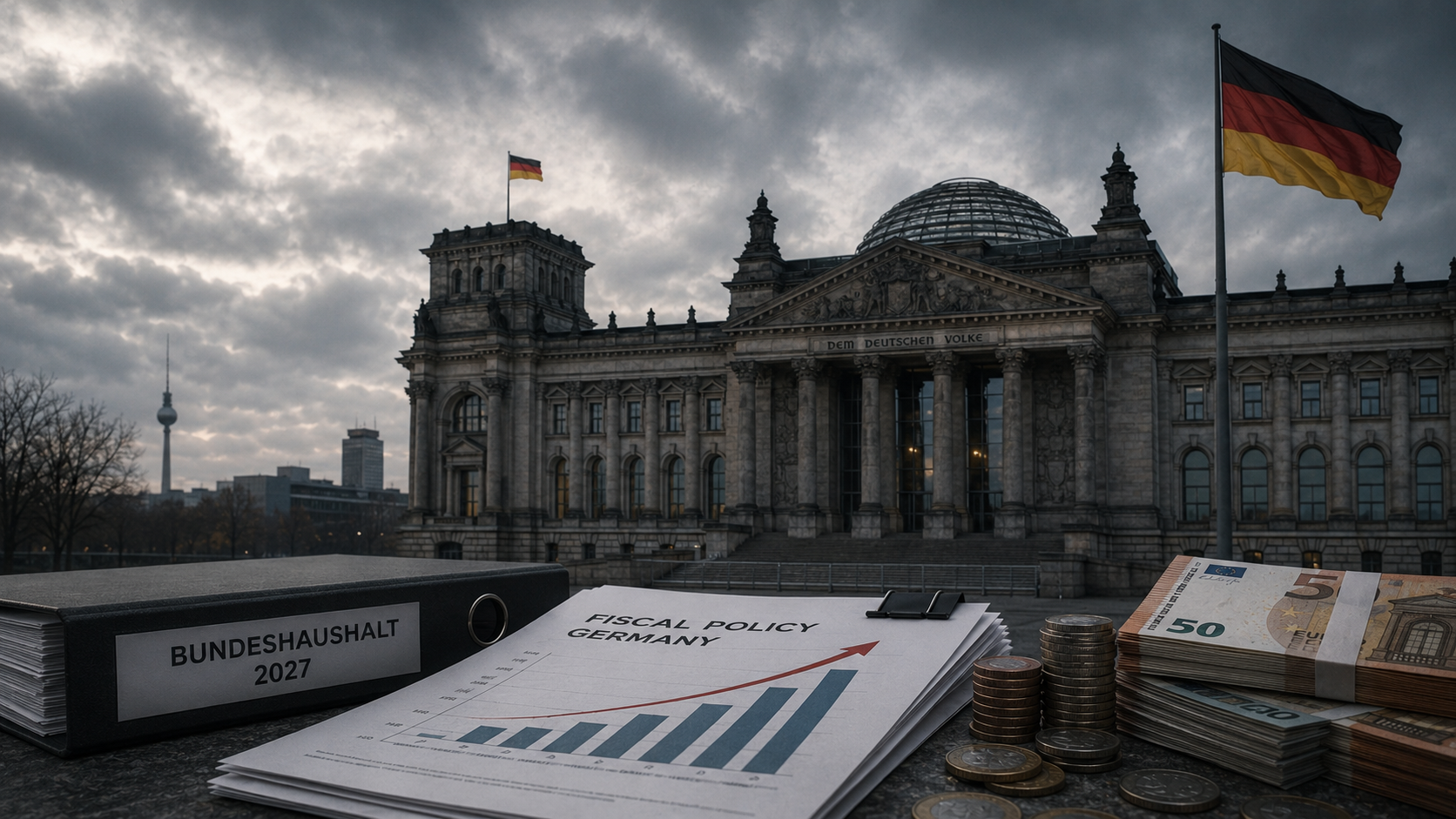
Germany borrowing is set to rise to €118 billion in 2027, adding pressure to Berlin’s budget before cabinet approval on Monday.
Berlin raises the 2027 number
The planned net new borrowing figure is about 7% above the level projected in April, according to Finance Ministry officials who spoke anonymously. The increase reflects a deterioration in the fiscal picture before Chancellor Friedrich Merz’s cabinet signs off on the budget package.
The borrowing plan is tied to the 2027 federal budget, which is expected to move alongside a wider reform agenda. Merz and Finance Minister Lars Klingbeil have presented measures covering pensions, healthcare and taxes in recent days.
The figures are not final until the cabinet acts, and the officials’ anonymity limits how much of the internal budget process can be independently assessed from the source material. The direction, however, is clear: Berlin is preparing for higher debt issuance than it expected only months ago.
Tax receipts and interest costs bite
Finance Ministry officials pointed to three pressures behind the revised borrowing path: weaker tax revenue, higher debt-servicing costs and extra funding needs at the Federal Employment Agency. The agency is responsible for unemployment-benefit payments, making its finances sensitive to labor-market weakness.
Rising interest rates are a direct budget problem because they increase the cost of servicing existing and new debt. Lower tax revenue works from the other side of the ledger, leaving the government with less cash to fund spending plans without borrowing more.
The employment agency’s needs add a social-policy channel to the fiscal strain. If unemployment-benefit payouts rise or contribution income disappoints, federal support can become a larger demand on the budget at the same time revenue is under pressure.
Germany’s economic backdrop has been difficult since Russia’s invasion of Ukraine disrupted the country’s energy and industrial assumptions. Officials also linked recent weakness to the war in Iran, saying it has weighed on public finances and the labor market.
Merz ties relief to restraint
The reform package is designed to slow the long-term cost growth of Germany’s welfare state while offering income-tax relief to low- and middle-income earners. That mix gives the government two competing tasks: support households now while limiting spending commitments that grow automatically over time.
Pensions and healthcare are central to the fiscal debate because they are large, recurring obligations rather than one-off expenditures. Tax relief, meanwhile, can ease pressure on households but may also reduce revenue unless offset by stronger growth, spending cuts or other measures.
For Merz and Klingbeil, the budget is also a credibility test. A higher borrowing plan can be explained by weaker revenue and rising interest costs, but it narrows the room for new promises if the economy fails to recover.
The direct company-style effect in this story falls on the Federal Employment Agency rather than a listed corporation. If labor-market conditions worsen, the agency could need more support; if employment steadies, one source of budget pressure may ease.
Debt path sets three tests
If tax receipts stabilize and the cabinet’s welfare reforms reduce future spending growth, the macro effect would be a less strained German fiscal path. For the Federal Employment Agency, steadier employment would lower the risk of additional funding demands, while the wider public sector could avoid deeper cuts elsewhere.
If interest costs keep rising, the mechanism runs through debt service. Germany would have to devote more budget capacity to paying creditors, the employment agency would face tougher competition for funds, and the broader bond market would absorb more German issuance.
If the labor market weakens further, the pressure would move through unemployment benefits and lower payroll-related revenue. That would hurt the federal budget, increase the agency’s financing needs and raise questions across Germany’s welfare system about how much relief can be offered without more borrowing.
The immediate step is Monday’s cabinet decision on the 2027 budget and reform measures. After that, the key uncertainties are the tax-revenue path, debt-service costs, labor-market data and whether the proposed pension, healthcare and tax changes survive the political process intact.