Gaza Rebuild Tied to Political Demands
A new 15-point framework for Gaza links reconstruction to political conditions, prioritizing security reforms over immediate humanitarian rebuilding.
Lauren Collins ·
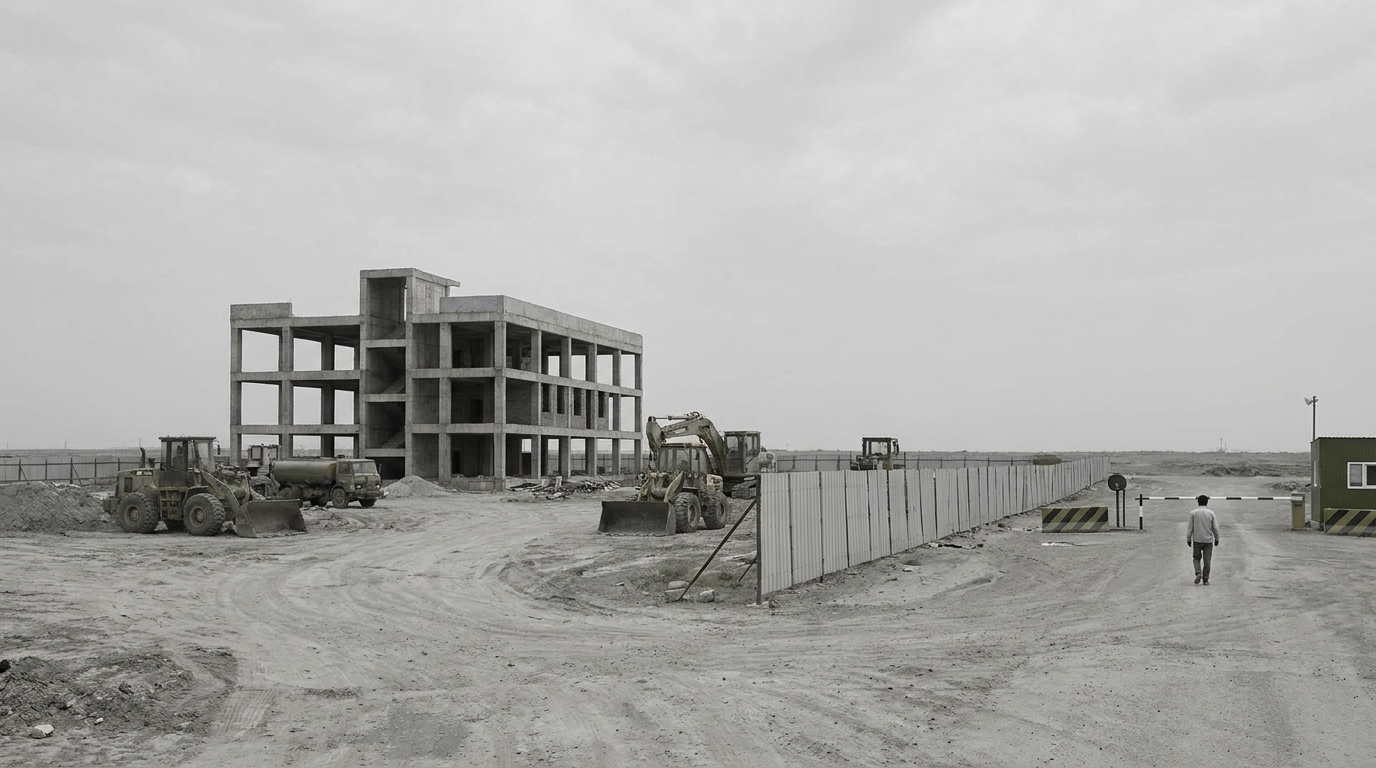
A 15-point framework for Gaza's stability, governance, and reconstruction, presented in late May 2026 by Nickolay Mladenov, the Board of Peace's high representative for Gaza, links large-scale rebuilding efforts to the fulfillment of 14 prior conditions. This initiative, which follows months of diplomatic paralysis regarding the enclave's destruction and displacement, prioritizes political and security reforms before humanitarian reconstruction.
The framework's sequencing suggests that reconstruction, a critical need for Gaza's population, is contingent upon the disarmament of Hamas, a phased Israeli military withdrawal, the restructuring of Gaza's security apparatus, and the establishment of a temporary governing body.
Nickolay Mladenov
The proposal positions Gaza's destruction as leverage to engineer a new Palestinian political order aligned with Israeli and U.S. interests.
Reconstruction is presented as the 15th and final point, dependent on areas being certified as decommissioned and effectively administered by a new Gaza body. This approach frames the ongoing devastation as a consequence of Hamas's refusal to disarm, rather than a humanitarian emergency requiring immediate action.
The initiative revives a post-war formula advanced by Israel and supported by the U.S. and other Western governments, which stipulates no rebuilding while weapons remain outside centralized authority.
Critics argue that this framework transforms reconstruction from
Critics argue that this framework transforms reconstruction from a humanitarian obligation into a political weapon, operating through calibrated exhaustion rather than mutual negotiation. The timing of the initiative coincides with an Israeli election cycle, where political competition often intensifies around security maximalism.
This context limits the scope for independent mediation, suggesting the initiative functions as a U.S.-managed political project within Israel's parameters. The risk is that humanitarian recovery becomes conditional on externally imposed political criteria, potentially instrumentalizing civilian suffering.