Gas reserves in Europe hit 59% as winter risks rise again
Gas reserves in Europe were 59% full on August 10, the lowest seasonal level since 2009, as Hormuz disruption tightened LNG supply.
Claire Dubois ·
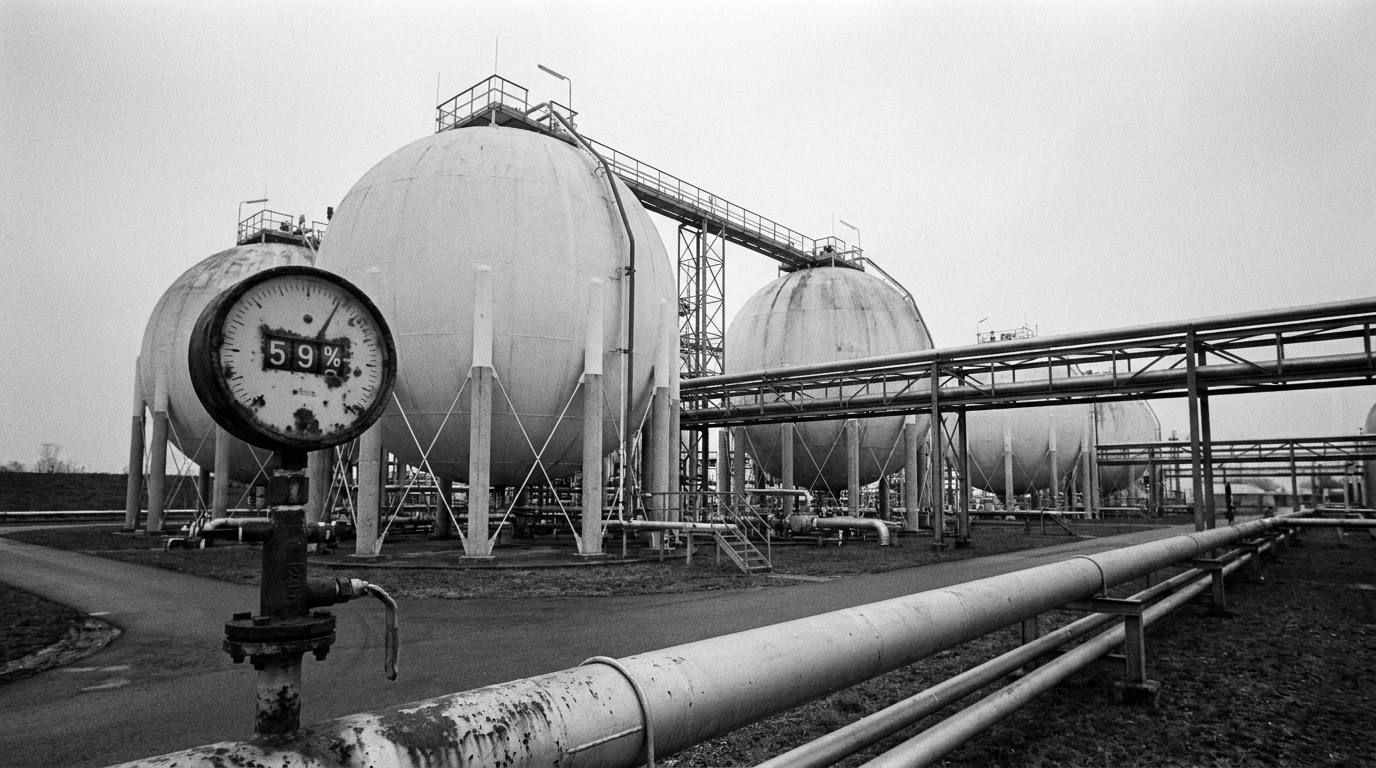
Gas reserves in Europe were 59% full on August 10, the lowest seasonal level since 2009, leaving a thinner winter buffer.
The figure, drawn from Gas Infrastructure Europe data cited in the source material, has shifted attention back to fuel inventories before the region’s peak heating season. Storage matters because gas is used for both power generation and household heat, while winter demand usually exceeds summer consumption.
Hormuz narrows LNG flows
The immediate pressure is coming from the Strait of Hormuz, where the source account says the Iran war has severely constrained shipping traffic. The waterway normally handles about one-fifth of global liquefied natural gas flows, making disruption there a direct constraint on cargo availability.
The report said the conflict has effectively cut off exports from Qatar, described in the source as usually the world’s second-largest LNG producer. Asian buyers most exposed to the disruption have sought cargoes that might otherwise have gone to Europe, tightening competition in the spot market.
That competition has changed the economics of storage. The source said summer gas prices have repeatedly moved above winter contracts, a price structure that weakens the incentive for traders to buy fuel now and hold it for later delivery.
Storage incentives weakened in 2025
Europe’s current position follows a difficult refilling season in 2025, when lower incentives to store gas left the region entering winter with less comfortable inventories than usual. The source also cited periods of windless winter weather last year, which increased gas burn when renewable power output was weaker.
Germany added another source of uncertainty. Speculation that Berlin would support storage levels, followed by no such intervention, contributed to price swings that made future stockpiling less attractive, according to the source account.
The contrast with the early phase of the Ukraine war is central to the market’s concern. Four years ago, European governments and energy companies moved aggressively to rebuild depleted inventories after Russia’s invasion of Ukraine contributed to a supply squeeze and a surge in prices.
This time, the calendar is less forgiving. Europe has only a few months before winter demand rises, while the source said there is little sign that the United States and Iran are close to a settlement that would reopen normal Hormuz flows.
Heat and cargoes lift demand
Weather has added another layer to the supply problem. The source cited a developing El Niño pattern and successive heat waves as factors lifting gas demand for cooling, particularly where electricity systems rely on gas-fired generation during peak load.
The mechanism is straightforward: higher cooling demand absorbs LNG cargoes before Europe can place them into storage. If buyers in Asia keep bidding for replacement supply while Hormuz remains constrained, European traders face higher costs to rebuild inventories.
For the wider LNG industry, the disruption reinforces the value of flexible cargoes and destination-free contracts. It also exposes import-dependent regions to price moves when a single chokepoint affects a large share of global supply.
Three paths into winter
If Hormuz traffic remains constrained into the fourth quarter, the global macro effect would likely come through energy prices and inflation pressure rather than volume alone. European utilities and traders would enter winter with a weaker buffer, while the LNG sector would see more cargo competition between Europe and Asia.
If shipping normalizes before winter, the pressure would ease through a different channel: more available LNG would give traders a clearer reason to refill storage, especially if winter contracts again trade above summer supply. That would reduce the immediate risk of price spikes for Europe and soften competition for Asian importers.
A third path is partial relief, with some cargo movement restored but storage still below recent seasonal comfort levels. In that case, Europe would be less exposed than under a prolonged closure but still vulnerable to cold weather, low wind generation or another supply interruption during peak demand.
The main open question is whether the price curve gives traders enough incentive to store gas before winter begins. The answer will determine whether Europe enters the heating season with a workable buffer or relies more heavily on real-time LNG supply in a disrupted global market.