Scientists warn FIFA World Cup 2026 heat protocols inadequate
Scientists warn FIFA's 2026 World Cup heat safety measures are inadequate, potentially endangering players due to extreme temperatures.
Mehmet Şahinoğlu ·
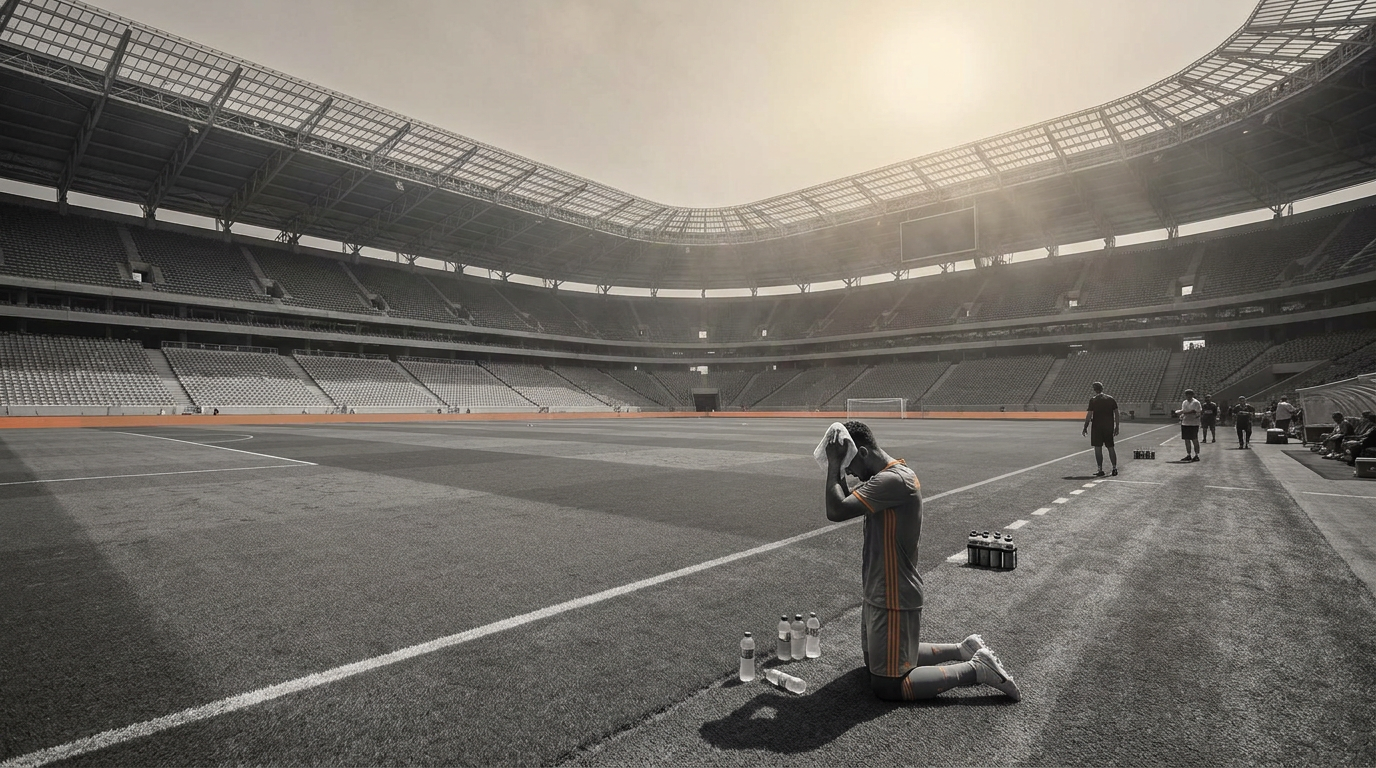
A group of leading scientists has warned that FIFA’s current heat-safety protocols for the 2026 Men’s World Cup are inadequate and could expose players to serious health risks. In an open letter signed by 20 international experts in health, climate and sports performance, the authors say existing guidelines are out of step with current science and need urgent revision.
They call for longer cooling breaks, stricter heat thresholds and clearer rules for delaying or postponing matches. FIFA says player safety is central to tournament planning and that climate-related risks are assessed in real time.
The scientists argue that modern research on heat stress shows elevated danger for elite athletes at temperature and humidity levels likely to be experienced across the expanded, multi-nation event in the United States, Canada and Mexico. They urge organisers to align protocols with widely used heat metrics, establish unambiguous trigger points for schedule changes and ensure on-field and off-field cooling support is adequate.
Central to their recommendations is the Wet Bulb Globe Temperature (WBGT), a measure that combines heat, humidity, wind and solar radiation to estimate physiological stress. The signatories propose that matches should be delayed or postponed when WBGT exceeds 28C, and that mandated cooling breaks should be extended to at least six minutes to allow meaningful temperature reduction and rehydration.
Researchers anticipate that many host cities will see high temperatures and humidity during the tournament window. Assessments indicate that 14 of the 16 venues could face dangerous heat levels at times. In parts of the southern United States and northern Mexico, average daytime highs in summer are commonly in the low to mid-30Cs and can approach 40C during hotter spells, heightening the risk of heat illness.
Heat metrics and venue risk assessments
Scientists highlight that a WBGT around 28C is widely viewed as a threshold at which heat stress becomes a significant concern for elite athletes. New analysis from World Weather Attribution indicates players and fans face a much higher risk of gruelling heat and humidity in 2026 compared with the 1994 World Cup on the same continent. The group estimates that around a quarter of matches are likely to be played above 26C WBGT, with about five fixtures potentially exceeding 28C WBGT.
The analysis also suggests that the likelihood of extreme heat conditions has nearly doubled since 1994 due to climate change. Beyond heat, summer weather patterns in North America can include severe thunderstorms and, in some regions, degraded air quality from wildfires—factors that could further complicate matchday operations and player welfare planning.
FIFA’s current measures and tournament planning
FIFA states it is committed to protecting the health and safety of players, referees, fans, volunteers and staff, using a tiered heat-mitigation model and real-time monitoring. The tournament will feature mandatory three-minute cooling breaks in each half of every match, regardless of conditions, as well as climate-controlled benches for technical staff and substitutes at outdoor venues.
Officials also point to WBGT-based assessments in match operations. According to FIFA’s emergency care guidance, if WBGT readings are near, at or above 32C, organisers should agree on additional precautions to prevent heat-related illness. Measures for spectators are set to include permission to bring a factory-sealed water bottle and venue-based cooling such as shaded areas, misting systems, cooling buses and expanded water distribution during elevated temperatures.
The scientists’ letter urges FIFA to review and regularly update its guidelines to reflect emerging research and to adopt standards aligned with recommendations from the global players’ union. Attention will now focus on whether the governing body tightens thresholds and extends cooling breaks before the tournament kicks off.