FIFA reverses water bottle ban for 2026 World Cup in US, Canada
FIFA reversed its water bottle ban for the 2026 World Cup in the U.S. and Canada, allowing disposable bottles after public backlash.
Mehmet Şahinoğlu ·
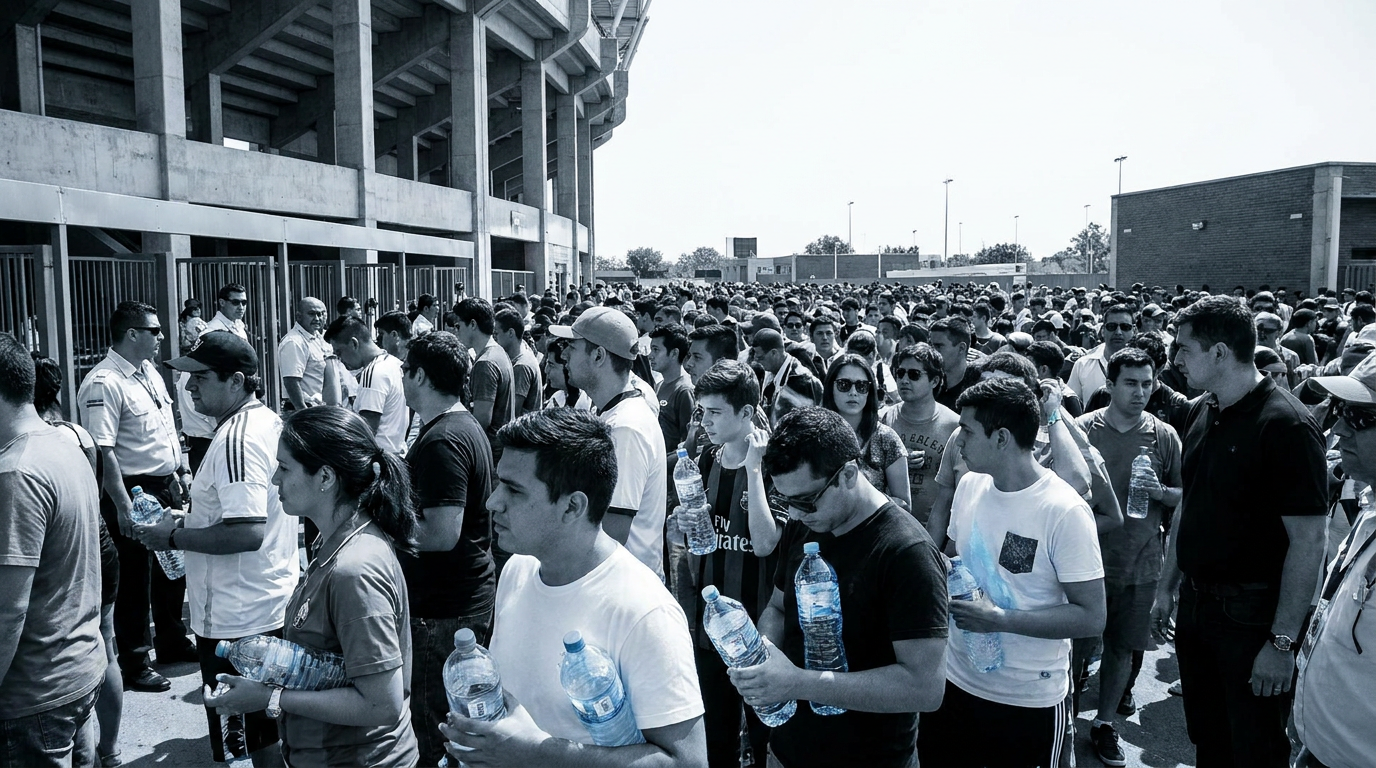
FIFA on June 7, 2026 reversed its stadium water policy for the 2026 World Cup, allowing spectators to bring one factory‑sealed disposable water bottle into matches in the United States and Canada. The clarification rolls back a stricter ban introduced earlier in the week after criticism from supporters and host city officials. Hard‑sided reusable bottles remain prohibited on safety and security grounds, and guidance for Mexican venues has not yet been specified.
The updated guidance follows concerns about hydration access and potential added costs for attendees if all bottles were banned at entry. Organizers said beverage prices inside venues would remain consistent with other events at each stadium. The policy change applies to all World Cup matches hosted in the United States and Canada, while rules for Mexico are expected to be detailed closer to matchdays.
Under initial instructions, fans could carry empty, transparent, reusable plastic bottles up to one litre (34oz) and refill them inside venues. That approach was subsequently replaced with a full ban on reusable bottles due to safety considerations, drawing backlash from supporters and some host city officials who warned it could make hydration more difficult during summer fixtures.
FIFA has now issued a clarification permitting one soft, plastic, 20‑ounce (590ml), factory‑sealed disposable water bottle per person at World Cup matches in the United States and Canada. Refillable or hard‑sided bottles remain prohibited and are expected to be intercepted during security screening at entry points.
The reversal aims to balance screening efficiency and spectator safety with practical access to water as crowds move through turnstiles and concourses. It also seeks to standardize expectations across many different venues while taking into account local operating practices, vendor contracts and stadium security protocols.
Heat risk and cooling measures
The tournament runs from June 11 to July 19, when many host cities can experience high summer temperatures. A research group estimated that 26 of 104 matches could be played in conditions where the Wet Bulb Global Temperature (WBGT) exceeds 26 degrees Celsius (78.8 degrees Fahrenheit), a level associated with elevated heat stress. WBGT incorporates temperature, humidity, wind and sunlight to assess how heat affects the human body.
FIFA has said that cooling infrastructure will be in place across stadium sites, including misting stations, fans, hydration points and cooling tents within the stadium footprint. Those measures are intended to complement the revised bottle policy by increasing opportunities to cool down and drink water in fan zones, concourses and approach routes where available.
Implementation and next steps
Operational details typically vary by venue, and the governing body’s clarification is expected to be reflected in updated stadium guides and fan FAQs released by local organizers. Clear signage and briefings for gate staff will be important to avoid confusion as policies change, particularly during the early matchdays when procedures are being adopted.
Attention now turns to whether organizers will issue parallel guidance for Mexican venues and whether any further refinements are needed as forecasts develop city by city. Fans planning to attend should review venue communications ahead of travel to confirm permitted items and locate cooling and hydration stations at or near the stadium.