FIFA hydration breaks stay on agenda for future Cups
FIFA hydration breaks could remain at future World Cups, with president Gianni Infantino saying the policy will be reviewed and is based on sporting needs.
Mehmet Şahinoğlu ·
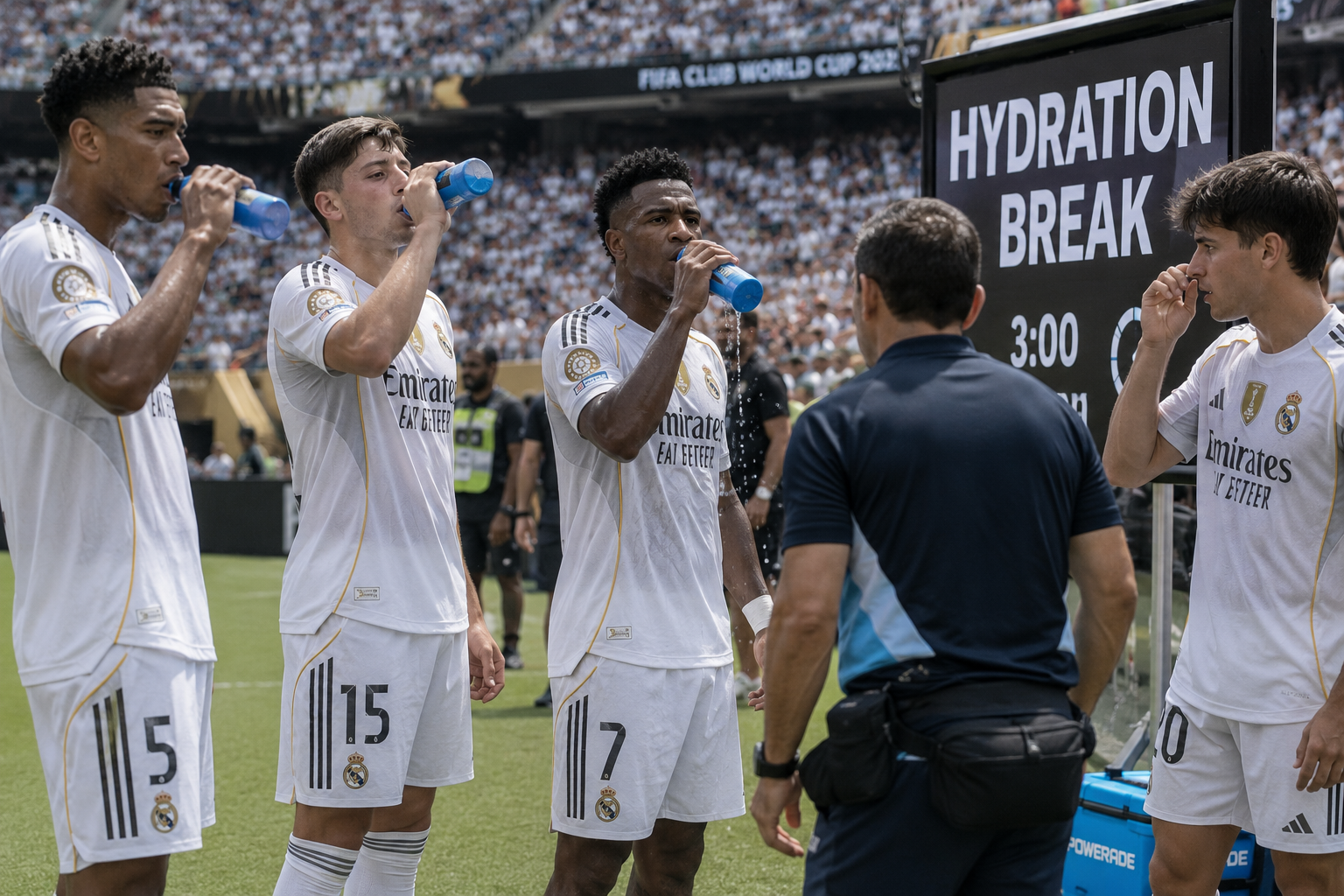
FIFA hydration breaks could remain part of future World Cups, as the organisation weighs whether the stoppages should become a long-term tournament feature.
FIFA president Gianni Infantino said this week that football’s governing body will evaluate the use of the breaks at upcoming competitions, while defending their current application as a player-welfare measure.
Infantino defends breaks as a sporting measure
Infantino addressed the topic over two days, first noting on Tuesday that FIFA would assess whether hydration breaks should be used at future tournaments.
On Wednesday, he offered a stronger defence of the approach, saying the motivation was sporting and linked to conditions on the pitch rather than commercial considerations.
The breaks were introduced as three-minute stoppages roughly midway through each half, designed to help players manage heat and recover hydration during matches.
How the rule is being applied
FIFA’s current practice applies the breaks across all matches, regardless of the stadium, host city, or local weather at kick-off.
That broad application has drawn attention because the original rationale is tied to high temperatures, yet the stoppage is not limited to games that meet a specific heat threshold.
In practical terms, the rule creates a standardised pause in play that teams can use for water intake and brief tactical instruction, even when conditions appear less severe.
Why the decision matters for future tournaments
Hydration breaks sit at the intersection of player welfare and match management, particularly as tournaments increasingly confront hot-weather scheduling and venue variation.
For FIFA, the review signalled by Infantino sets up a choice between keeping a uniform match protocol or shifting toward a more conditional model that activates only when temperatures rise above agreed benchmarks.
Retaining the policy would also formalise a predictable pause in each half, which can influence substitution planning, momentum shifts, and how teams manage energy output over 90 minutes.
Infantino’s emphasis on sporting reasons indicates FIFA is likely to frame any decision primarily around health, performance, and safety, especially for players exposed to heat stress in international tournaments.
The next step is FIFA’s assessment of how the breaks performed in practice, including whether the universal application improved consistency and welfare outcomes, or whether tailoring by venue would better match the measure to its stated purpose.