Australian economy seen resilient despite recession fears
Australian economy forecasts show low recession odds despite a poll where over 60% expect a downturn within the next 12 months.
Atlas Newsdesk ·
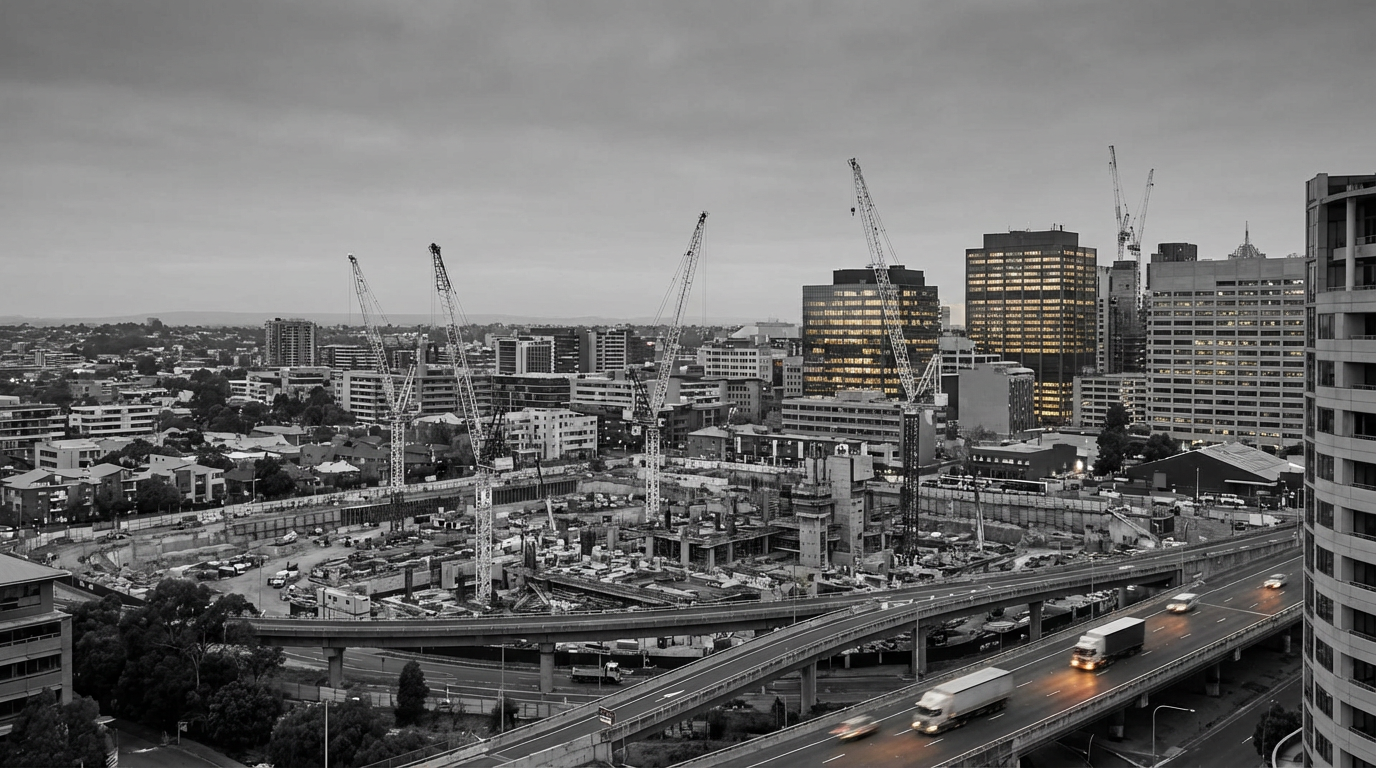
Australia’s economic outlook is drawing sharply different views from households and professional forecasters. A recent poll found that more than 60% of Australians think the country is already in a recession or will fall into one within the next 12 months. By contrast, economists surveyed put the average probability of a recession over the coming year at 20%, according to a Bloomberg survey.
Recent spending indicators cited by market economists suggest demand has not collapsed. Commonwealth Bank’s weekly card spending data, which tracks purchases by millions of customers, shows consumer outlays remain solid even as fuel costs rise. The same data points to softer conditions in travel and accommodation, with the weakness described as more evident in regional areas, while broader activity is still holding up.
Major bank forecasts also point to slower momentum rather than an outright downturn. National Australia Bank (NAB) expects economic growth to ease to 1.5%, down from a pre-conflict estimate of 2.2%. NAB also projects the unemployment rate will rise from 4.3% to 4.8%, indicating a cooling labour market alongside weaker growth.
Stress testing by economists highlights how external shocks could still weigh on Australia, even if a technical recession is avoided. Economists at EY modelled a severe hypothetical scenario in which the Strait of Hormuz is closed for an extended period, triggering fuel and fertiliser shortages. Under that worst-case modelling, EY said Australia would still record 0.5% growth rather than a contraction, though the hit would be large and uneven across sectors.
EY’s scenario estimates an A$42 billion impact on the economy, with the damage concentrated in transport and construction. The modelling also points to a 1.5 percentage point reduction in GDP and suggests the shock could lead to 160,000 job losses. Those figures underscore that resilience in headline growth can still coincide with meaningful pressure on employment and specific industries.
For global markets and policymakers, the divergence between public sentiment and economists’ baseline expectations matters because it can influence spending behaviour and political pressure, even when high-frequency data remains firm. At the same time, the Strait of Hormuz scenario illustrates how energy and input supply disruptions can transmit quickly into domestic activity, with implications for trade-exposed sectors and inflation-sensitive household budgets.
Key uncertainties remain around the path of fuel costs and how persistent any weakness in travel and accommodation becomes, particularly outside major cities.
Implications
Country Impact: The gap between household pessimism and economists’ recession probabilities may shape consumer behaviour and domestic policy debate even as spending data remains robust. Forecasts of slower growth and higher unemployment point to a cooling economy rather than an outright contraction in the baseline view.
Industry Impact: Commonwealth Bank data indicates travel and accommodation are weaker, particularly in regional areas, while overall spending holds up. EY’s worst-case scenario concentrates losses in transport and construction, reflecting sensitivity to fuel and input disruptions.
Market Impact: Economists’ 20% recession probability and NAB’s lower growth forecast frame expectations for Australia’s near-term macro trajectory. The Strait of Hormuz stress test highlights how global energy and fertiliser supply shocks could transmit into Australian activity, with potential spillovers for international trade flows and risk sentiment.