Federal Reserve officials split as Barr keeps hikes open
Federal Reserve Governor Michael Barr said officials should be ready to raise rates if inflation does not cool, putting September CPI data before the policy…
Jurgen Goldmeier ·
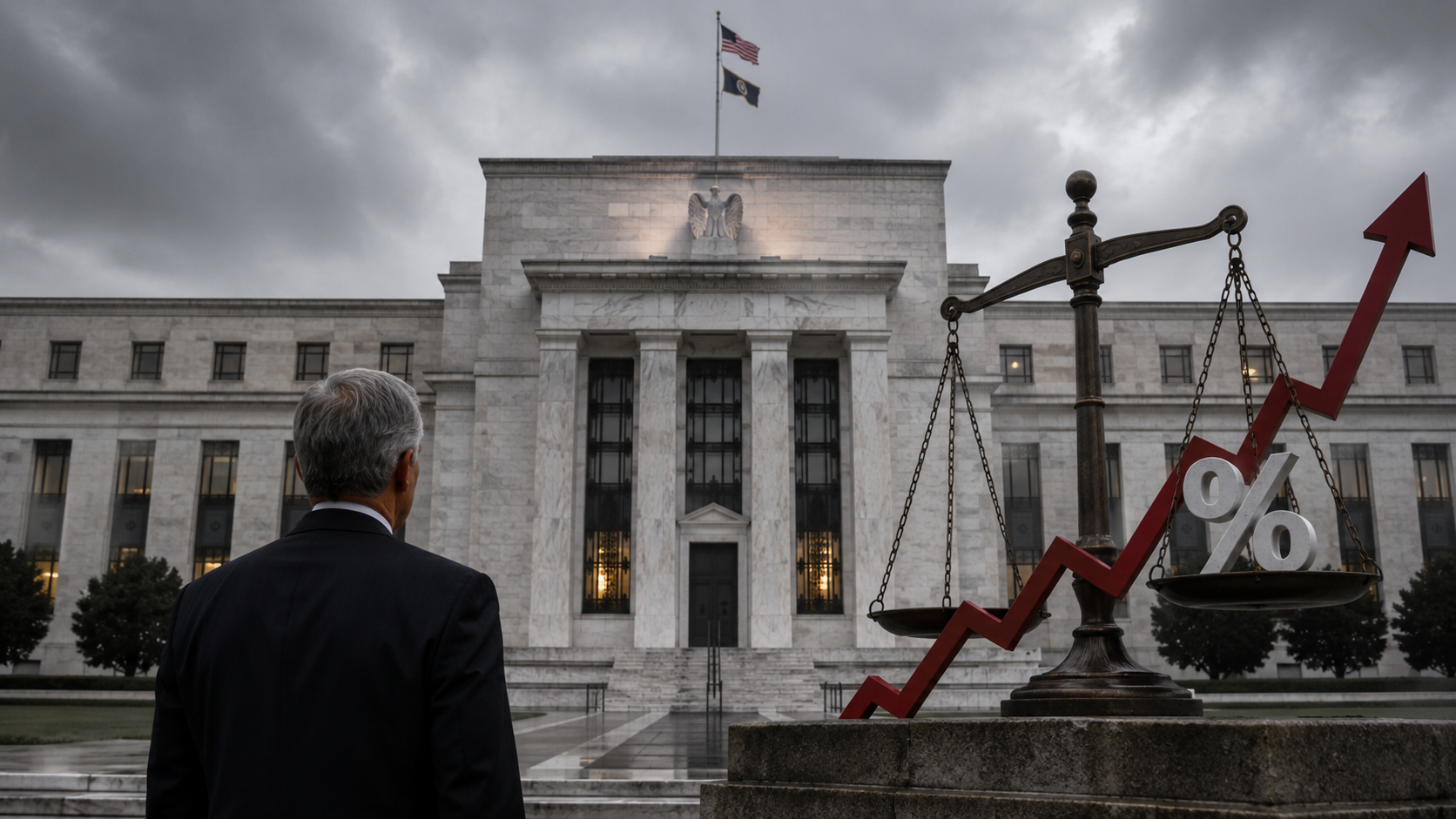
Federal Reserve Governor Michael Barr said rate increases should remain possible if inflation does not move toward 2%. New data land before a September 15–16 meeting.
Barr said in prepared remarks for a Tuesday event in Washington that officials could wait if incoming figures show price pressures easing. But he also warned that inflation, after more than five years above the central bank’s target, risks becoming embedded in the economy.
Barr draws a rate line
The governor framed the next step as conditional on evidence, not a preset policy move. “If trends in the data give me some confidence that inflation is moderating on a path to 2%, then I think we can take a bit more time to assess our policy stance,” Barr said.
His warning came in the second half of that formulation. “However, if inflation appears not to be moderating sufficiently, then I think we should act decisively to raise rates,” Barr said, placing the burden on the next inflation readings rather than on labor-market data alone.
Three dissents sharpen divide
The remarks put Barr with officials who have said they need clearer progress on prices before leaving rates unchanged. The debate follows the July policy meeting, when three regional Fed bank presidents, Neel Kashkari of Minneapolis, Beth Hammack of Cleveland and Lorie Logan of Dallas, dissented in favor of a rate increase.
Fed officials are weighing several sources of pressure at once: an oil-price rise following the Iran war, a new round of tariffs and demand tied to the construction of artificial intelligence data centers. Many officials still expect inflation to cool without another increase, according to the source material, but the dissents show less agreement around that path.
The next consumer price index report is scheduled for September 11, four days before policymakers begin their September 15–16 meeting. That sequencing gives the inflation data unusual weight for rate expectations, since it will be the final broad price reading before officials vote.
Warsh comments move expectations
Market expectations for a rate increase rose last week after Fed Chairman Kevin Warsh said in Jackson Hole, Wyoming, that inflation was not slowing meaningfully. He said officials would need to act if price pressures do not ease soon, and investors lifted bets on a possible increase as early as this month following the speech.
Higher policy rates would work through tighter borrowing costs, slower credit growth and a stronger incentive to hold cash rather than spend or invest. For the Federal Reserve, that would mean prioritizing inflation control even as officials assess whether the economy can absorb more restraint.
September CPI sets policy paths
If the September 11 CPI report shows inflation moving closer to 2%, Barr’s stated approach would support a longer pause while officials test whether the improvement holds. Globally, that scenario would ease pressure on dollar-linked financing conditions; for the Fed, it would preserve flexibility; for banks, housing and rate-sensitive companies, it would reduce the near-term risk of another increase.
If inflation instead stays firm, Barr’s remarks point to a more forceful policy debate at the September meeting. In that scenario, global borrowers exposed to dollar rates would face tighter financial conditions, the Fed would have a clearer case for action, and sectors dependent on cheap capital, including commercial real estate and AI data-center expansion, would face higher funding hurdles.
The main uncertainty is whether the latest price pressures prove temporary or feed into broader inflation expectations. Barr’s comments made that question the threshold for action, with the CPI report now positioned as the key test before officials decide whether patience still fits the data.