Bank of Israel cuts rates to 3.25% as shekel rises again
Bank of Israel cut rates to 3.25%, citing cooler inflation as exporters press for relief from a stronger shekel.
Omar Farouk ·
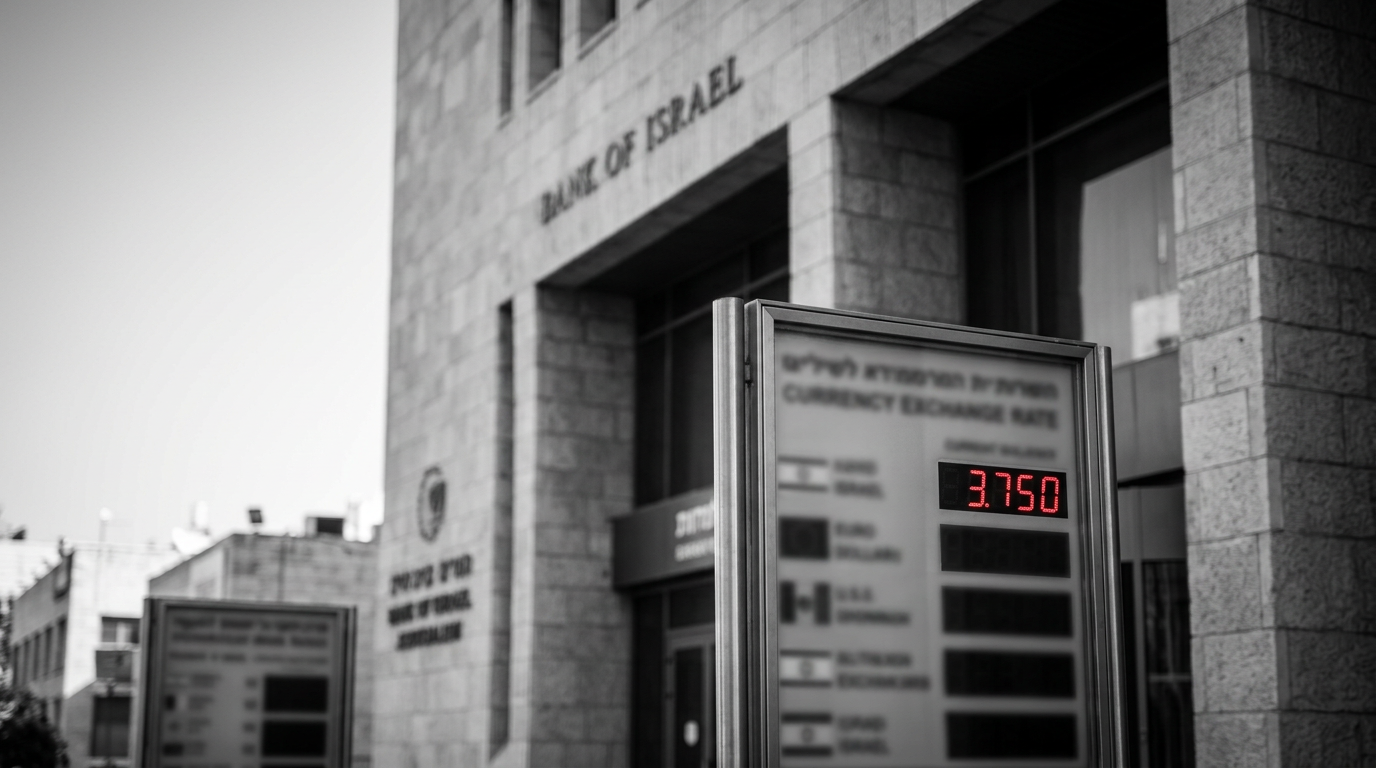
Bank of Israel cut its benchmark rate to 3.25%, easing policy as a stronger shekel squeezes exporters and inflation cools.
The central bank lowered borrowing costs by 25 basis points on Monday, from 3.5%, in its third straight reduction after cuts in May and July. The decision came after Governor Amir Yaron said last month that the meeting would be a "live one," signaling that officials had not settled on a clear path.
Shekel strength frames the cut
The move places the Bank of Israel between two pressures: exporters seeking relief from currency appreciation and policymakers watching for fiscal strain before elections expected in October. The shekel has been supported by the interruption of direct fighting between Israel and Iran, according to the source material, while the central bank said inflation had moderated in recent months.
Lower rates can reduce pressure on a currency by narrowing the return investors receive on local assets, though the effect depends on capital flows and expectations for future policy. For exporters, a stronger shekel makes foreign-currency revenue worth less when translated into local money, weighing on margins unless companies can raise prices abroad or cut costs at home.
The rate cut was not treated as automatic before the meeting. A survey of 18 economists cited in the source material was evenly split, with nine expecting a reduction and nine expecting the rate to remain unchanged.
Inflation sits near target
Analysts cited in the source material expect inflation to hold near 2% over the next 12 months, around the middle of Israel’s target range. That forecast depends on ceasefires in Gaza, Lebanon and Iran holding, and on military reservists being able to return to civilian jobs.
Those conditions matter because labor supply, public spending and risk premiums all feed into prices and growth. If reservists rejoin the workforce at scale, companies face fewer staffing constraints; if security demands rise again, the labor market and the budget may tighten at the same time.
The economy also entered the decision with a volatile growth picture. Gross domestic product rose at a 15.4% annualized, seasonally adjusted pace in the second quarter, the fastest rate in more than two years, as the $610 billion economy recovered from a contraction earlier in the year following the conflict with Iran.
That rebound gives policymakers some room to lower rates without immediately signaling concern about a broad downturn. Early third-quarter activity appears to have softened, according to the source material, which also gave officials a reason to consider easier policy or at least avoid a more restrictive stance.
Exporters face currency arithmetic
The companies most exposed to the exchange rate are those with foreign sales and shekel-denominated costs. A firmer shekel reduces the local value of overseas revenue, so the same dollar or euro sale produces less domestic income unless firms hedge currency exposure or adjust pricing.
Banks and borrowers face a different calculation. A 25 basis point cut lowers benchmark funding costs at the margin, but loan rates, deposit pricing and credit demand will depend on how quickly lenders pass the move through and how households assess security and employment risks.
For the wider economy, the decision suggests the central bank sees less immediate danger from inflation than from an overly tight policy setting. The risk is that fiscal pressure before the October election, or renewed conflict, changes that balance and forces officials to slow or pause the easing cycle.
Three paths after 3.25%
If ceasefires hold and inflation stays near 2%, the Bank of Israel would have more space to keep policy easier without undermining its price target. That path would support domestic demand, leave exporters watching the shekel, and add a modest disinflationary signal to global markets already tracking when smaller central banks can loosen safely.
If the shekel keeps appreciating, exporters may press for further relief while the central bank weighs whether rate cuts are the right tool for an exchange-rate problem. In that scenario, the Bank of Israel risks cutting into a currency rally without much control over global capital flows, while export-heavy sectors face pressure to hedge more aggressively.
If security risks return or fiscal spending rises before the election, inflation expectations and government borrowing costs could become more important than currency pressure. That would test the Bank of Israel’s easing cycle, weigh on companies exposed to domestic financing costs, and add another geopolitical channel to the global macro debate over rates, currencies and risk premiums.