EU-Ukraine drone production pact aims to scale output on Statehood Day
The EU and Ukraine signed a defence industrial partnership in Kyiv on July 15, 2026, launching a drone deal to boost investment and production.
Claire Dubois ·
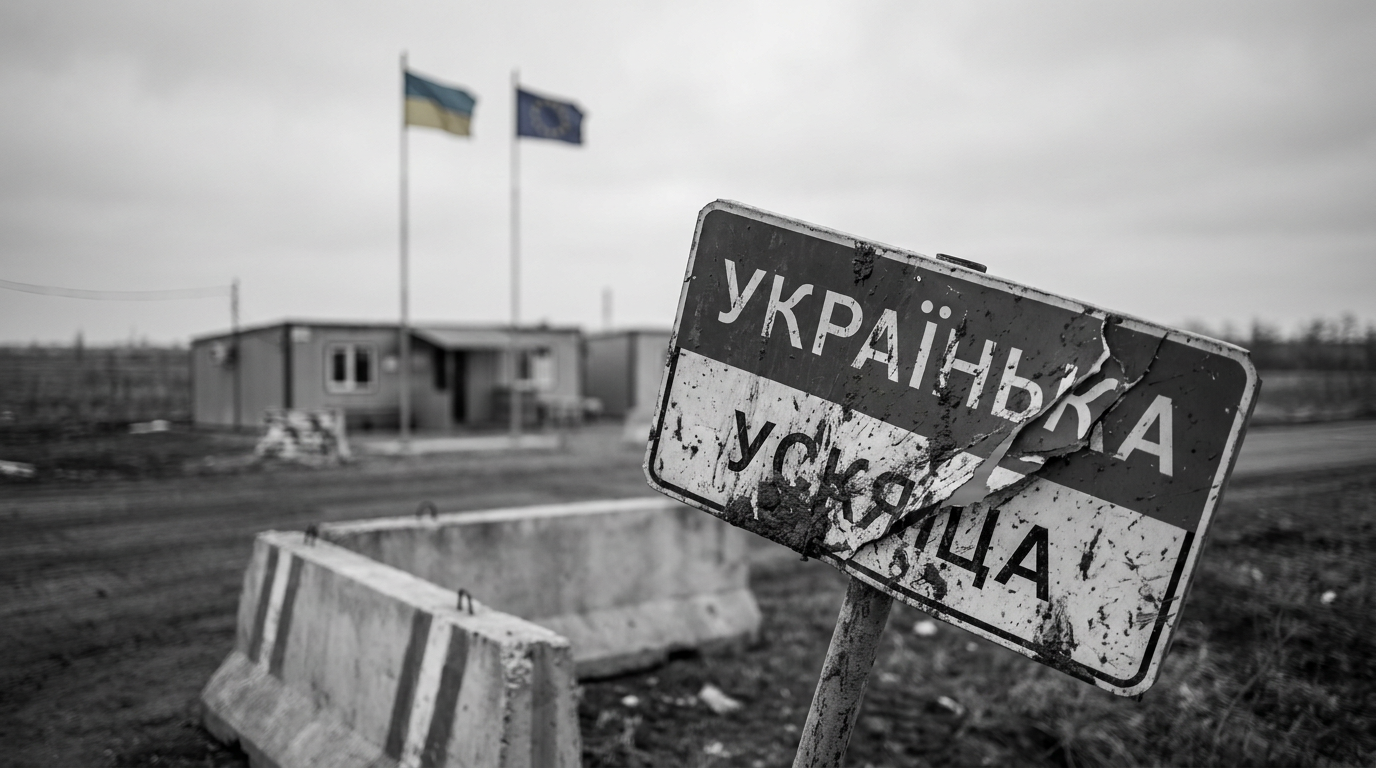
# EU-Ukraine drone production pact aims to scale output on Statehood Day
European Commission President Ursula von der Leyen and Ukrainian President Volodymyr Zelenskiy used Ukraine’s Statehood Day on July 15, 2026 to launch what the Commission called a new EU-Ukraine defence industrial partnership focused on drones. Speaking in Kyiv, von der Leyen said the agreement is designed to link “Ukrainian ingenuity” with “Europe’s industrial scale,” while Zelenskiy said Ukraine intends to double annual drone output with European support.
The announcement matters for Europe’s broader rearmament debate because it is framed as an EU-spanning industrial effort, not a bilateral project, and because it puts drones at the centre of the bloc’s push to expand defence manufacturing capacity.
The deal lands as EU institutions try to square three competing realities: sustained military support for Ukraine, tighter national budgets after the inflation shock, and the political push to build more defence production inside Europe. The European Commission can convene and fund certain industrial programmes, but defence procurement and industrial policy still sit largely with member states, which is why EU-wide frameworks are harder to build than country-by-country agreements.
For the euro area, the fiscal frame is shaped by the EU’s budget rules and by market discipline through sovereign borrowing costs. The European Central Bank (ECB) sets monetary policy for the 20-country euro area, targeting inflation as measured by HICP, the Harmonised Index of Consumer Prices. In periods of market stress, the ECB has also designed backstops such as OMT, Outright Monetary Transactions, a conditional bond-buying tool created during the euro crisis, and TPI, the Transmission Protection Instrument, intended to counter “unwarranted” market fragmentation that interferes with the transmission of monetary policy. Neither tool is a blank cheque; both are designed to be used under defined conditions rather than as routine financing.
What it means for the euro area
In market terms, the immediate macro channel is not the drone deal itself, but what it signals about Europe’s direction of travel: more sustained defence industrial spending and more cross-border coordination. If that spending is financed through national budgets, investors will watch how it interacts with the euro area’s already-sensitive debate over debt sustainability and the credibility of fiscal plans, particularly in higher-debt countries.
For monetary policy, any broad-based rise in defence-related demand would only matter for the ECB if it materially alters the inflation outlook or keeps services and wage pressures elevated. In bond markets, investors typically translate higher expected issuance into higher term premia, which can widen the spread between German Bund yields and Italian BTP yields if risk appetite sours or fiscal slippage is suspected. For banks, larger sovereign swings feed back into funding costs and lending conditions, especially in countries where banks hold large domestic government bond portfolios. For the euro, the balance is nuanced: stronger defence industrial capacity can be read as strategic resilience, but higher energy import needs and higher public borrowing can still weigh on the currency depending on the broader growth and rate differential.
By 2026-12-31, the falsifiable test is whether the EU-Ukraine partnership produces measurable joint procurement or industrial outputs that go beyond speeches. The “right” condition would be evidence of signed implementation contracts across multiple EU countries and companies, plus a credible production ramp consistent with Zelenskiy’s target of doubling drone output from 10 million to 20 million annually. The “wrong” condition would be that the agreement remains largely political, with cooperation confined to existing bilateral deals and no clear cross-EU industrial participation.