Equities Fall as Iran Strikes Elevate Oil and Yields
Global equities fell as US strikes in Iran drove up crude oil prices and Treasury yields, tightening financial conditions across global markets.
Atlas Newsdesk ·
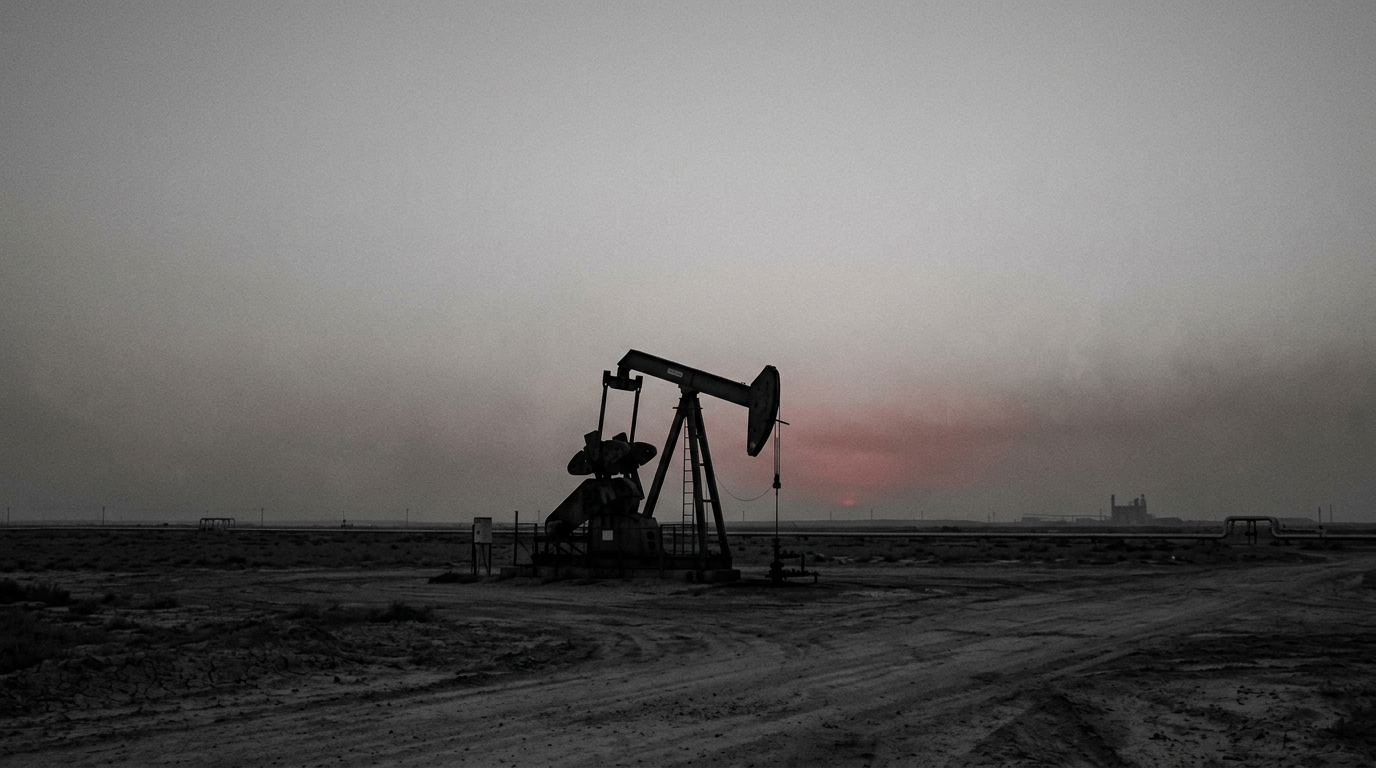
Global equity markets registered widespread declines following reports of US military actions in Iran, which prompted a significant increase in benchmark crude oil prices. This surge in energy costs, a critical inflation driver, coincided with a sell-off in US Treasuries. The treasury market movement pushed yields to multi-week highs, creating tighter financial conditions for both corporate entities and individual consumers.
Before the session commenced, market indicators already suggested a degree of investor apprehension. Market breadth, a metric assessing the widespread participation of stocks in a particular market move, had shown signs of weakening over several preceding sessions. This indicated that recent market gains were concentrated in a limited number of major companies, a pattern often observed before a broader market correction.
Inflationary Pressures and Monetary Policy Outlook
The negative shift in market sentiment was exacerbated by a series of recent inflation data releases. These reports highlighted the persistent nature of price pressures, particularly within the services sector. Such sustained inflation complicates the forecast for corporate earnings per share (EPS), a key measure of profitability, as businesses face challenges from elevated input costs and a potential deceleration in consumer spending.
Heading into the current month, market participants widely anticipated the Federal Reserve would initiate an easing of its monetary policy before the year concludes. This expectation was predicated on a scenario of moderating inflation alongside a robust economy. However, the combination of sticky inflation figures and the sudden geopolitical oil shock directly challenges this previously held market thesis. The central bank has consistently maintained that its future policy decisions will remain strictly dependent on incoming economic data.
Impact on Valuations and Credit Markets
The yield on the 10-year US Treasury note, which functions as a global benchmark for borrowing costs, has been re-priced upward. This adjustment reflects the heightened uncertainty in the economic outlook, effectively unwinding previous market bets on imminent interest rate reductions. The simultaneous increase in both oil prices and interest rates creates a challenging valuation environment for equities, particularly impacting growth-oriented sectors like technology and consumer discretionary.
Higher risk-free rates, as indicated by rising Treasury yields, inherently diminish the present value of a company's projected future earnings. This directly compresses the price-to-earnings (P/E) multiple investors are willing to assign to a stock. Concurrently, elevated energy costs act as a de facto tax on consumers and constrain corporate profit margins, threatening the 'E'—or earnings component—of the P/E ratio. This dual pressure establishes a difficult operational landscape for assets whose value largely derives from long-term growth expectations.
The most immediate repercussions are felt by traders who had positioned themselves for a 'soft landing' economic scenario, where inflation would cool without a significant economic slowdown, enabling the Federal Reserve to cut rates. This group, often invested in duration-sensitive growth stocks and holding short positions in energy commodities, now faces adverse market movements. Furthermore, the stress extends into credit markets, where highly leveraged companies, especially those with upcoming debt refinancing needs, confront a sudden increase in borrowing expenses. This directly affects their capacity to service debt, invest in growth, and return capital to shareholders.
Key Indicators for Future Market Direction
The primary indicators to monitor closely are the price of West Texas Intermediate (WTI) crude oil and the yield of the 10-year US Treasury. For equity markets to stabilize and establish a floor, a clear de-escalation of military activity in the Middle East would likely need to translate into a sustained decline in WTI prices, ideally falling below $80 per barrel. Conversely, any further geopolitical escalation that pushes oil prices above $95 per barrel and maintains them at that level would signal a more severe threat to global economic growth and inflation. Such a scenario would likely trigger a deeper market correction in major equity indices.