Brazil Leads World Cup in Red Cards
Brazil has accumulated the most red cards in World Cup history with 11, as officials have issued 177 red cards across all tournaments.
Cuneyd Erdogan ·
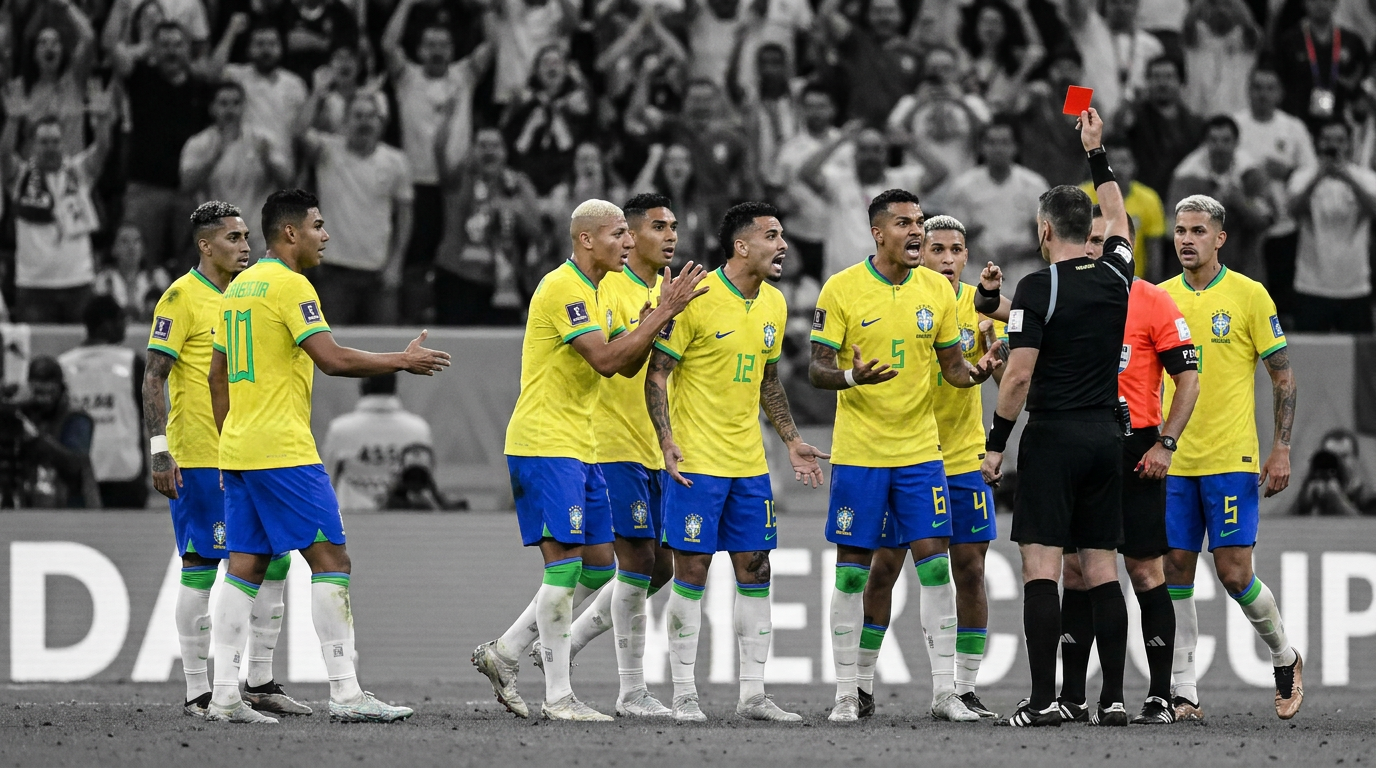
Brazil holds the distinction of receiving the most red cards throughout the history of the World Cup. The national team has been penalized with 11 red cards across its various tournament appearances. Following closely behind is Argentina, which has accumulated 10 red cards.
Uruguay and Cameroon share the third position, each having received nine red cards. Germany, Italy, and the Netherlands have each seen eight red cards issued against their players during World Cup competitions.
Historical Card Totals
During the 2002 World Cup, Turkey notably received two red cards in a match against Brazil. Across all 22 World Cup tournaments held to date, referees have collectively issued a total of 177 red cards.
The 2006 World Cup in Germany stands out as the tournament with the highest number of red cards, recording 28 dismissals. In contrast, the 1950 tournament in Brazil and the 1970 tournament in Mexico concluded without a single red card being shown.
Introduction of Cards and Notable Incidents
The system of using red and yellow cards was officially introduced in 1970. The very first red card in World Cup history was issued in 1974 during a match between West Germany and Chile by Turkish referee Doğan Babacan, who dismissed Chilean player Carlos Caszely.
A single match saw an unprecedented number of red cards during the 2006 Germany World Cup. In the game between Portugal and the Netherlands, Russian referee Valentin Ivanov issued four red cards, setting a record for a single fixture.
The first red card ever shown in a World Cup final occurred in 1990 in Italy. During the final match between West Germany and Argentina, Argentine player Pedro Monzon was sent off.
Implications for Team Discipline
The data highlights a long-standing pattern of disciplinary challenges for certain national teams in major international competitions. Such a high number of red cards can significantly impact a team's performance by reducing player availability in critical matches and potentially affecting team morale.
While the introduction of cards aimed to standardize disciplinary actions, the varying number of cards across tournaments and specific matches suggests that refereeing styles and game intensity play a crucial role. Future tournaments will likely continue to see discussions around fair play and the interpretation of rules by officials.
One uncertainty remains regarding how rule changes or VAR implementation might further influence the frequency of red cards in upcoming World Cups. The balance between maintaining game flow and enforcing strict disciplinary measures is an ongoing challenge for football authorities.