Ancient DNA Rewrites Human Origin Story
A 2023 Nature study says modern humans likely came from multiple connected African populations, using diverse genomes including 44 from the Nama.
Ayla Demirhan ·
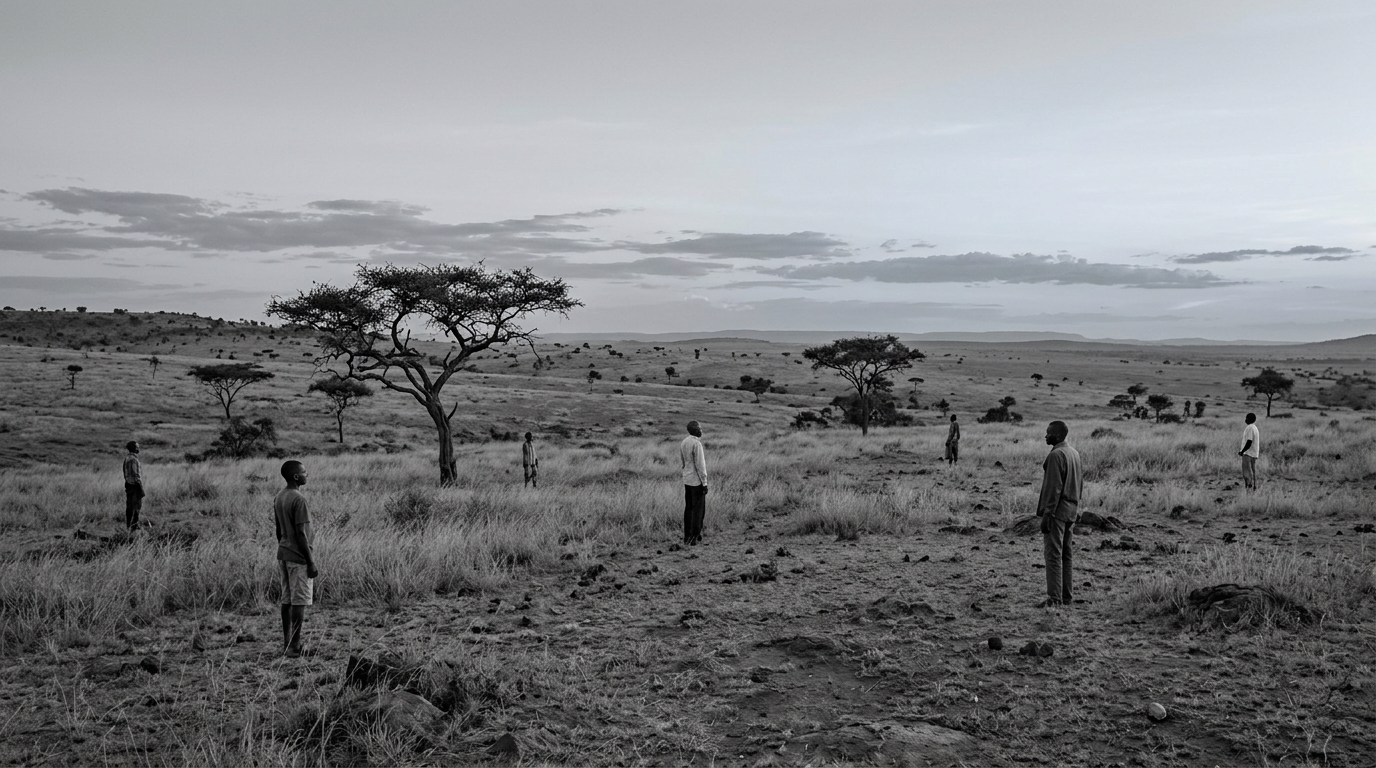
A 2023 study published in Nature reports that modern humans likely emerged from several connected populations spread across Africa, rather than from one isolated ancestral group. The researchers based their conclusion on genetic analysis of diverse present-day African populations, including 44 newly sequenced genomes from the Nama people. The findings challenge a long-standing “single origin” view by arguing that early human groups remained linked through gene exchange over very long periods.
The study says these early populations began to diverge roughly 120,000 to 135,000 years ago, but did not become fully separated. Instead, the authors describe gene flow continuing for hundreds of thousands of years, producing a pattern of human genetic diversity that looks less like a branching tree and more like a network. The work was co-led by Brenna Henn of the University of California, Davis, and Simon Gravel of McGill University.
To interpret the data, the researchers used what they describe as a network-like model. In this framework, early human populations are treated as geographically widespread groups that stayed in contact through ongoing interbreeding. The paper refers to this as a “weakly structured stem,” meaning the ancestral foundation of Homo sapiens was not a single, sharply bounded population but a set of related groups with persistent connections.
The authors argue that this approach can account for observed genetic patterns without needing to assume large genetic inputs from unknown archaic hominin populations. In other words, the study says the diversity seen in living humans can be explained by long-running exchanges among early African populations, rather than by substantial contributions from unidentified, deeply divergent hominin groups.
The research also links its genetic conclusions to how scientists interpret the fossil record. The authors report that only 1% to 4% of genetic differentiation among living human populations can be attributed to differences between these ancestral stem populations.
Based on that estimate, they suggest that fossils showing strongly distinct physical traits are less likely to represent direct ancestors of Homo sapiens, supporting a picture of human evolution in Africa as more fluid and interconnected than a single-line descent model implies.
While the study presents a revised model for human origins, it also leaves open questions about how specific regions and populations across Africa contributed to the long-term network described. The authors’ conclusions are grounded in the genetic datasets and modeling choices reported in the paper, and the work underscores that different analytical frameworks can change how genetic variation is mapped onto deep human history.