Deion Sanders urges NFL teams to keep Travis Hunter a two-way player
Deion Sanders is urging NFL teams to use Travis Hunter as a full-time two-way player, challenging standard professional views on positional roles.
Mehmet Şahinoğlu ·
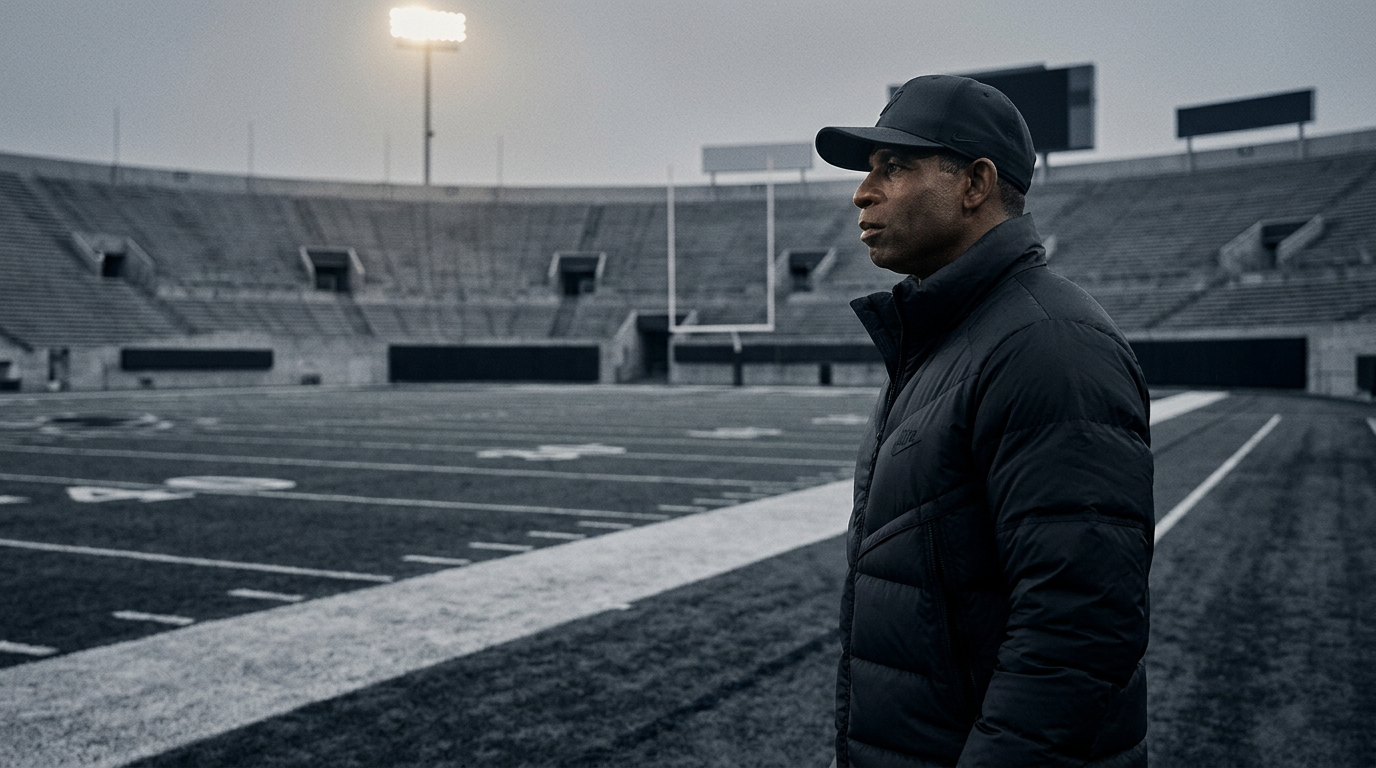
Colorado head coach Deion Sanders has urged NFL teams to keep former Buffaloes star Travis Hunter as a true two-way player as Hunter prepares for the jump to the professional game.
Sanders pointed to Hunter’s Heisman Trophy-winning season as evidence he can handle a heavy workload on both offense and defense. He also said he does not expect NFL teams to seek his input on how to manage Hunter’s workload or deploy his versatility.
Sanders added that he sees no fair historical comparison for Hunter, arguing that forcing parallels would undersell both Hunter and any past stars used as reference points.
The comments have renewed a familiar NFL debate over whether modern roster construction and weekly game planning can support a player taking meaningful snaps on both sides of the ball in an era built around specialization.
Teams and evaluators are now left with the same core projection question: what is Hunter’s best pro position, and how much two-way usage can he realistically sustain over a full season.
Sanders points to the Heisman season as proof of two-way capacity
Sanders’ core argument is that Hunter’s two-way capability should be treated as a defining part of his value, not something saved only for occasional specialty packages. In his view, narrowing Hunter’s responsibilities too early would remove an advantage Hunter has already shown he can handle at the college level.
On the question of how much access teams might seek to Sanders’ perspective, he said he does not expect clubs to ask him how to manage Hunter across units. He has previously said he was disappointed that at least one organization did not contact him for input as Hunter’s transition approaches.
Why an every-down two-way role is hard to build in the NFL
Using a player on both sides of the ball can create matchup stress and give a staff more ways to feature an elite athlete in high-leverage moments. It can also widen weekly game-plan options if a coaching staff is willing to tailor situational roles to specific opponents.
At the same time, the NFL’s physical demands create constraints that teams must weigh: fatigue management, increased exposure to contact, and the time required to learn and execute a larger combined playbook across separate position meetings. For scouts and front offices, the issue is often less about whether Hunter can line up in multiple spots and more about how frequently he can do it without diminishing performance or availability.
Attention will center on how teams describe Hunter’s projected usage during the pre-draft process and whether any club signals a willingness to use him on offense and defense beyond limited packages.