New AI Breakthrough Adds Crucial 24-Hour Buffer to Hurricane Warnings
AI hurricane forecasts now offer a 24-hour lead-time gain on track and intensity, using lower-resolution data, officials and researchers said.
Atlas Newsdesk ·
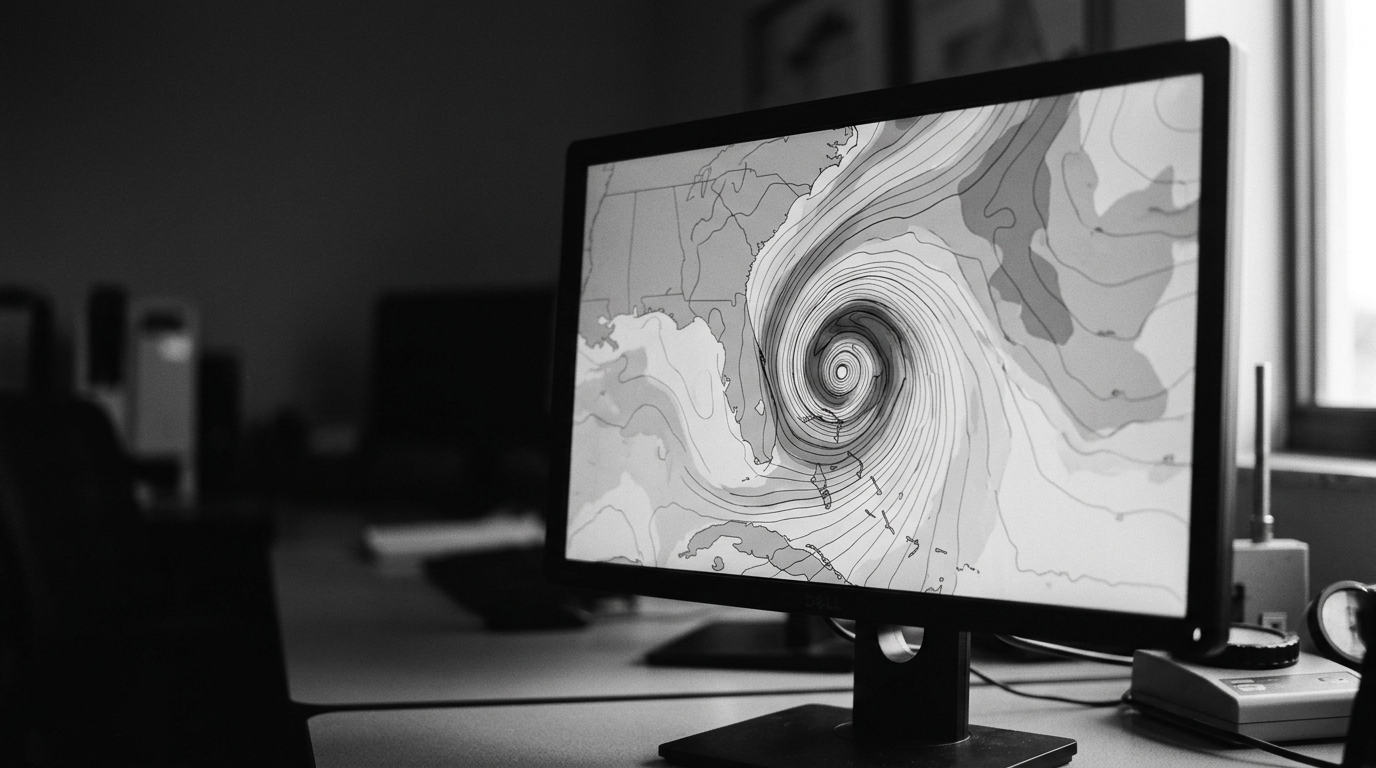
Artificial intelligence is being integrated into meteorological forecasting in ways that are extending hurricane warning windows, with researchers reporting a 24-hour improvement in lead-time accuracy for predicting both storm trajectory and intensity. The advance is linked to an AI-driven approach that can generate high-value guidance from lower-resolution atmospheric data.
Researchers said the new model reaches predictive performance that previously would have required years of incremental progress through traditional numerical weather prediction methods. In practical terms, it allows forecasters and emergency managers to act earlier with a more refined view of potential paths and strength changes.
Authorities said improved forecasting windows can also support better-timed evacuations. With more time to coordinate transport, communicate orders, and adjust plans as new runs arrive, institutions can reduce last-minute changes that often increase disruption and strain infrastructure.
Officials linked these operational gains to reduced economic and infrastructure volatility associated with extreme weather events. The potential benefit is not only earlier action, but more efficient action, as planners can align preparations to a clearer set of plausible outcomes.
Black-box risks and the need for human oversight
Researchers cautioned that the AI system functions as a “black box,” meaning the internal reasons it can infer high-resolution insights from coarse inputs remain unclear. That opacity creates challenges for validation, accountability, and communicating uncertainty to decision-makers.
Officials said the model is intended as a supplementary tool within a broader decision framework rather than a standalone replacement for established methods. Institutional use, they added, should continue to include expert human oversight to manage algorithmic uncertainty in high-stakes emergency settings.
While the reported performance gains are notable, researchers said the limits of interpretability remain an unresolved constraint. In practice, emergency decisions must continue to balance model guidance with expert judgment, particularly when small forecast errors can produce large real-world consequences.