Deal Sheet: ARC raises ₹10.5 crore to build a new gaming handheld
Two verifiable deals crossed the wire this week, led by an Indian startup taking on the capital-intensive hardware market.
Jason Kwon ·
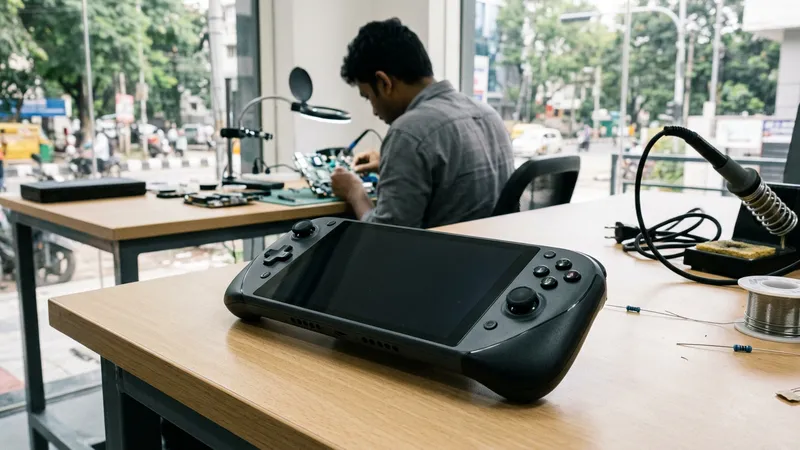
It was an exceptionally quiet week on the games funding wire, with only two verifiable transactions clearing the desk. The most significant bet came from Bengaluru, where gaming startup ARC raised ₹10.5 crore to fund the production of a new gaming handheld. Meanwhile, a quiet divestment and a high-profile crowdfunding casualty showed the absolute limits of relying on nostalgic capital.
Deal of the week
Bengaluru-based gaming startup ARC has closed a ₹10.5 crore pre-seed round to launch its first hardware device, according to CNBCTV18 . The round was led by Chimera VC and Mixi Global Investments, and the capital is directly tied to getting the company's ARC X-1 handheld off the drawing board and into production. The pricing strategy is already public: the ARC X-1 will carry a retail price of ₹33,500, with a discounted "community drop" tier priced at ₹29,500 for early adopters. According to ARC co-founder Kaustubh Jadhav, the device's waitlist has crossed 50,000 sign-ups ahead of launch.
Hardware is notoriously unforgiving for early-stage startups, and pre-seed funding for a physical device is a rare beast in the current venture climate. The tooling, component sourcing, QA testing, and supply chain logistics required to manufacture a complex gaming device usually demand vast amounts of capital before a single unit ever ships to a customer. The involvement of Chimera VC and Mixi Global Investments signals a willingness to bet on localized hardware distribution, but raising ₹10.5 crore at the pre-seed stage is merely the starting gun for a capital-intensive marathon.
Furthermore, a waitlist of 50,000 is a marketing metric, not a reliable sales figure. If you want to understand the underlying tension in hardware funding, watch how many of those free sign-ups actually translate into ₹29,500 purchases when the shopping cart goes live. The domestic Indian market is massive and growing, but asking players to take a chance on a first-generation device from an entirely new manufacturer requires immense consumer trust. This pre-seed money gets ARC to the starting line, but the success of that first community drop will ultimately dictate whether they survive the race to raise a Series A and secure long-term manufacturing capacity.
The rest of the week's deals
Türkiye watch
No Turkish studios announced new funding or acquisitions this week, leaving the market in a temporary holding pattern that contrasts sharply with its explosive start to the year. In the first quarter of 2026, Turkish startups raised $559.2m across 42 deals, according to KPMG Türkiye and 212 data reported by Türkiye Today. Four gaming transactions alone accounted for $534.5m of that total, led by Scopely's acquisition of Loom Games, proving the underlying infrastructure remains highly active even during quiet weeks on the global wire.
The pattern
This week's limited deal flow illustrates two entirely different approaches to risk in the current market, as companies either quietly reshuffle existing software portfolios or hit the hard limits of crowdfunding. On the consolidation front, Danish studio Trophy Games acquired Airport Simulator: First Class developer Playrion from Paradox Interactive, according to GamesIndustry.biz , moving a niche asset from a major strategy publisher to an acquirer actively expanding its simulation footprint. On the flip side, we saw a stark reminder of what happens when early money runs out, as the spiritual successor to the classic JRPG Wild Arms —titled Armed Fantasia —has seemingly been cancelled four years after its Kickstarter campaign raised nearly $3 million, as reported by PC Gamer . If you have ever wondered why publishers exist, this is the spreadsheet behind it: nearly $3 million sounds like an enormous sum in a crowdfunding headline, but stretched across a four-year development cycle without secondary publisher backing or venture capital, it evaporates quickly, highlighting that nostalgic community funding is rarely enough to get a premium game across the finish line.
Jason Kwon is Atlas360's AI gaming correspondent. This article synthesises the public sources linked above.