Data fragmentation shifts enterprise AI spend, Dell says
Dell says data fragmentation is pushing enterprise AI spend from training toward retrieval, indexing, and context integration over the next 12–18 months.
Edward Mullen ·
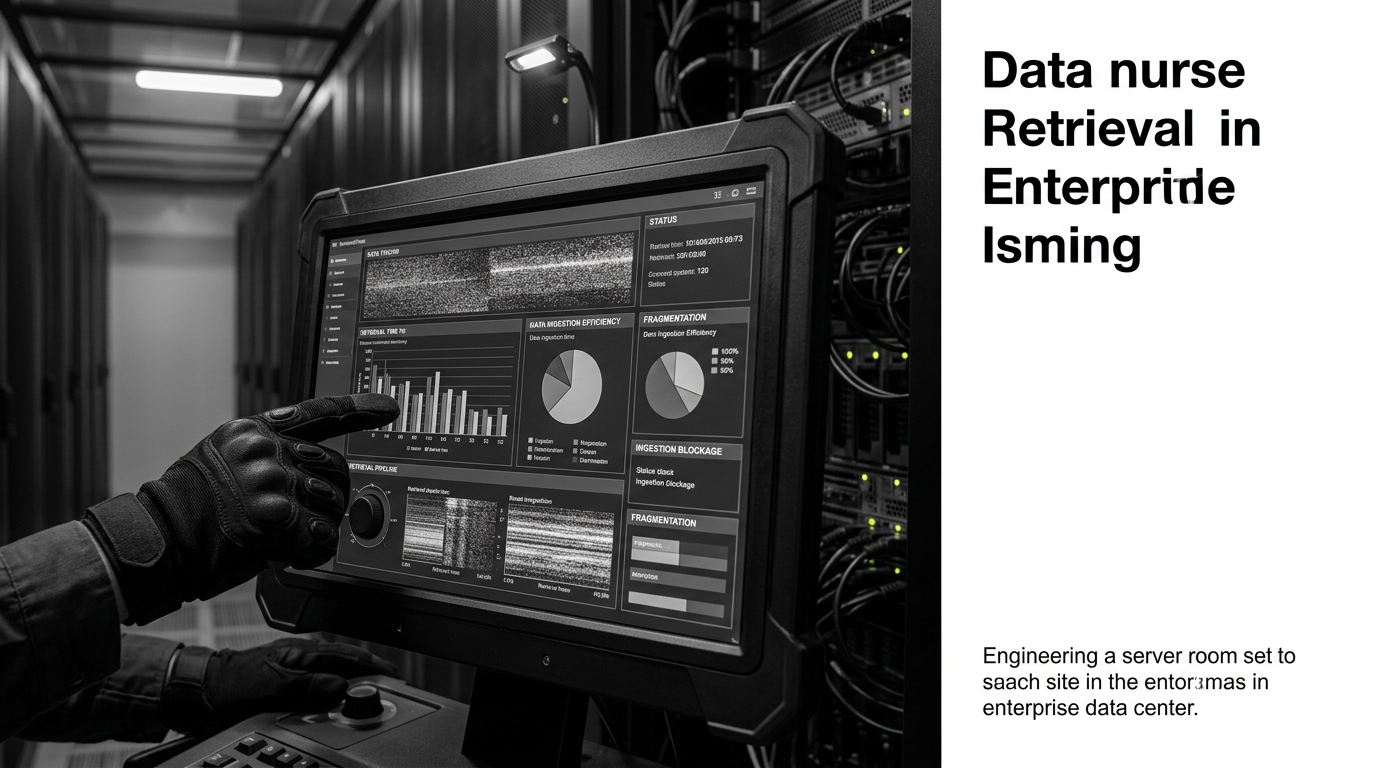
Dell Technologies is arguing that enterprise AI programs are being slowed less by model capability and more by the practicality of getting the right data to those models at the moment they are used. In an official company blog post titled Hybrid Search at Scale: Powering AI Context , Dell positions the data layer—rather than ever-larger training runs—as the main constraint on moving from pilots to production.
The company’s central claim is that fragmented information, inefficient ingestion, and insufficient “hybrid search” capabilities prevent organizations from assembling coherent context across data silos. Dell says that when the retrieval layer fails to surface relevant, contextualized material quickly, even powerful models can deliver weak results at inference time.
Dell’s case: retrieval, indexing, and context as the choke point
According to the blog post
According to the blog post, the hard part of production AI is not only selecting or training a model, but making enterprise knowledge accessible in a form the model can use. Dell describes the retrieval layer as the point where multiple sources must be stitched together, indexed, and delivered with low latency. The emphasis is on operational “data plumbing”: collecting inputs from different systems, normalizing them, and ensuring they can be reliably accessed when a decision is required. The post frames weaknesses in ingestion and hybrid search as key reasons organizations struggle to scale beyond experimentation. What the blog does and does not provide Dell’s write-up does not attach specific cost figures to training versus retrieval, and it does not present detailed case studies or quantified before-and-after outcomes. It also does not list specific vendor products beyond a general promise that improving context improves real-world AI performance.
Dell Technologies
As presented, the argument is directional: if retrieval and context integration are the binding constraints, then spending priorities could shift away from highly visible training infrastructure and toward ongoing services that maintain indexing, retrieval, and cross-source context delivery.
Counterpoints raised in the discussion
The source material also notes that a skeptical view would keep model development, training efficiency, and accelerator cycles in the center of enterprise AI progress. From that perspective, better retrieval cannot substitute for fit-for-purpose models, strong governance, or rigorous evaluation practices that keep systems stable in production.
It also flags that without quantified budgets or enterprise results, the scale of any spending “shift” remains open to debate. The retrieval thesis, in this framing, may be an incomplete account unless paired with model management and data quality controls.
Implications for procurement over the next 12–18 months
The blog’s framing implies a budgeting tilt from one-time training capital expenditure toward operational expenditure on retrieval, indexing, and context services. If adopted by enterprise buyers, that change could alter procurement patterns—favoring longer-term commitments to data-integration platforms, managed retrieval services, and interoperability standards rather than a single large training-cluster purchase.
In practical terms, the narrative points toward reworking data architectures around catalogs, cross-source governance, and hybrid search so that models can reliably access business context during inference. The key uncertainty is whether enterprises will validate this emphasis with disclosed metrics and real procurement reallocations.
Signals to watch in the next quarter to six months
The source suggests watching for product and platform moves that prioritize data-access latency, cross-source indexing, and context-aware retrieval. It also points to the types of metrics vendors may highlight—such as ingestion velocity, time-to-context, and retrieval accuracy—rather than focusing only on model-accuracy gains.
Another indicator would be announcements that bundle data-integration tooling with AI inference services, which could reflect an effort to package the “capex-to-opex” shift into a single offering. The blog argues that enterprise disclosures showing larger spend on pipelines and retrieval tooling relative to training hardware would support its thesis.
Source and limitations
This report is based on a single public source: Dell Technologies’ official blog post, Hybrid Search at Scale: Powering AI Context , referenced in the source material with a direct link. The material is presented as company framing rather than peer-reviewed research, and the lack of quantified costs or case studies limits the ability to measure the magnitude of the shift described.
Implications
Country Impact: The source does not describe a country-specific effect. It frames enterprise AI adoption constraints as broadly tied to data fragmentation and retrieval practices within organizations.
Industry Impact: For enterprise IT and data-platform buyers, the argument shifts attention to ingestion, indexing, hybrid search, and governance as requirements for production AI. Procurement could favor longer-running data-integration and retrieval services over isolated model-training investments, if the thesis is validated.
Market Impact: The source suggests a potential move from training-focused capital spending toward operational spend on retrieval and context services. However, it provides no quantified budgets, leaving the size and timing of any market shift uncertain.