Danone lawsuit targets Chobani protein labels in US
Danone lawsuit against Chobani challenges protein labeling on multi-serve tubs, sharpening a US yogurt rivalry buoyed by GLP-1-driven demand.
Cuneyd Erdogan ·
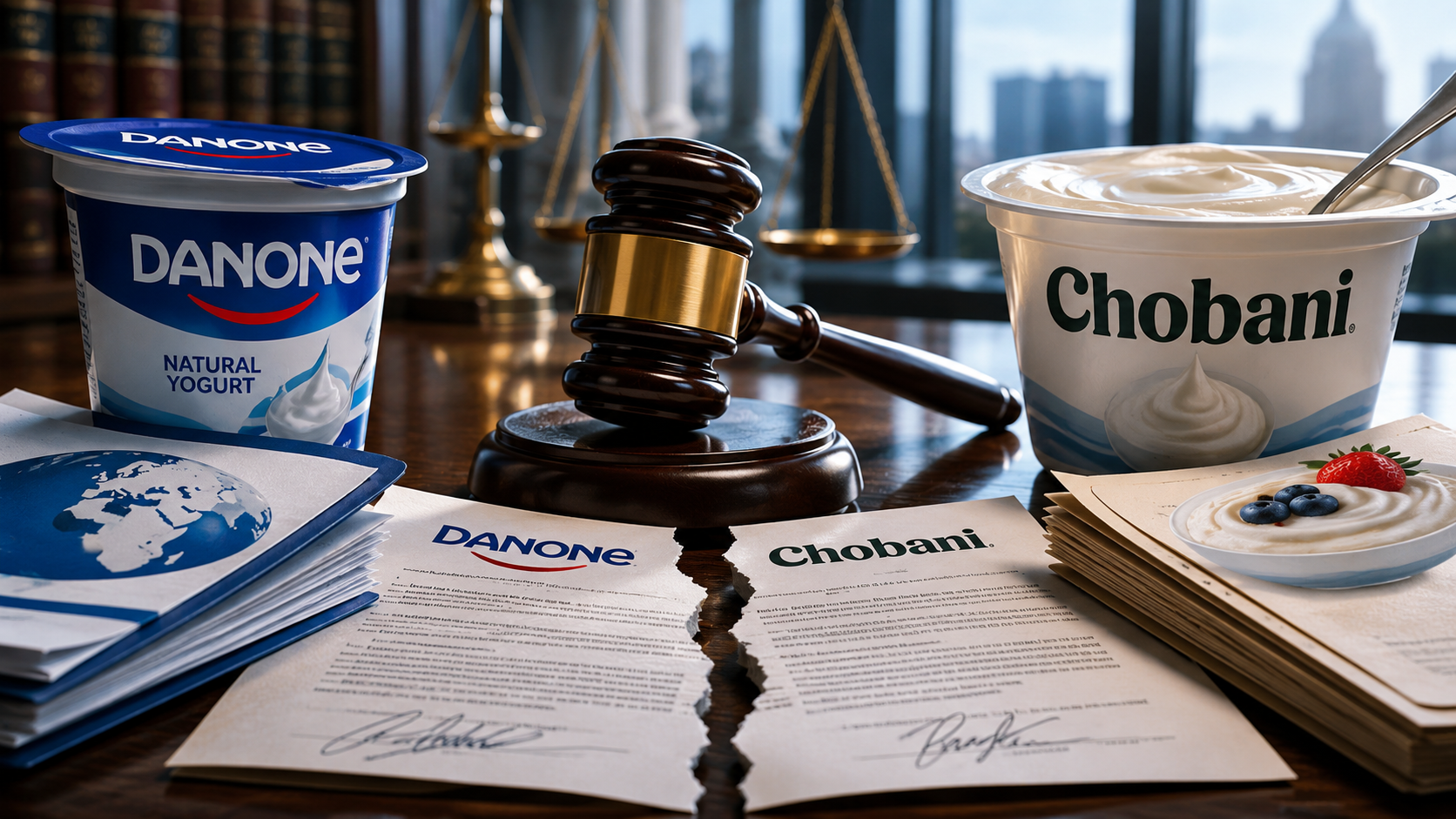
Danone lawsuit against Chobani is escalating a high-stakes fight over protein yogurt labels as US demand rises among users of GLP-1 weight-loss drugs.
The Paris-based dairy group filed the case in Manhattan federal court on Monday, accusing privately held Chobani of overstating protein content on certain products. Chobani’s chief executive dismissed the claims and said the company does not add outside protein.
Protein claims land in court as GLP-1 reshapes demand
Danone alleges that multiple-serving tubs of Chobani 20G Protein present inflated protein claims because of how serving sizes are displayed on the label. The French company says the approach can leave shoppers unable to make an “accurate comparison between products.”
At the center is the “ultra-high-protein” yogurt segment, where Danone positions Oikos Pro as a direct competitor to Chobani 20G Protein. Danone also claims Chobani copied its product and misled consumers in a bid to lift sales—allegations Chobani rejects.
The dispute lands in one of the few mainstream food categories that appears to benefit as GLP-1 weight-loss drugs spread. Users often seek protein-rich foods to help counter muscle loss during weight reduction, keeping pressure on brands that can supply high-protein options consistently and at scale.
A consumer study by Boston Consulting Group found yogurt stands out versus more transient purchases such as protein shakes. “High-protein foods like yoghurt or...meat seem to increase in frequency during and even more after stopping GLP-1s,” said Lauren Taylor, a BCG managing director and senior partner.
Danone’s US pressures: share slip, capacity questions
Danone is trying to catch up with a consumer shift it says it has struggled to meet. The company pointed to extremely strong demand for high-protein yogurts in the second half of 2025 and says it is adding production capacity to respond.
Investors, however, have been watching the US dairy business closely. Barclays analysts said in May that markets are increasingly uneasy about what they described as insufficient urgency around Danone’s recovery in US dairy, particularly as competitors gain momentum.
Danone shares are down 15% this year, compared with an 11% rise in the MSCI World Index. The divergence highlights how sharply investors are rewarding companies that are perceived to be winning in faster-growing pockets of packaged food.
Competitive intensity is visible in market share. NielsenIQ data shared by Chobani show the company’s US market share reached 26% in the first quarter of this year, up from 21% three years ago, while Danone’s share slipped to 25.8% from 30.7% over the same period.
Danone’s dairy unit reported 3% like-for-like sales growth in the Americas in the first quarter, according to company filings. That growth comes as US shoppers tilt toward higher-protein formats, yet Danone is facing a pricing challenge it links directly to the disputed labeling practice.
Chobani rejects the allegations as rivalry deepens
Danone argues Chobani’s labeling enables it to undercut Danone’s roughly €1 billion Oikos brand on price. Chobani CEO Hamdi Ulukaya said Danone was “throwing things out there” to generate damaging headlines for the New York company he founded in 2007.
“In a way, I am kind of laughing at it,” Ulukaya told Reuters. “We never add external protein to our products. We will never mislead anybody.”
The legal battle is not the first between the two companies. Danone has sued Chobani at least four times since 2016, most recently involving coffee packaging slogans; Ulukaya said previous suits have been dismissed.
Brad Charron, a former Chobani marketing executive who now leads plant-based protein brand ALOHA, said large consumer packaged goods companies often adjust serving sizes to present nutrition metrics differently. Still, he added that shoppers are generally able to judge whether a claim is misleading.
Next steps will hinge on how the court views serving-size presentation and protein claims in multi-serve packaging. For both companies, the case also doubles as a proxy fight over who sets the rules in a category that is becoming a durable beneficiary of GLP-1-era eating habits.