Constellation’s outage metric puts nuclear reliability back in Washington’s view
Constellation Energy’s effort to reduce EFOF offers a test for nuclear reliability as Washington weighs grid security, clean power, and fleet performance.
Lauren Collins ·
Constellation’s outage metric puts nuclear reliability back in Washington’s view
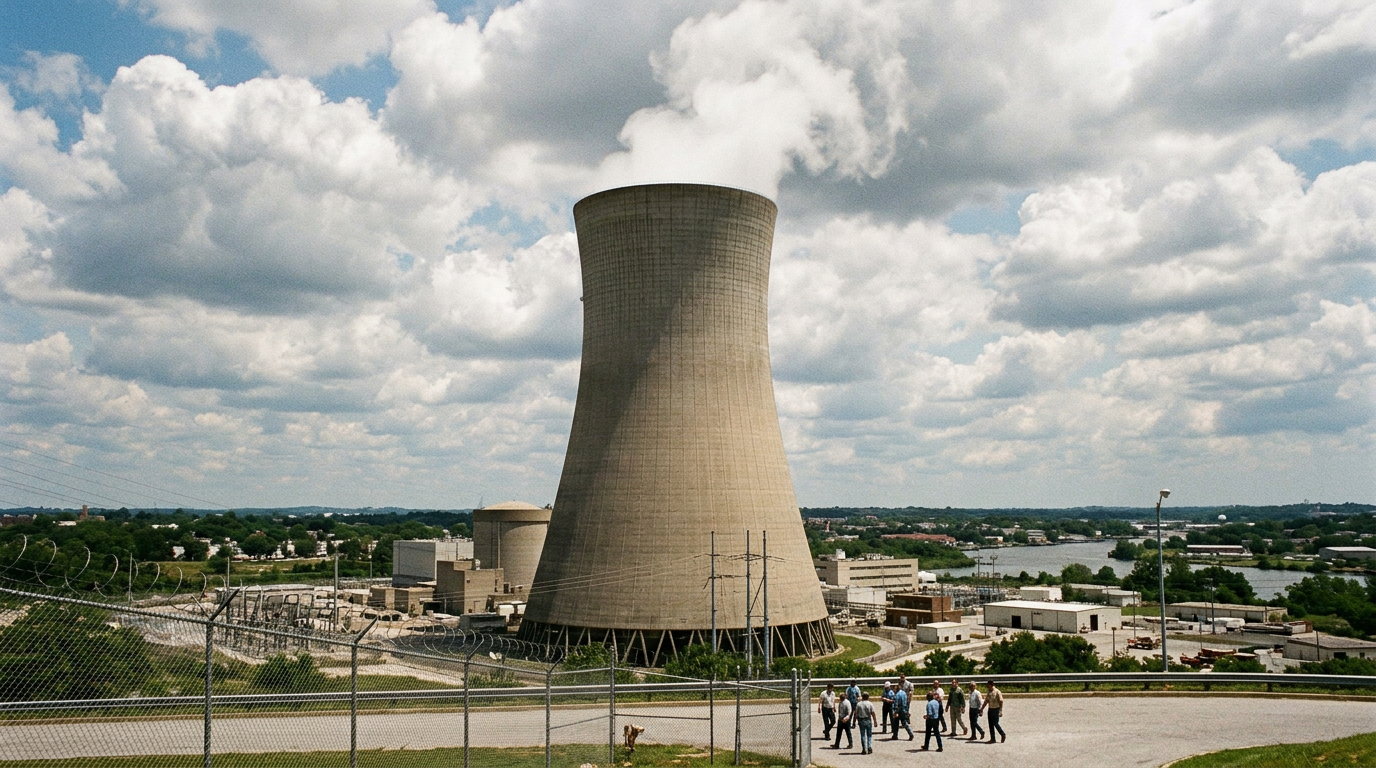
Washington’s grid-reliability debate gained a sharper corporate benchmark this week after Constellation Energy was reported to be improving fleet performance by reducing EFOF, an outage metric closely watched by power operators. The issue matters in Washington because nuclear plants supply around-the-clock electricity, and federal energy officials are looking for ways to keep firm clean power online as electricity demand rises.
For the White House, the Energy Department and lawmakers on Capitol Hill, the Constellation case offers a practical question: whether nuclear operators can show measurable reliability gains while adding more renewable generation to their portfolios.
If the answer is yes, those metrics could strengthen the case for policy tools that reward availability, not just installed capacity.
EFOF generally refers to Equivalent Forced Outage Factor, a measure of how much generating capacity is unavailable because of unplanned outages or forced deratings. In plain terms, a lower EFOF means a power fleet is spending less time unexpectedly out of service, which matters to grid planners who must make sure electricity is available during peak demand, heat waves, winter storms and periods of renewable underperformance.
For nuclear operators, the metric carries particular weight. Nuclear plants have high fixed costs, long licensing timelines and a central role in regional reliability because they can run continuously for long periods between refueling outages. A forced outage at a large reactor can remove hundreds or thousands of megawatts from the grid at once, forcing regional operators to draw on gas plants, imports, storage or demand cuts.
Constellation sits near the center of that debate because it is one of the largest US nuclear operators and has also expanded its clean-power position beyond reactors. That mix puts it at the intersection of three Washington priorities: preserving existing nuclear capacity, accelerating low-carbon generation and reducing the operational risks that can leave regional grids short during stress events.
The policy backdrop has shifted in nuclear’s favor over the past several years. Congress and the Energy Department have backed programs intended to keep existing reactors open, support advanced nuclear development and treat firm low-carbon power as a grid asset rather than only a climate asset. The Nuclear Regulatory Commission remains the key licensing and safety gatekeeper, which means any major expansion or life-extension strategy still runs through a slow and highly scrutinized federal process.
That is where EFOF becomes politically useful. Capacity additions can take years to permit and build, but better availability at existing plants can increase effective supply without constructing a new reactor. In a Washington debate often dominated by large spending programs and long construction timelines, an operating metric offers a nearer-term way to judge whether a fleet is becoming more dependable.
The renewables side complicates the story rather than weakening it. Wind and solar output varies with weather and time of day, so grid operators need flexible backup, transmission, storage or firm generation to maintain reliability. A company that combines nuclear output with renewable growth can argue that it is supplying both clean energy and system stability, but only if plant performance data support the claim.
For Constellation, lower EFOF would help frame its nuclear fleet as a reliability asset at a moment when large power users, including data centers and industrial customers, are seeking clean electricity that is available around the clock. It could also give the company more leverage in discussions over power contracts, state clean-energy rules and federal incentives tied to dispatchable low-carbon generation.
For competitors, the implication is straightforward. If Washington starts paying closer attention to forced-outage metrics, nuclear and other firm-power operators may face stronger pressure to prove availability across entire fleets, not just highlight performance at a few plants. That could benefit operators with disciplined maintenance programs and penalize fleets where aging equipment, refueling delays or regulatory issues create inconsistent performance.
The macro link runs through electricity demand. The US power system is under pressure from industrial policy, electrification and the growth of large computing loads, all of which increase the premium on dependable capacity. If nuclear plants run more reliably, the grid may need less emergency fossil generation during tight periods; if they do not, policymakers will face harder trade-offs among reliability, emissions and cost.
Washington’s interest is not limited to climate policy. Grid reliability is also a national-security issue when power demand touches defense manufacturing, semiconductor plants, cloud infrastructure and critical communications. That gives the Pentagon, National Security Council and congressional defense committees an indirect stake in whether civilian energy policy can deliver enough firm power without creating new vulnerabilities.
The test by December
21, 2026, is whether Constellation can show sustained, portfolio-wide EFOF improvement and connect it to credible renewable expansion, regulatory alignment and grid value.
If the gains hold across the fleet, Washington is more likely to treat availability metrics as a basis for nuclear incentives and reliability policy, which would support Constellation’s standing and push the wider power sector toward measurable performance standards.
If the improvement is limited to a few units, fails to appear in future company disclosures, or meets regulatory or reliability pushback, the policy case weakens: the macro effect would be less firm clean capacity, the company would have less evidence for premium contracts or incentives, and the sector would remain exposed to a more fragmented reliability debate.