China Expands AI Infrastructure in Northern Provinces
China is scaling AI infrastructure in remote provinces to bypass chip sanctions and achieve industrial integration, intensifying global tech competition.
Lauren Collins ·
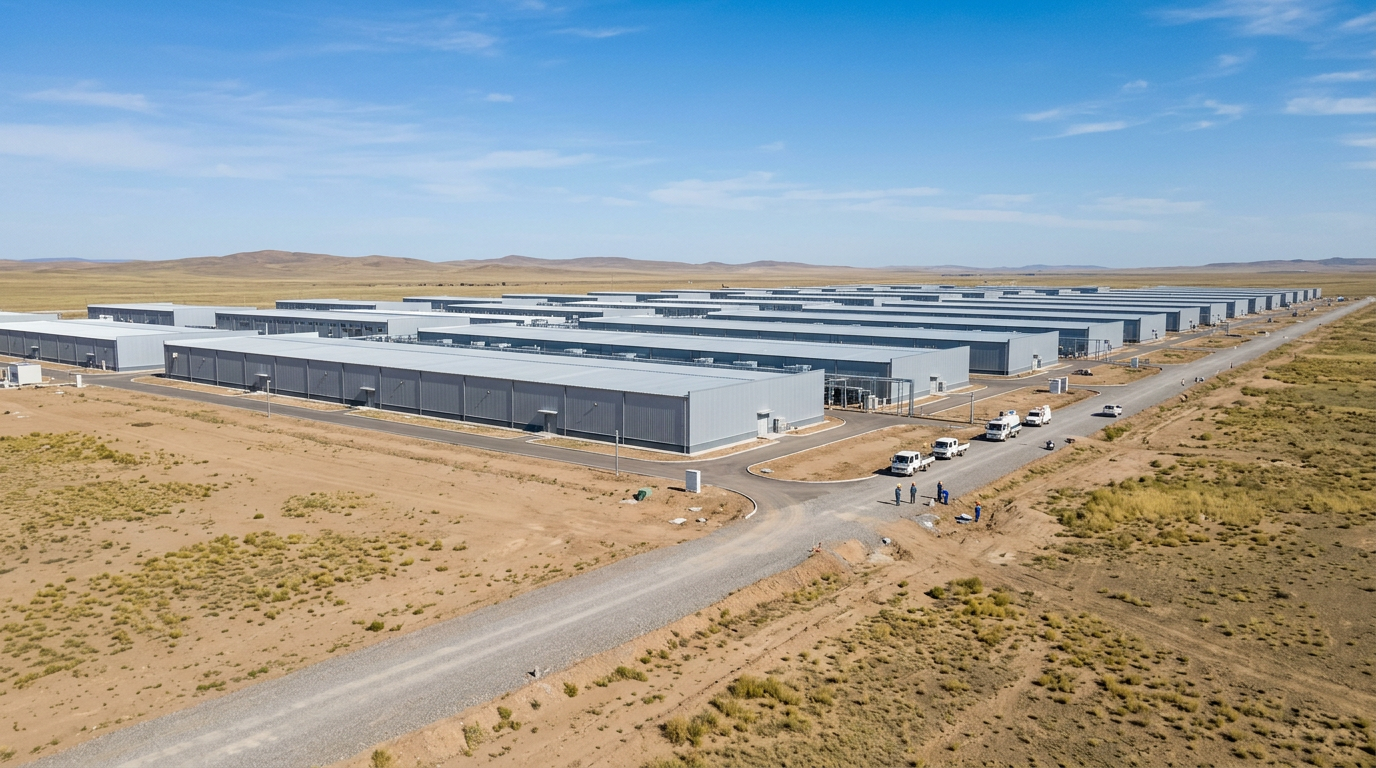
China is accelerating the construction of large-scale data centers in its northern regions, including Inner Mongolia, to bolster its domestic computing capacity. This infrastructure expansion supports the country's strategic objective to integrate artificial intelligence across 90 percent of industrial sectors by 2030.
The strategic deployment to remote provinces capitalizes on existing renewable energy infrastructure and lower operational costs. This move is designed to mitigate the impact of international restrictions, particularly US-led export controls, on advanced semiconductor access.
Talent Repatriation and Open-Source Push Accompanying the infrastructure drive is a state-led initiative Accompanying the infrastructure drive is a state-led initiative to repatriate high-level technical talent and promote open-source AI models. By prioritizing open-source development, Beijing aims to accelerate domestic innovation and establish an alternative regulatory framework. This approach counters the closed-model systems favored by major Western firms, reflecting China's ambition for a greater say in global AI governance standards, according to the source. Resource Management Concerns The rapid development of these sites has raised concerns regarding local resource management. Specific issues include increased water usage and potential land displacement in rural areas where these facilities are being built.
While the state maintains a target for green
While the state maintains a target for green energy integration by 2030, the continued reliance on existing coal-fed grids remains a significant variable in the projects' long-term sustainability. These developments highlight the intensifying geopolitical competition for technological hegemony.
Geopolitical Implications
China's push for AI dominance, as evidenced by its infrastructure investments and talent strategies, directly impacts its technological rivalry with the United States. President Trump recently emphasized the strategic importance of AI, stating that "whoever wins AI, wins," while an AI firm CEO warned a Chinese lead could "pose grave danger."
These divergent approaches and strategic priorities underscore the challenges in establishing global frameworks for AI regulation, with both nations pursuing distinct paths forward.