Colombia fiscal deficit plan seeks IMF, US Treasury help
Colombia fiscal deficit plans will receive IMF and US Treasury assistance while the incoming government pursues multilateral financing to cut borrowing costs.
Atlas Newsdesk ·
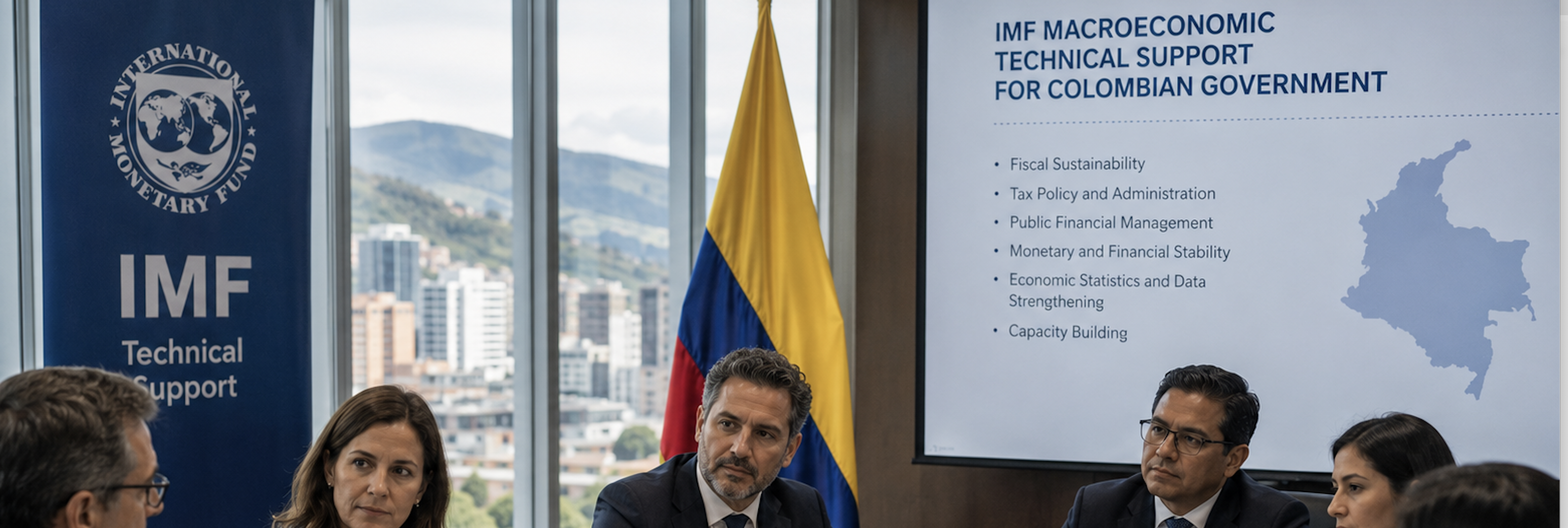
Colombia fiscal deficit plans will get IMF and US Treasury technical assistance as the incoming government seeks cheaper funding. Vice President-elect José Manuel Restrepo said the support is meant to sharpen both the fiscal adjustment proposal and the growth agenda.
The request puts fiscal credibility at the center of the incoming administration’s economic opening. Restrepo, speaking in Washington on July 17, also said Colombia is pursuing financing from multilateral lenders to reduce borrowing costs.
Restrepo courts technical support
The technical work would involve the International Monetary Fund and the US Treasury, according to Restrepo. He framed the assistance as a tool for refining policy before the new government begins carrying out its fiscal program.
“The technical assistance will allow us to refine the fiscal adjustment proposal and the economic growth agenda,” Restrepo said. “They’re a valuable instrument for Colombia at this moment, and we’re going to explore them in detail.”
The comments signal that the administration wants outside validation for a difficult budget task. Technical advice does not provide financing by itself, but it can help shape spending, revenue and growth measures in a way that lenders and investors can evaluate more clearly.
https://x.com/NigelClarkeJa/status/2076825058652434432?ref_src=twsrc%5Etfw%7Ctwcamp%5Etweetembed%7Ctwterm%5E2076825058652434432%7Ctwgr%5E3e74a4f7e81444b73f90f78dba6571d637adb7e5%7Ctwcon%5Es1_&ref_url=https%3A%2F%2Fwww.bloomberg.com%2Fnews%2Farticles%2F2026-07-17%2Fimf-us-treasury-agree-technical-help-for-colombian-fiscal-reset
Multilateral package takes shape
Colombia is also discussing a financing package with the World Bank, the Inter-American Development Bank and CAF, the regional lender. The proposal under review would combine investment financing, credit guarantees and support for the fiscal adjustment program, Restrepo said.
That mix matters because guarantees can change the economics of borrowing. If a multilateral lender backs part of a commercial loan, investors may demand a lower risk premium than they would on an unsupported sovereign transaction.
The World Bank recently approved guarantees for a commercial loan of as much as $2 billion for Argentina, which plans to use the proceeds to help cover debt maturities. Colombia’s talks are separate, but the Argentina approval shows how guarantees can be used when governments want market financing at less punishing terms.
Fiscal credibility meets market costs
The immediate audience for Colombia’s plan is broader than the lenders in the room. Bond investors, ratings analysts and domestic businesses will look for signs that the incoming government can pair deficit reduction with a growth agenda that does not weaken public services or private investment.
If the technical assistance produces a clear adjustment plan and multilateral talks advance, Colombia could lower financing pressure through cheaper borrowing and stronger policy signals. For the incoming administration, that would create more room to sequence budget measures; for the wider sovereign debt market, it would reinforce the role of multilateral guarantees as a bridge between reform plans and private capital.
If the package stalls or the fiscal plan lacks detail, the mechanism runs in the opposite direction. Higher uncertainty could keep borrowing costs elevated, limit the government’s room for investment and make lenders more cautious toward other emerging-market borrowers seeking similar support.
The key open questions are the size, timing and terms of any Colombia package, along with the fiscal measures the government is prepared to put behind it. Restrepo’s comments identify the strategy; the market test will come when the administration converts that framework into numbers, legislation and financing agreements.