Microagi raises $55 million for robot data in factories
Microagi raised $55 million to expand its robot data model, linking New York home footage, Chinese hardware and factory automation.
Atlas Newsdesk ·
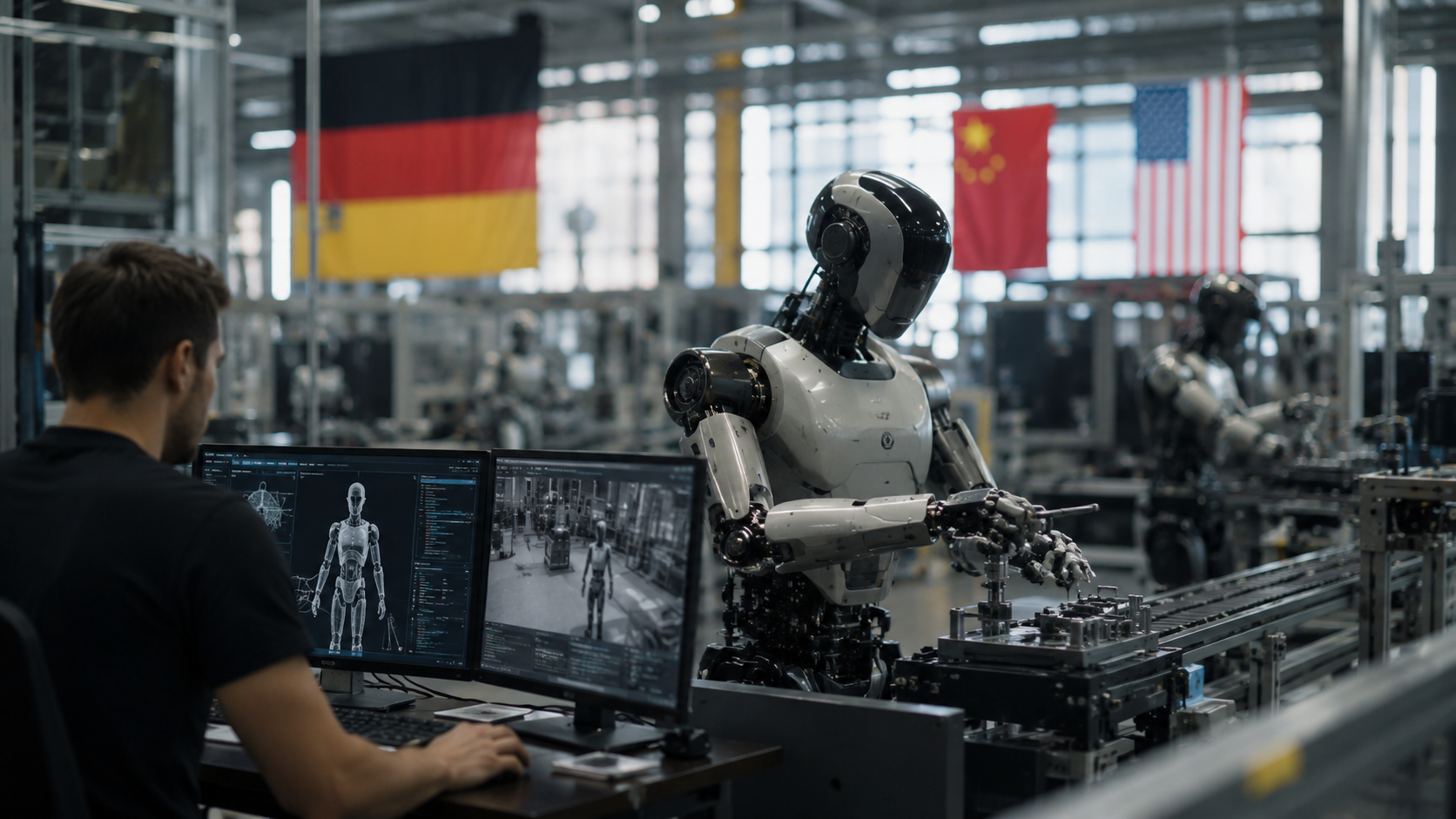
Microagi raised $55 million to expand robot data work, tying home footage, Chinese hardware and factory automation into one model. The Munich startup’s seed round reflects investor demand for real-world training material as humanoid robotics moves closer to commercial deployment.
The financing was described as the largest seed round ever closed in Germany. It gives Microagi more capital to pursue a hybrid business: collect data from human environments, build software for robots and place those systems inside factories.
$55 million seed round
Microagi closed the round this week after drawing attention in May with a New York service that offered no-cost apartment cleaning in exchange for permission to film the work. The arrangement turned domestic chores into training material for machines that need to understand messy, unpredictable spaces.
Founder and CEO Bercan Kilic said the company has granted exclusive access to some of that material to advanced AI laboratories. The same data also feeds Microagi’s own software stack, which the company uses to shape how robots perform tasks for industrial customers.
The logic is simple but hard to execute. Humanoid robots need far more than code: they need examples of bodies, objects and tools interacting in real settings, where lighting, clutter and human habits vary from one room or production area to another.
Apartment footage enters factories
Microagi also works directly with manufacturing and logistics companies. It gathers video and operational data from active factory environments, studies where automation can be introduced and then installs systems calibrated for each client’s workflow.
That model moves the company beyond selling raw data. It positions Microagi as an operator that can translate observed human work into robot behavior, then test whether machines can handle repetitive or physically demanding tasks inside commercial sites.
The company’s approach speaks to a wider challenge in robotics. Simulated environments are useful for early development, but factories and homes generate edge cases that are difficult to model fully, from unusual object placement to last-minute changes on a line.
Chinese hardware, German software
Microagi does not build all of the machines it deploys. The company buys hardware, often from Chinese robot makers Unitree or UBTech, then leases those units to factories after adding its own software and client-specific tuning.
That supply chain shows how physical AI remains international even as governments and companies debate technological separation. In Microagi’s case, Chinese robots can run on German software shaped partly by data gathered in New York apartments.
The structure creates opportunities and risks. If manufacturers see measurable savings or safer workflows, Microagi could expand leasing, software customization and data partnerships, while the broader robotics sector may place a higher premium on proprietary real-world datasets.
If privacy concerns, customer resistance or cross-border technology restrictions intensify, the mechanism works in reverse. Microagi could face higher compliance costs or tighter limits on data sharing, while the industry may shift toward localized data collection and region-specific hardware partnerships.
A third path depends on factory adoption. If robots remain too costly or unreliable for routine deployment, global capital may keep flowing into software and training data rather than large hardware rollouts; if performance improves, manufacturers could accelerate automation plans and force rivals to secure their own data pipelines.
The open questions are concrete: Microagi has not disclosed customer numbers, valuation or revenue in the provided material. Investors and manufacturers will now watch whether the company can turn a headline-grabbing data strategy into repeatable deployments on factory floors.