Glacier Collapse in Nepal Linked to Warming Climate, Killing 1,300
A study links the Nepal-Tibet glacier collapse to climate warming, prompting Nepal to seek international financial support for urgent recovery efforts.
Lauren Collins ·
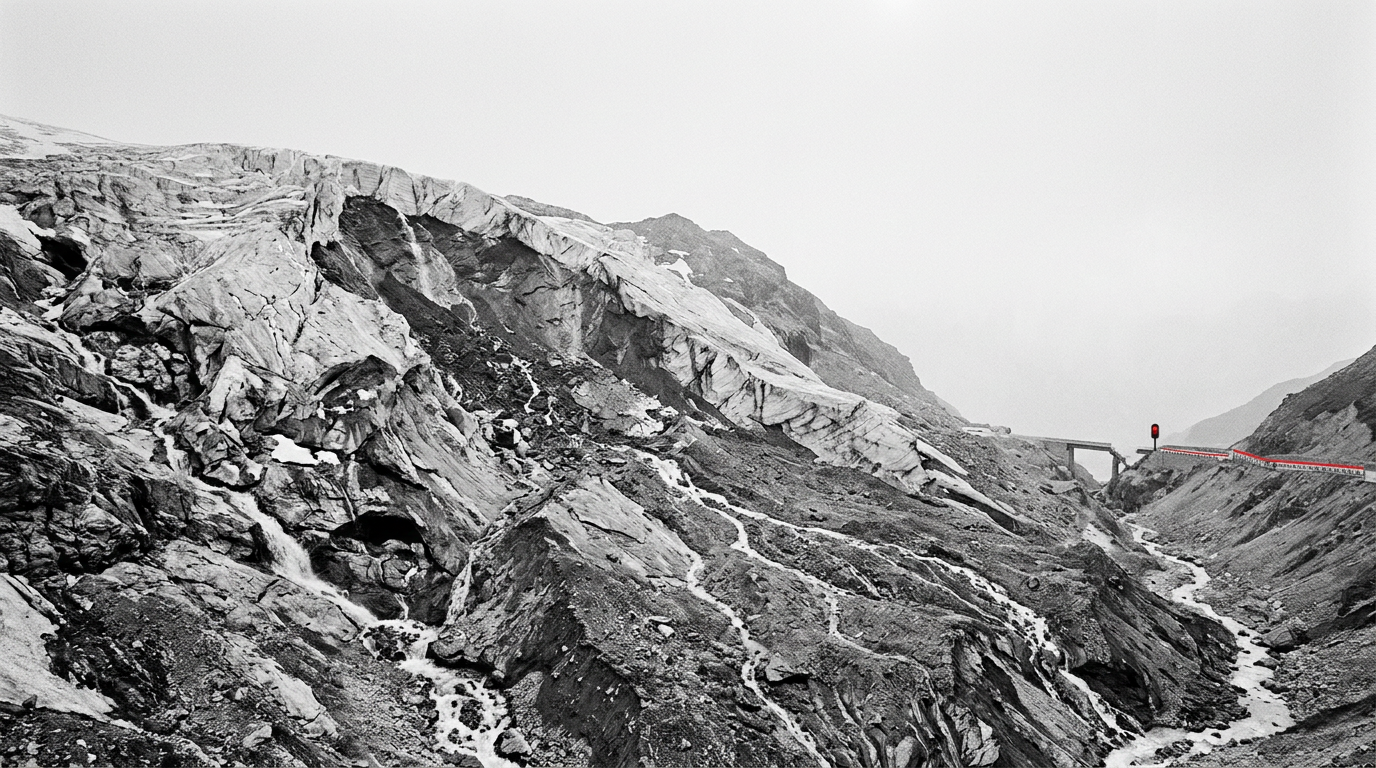
Scientific analysis has linked long-term atmospheric warming to the destabilization of a glacier whose collapse in August 2026 resulted in over 1,300 fatalities in Nepal and Tibet. The event, which saw a 200,000-square-meter glacier section detach, also caused widespread destruction of critical infrastructure and registered seismic activity upon impact, according to the study.
Researchers identified record-high regional temperatures and an increasing freezing threshold as primary factors that weakened mountain slopes and permafrost in the area. While geological factors, such as the 2015 earthquake, contributed to slope instability, the study concluded that anthropogenic climate change acted as a critical force multiplier in the disaster.
Rising Temperatures Weaken Mountain Slopes
Rising Temperatures Weaken Mountain
The research, conducted by Imperial College London and other climate specialists, found that the region experienced approximately 2 degrees Celsius of warming since pre-industrial times, with July and August 2026 being the warmest on record locally, reaching 5 degrees Celsius above the 30-year average in the days preceding the collapse. The freezing threshold in the Himalayas has risen by about 100 meters per decade since the 1980s.
This long-term warming had already led to substantial glacier recession, removing stabilizing ice from the collapse site and contributing meltwater. Dr. Friederike Otto, a climate science professor at Imperial College London, stated that communities in Nepal are "paying with their lives for a crisis driven by fossil fuel emissions thousands of miles away."
Nepal Seeks Climate Disaster Funds
Nepal has formally petitioned the United Nations loss
The disaster highlights the increasing limitations of local climate adaptation strategies. Nepal has formally petitioned the United Nations loss and damage fund for financial assistance to cover recovery costs. This request underscores growing political pressure on high-emitting nations to accept liability for climate-related disasters in vulnerable regions.
The event serves as a precedent for future claims regarding the economic and security impacts of climate-driven environmental degradation, as the study noted that "limits to adaptation are already being reached" in the Himalayas.