Himalayan Flash Floods Leave 630 Dead and Infrastructure in Ruins
Recent flash floods in the Himalayas, triggered by glacial lake outbursts, have claimed over 630 lives and devastated critical infrastructure across Nepal…
Atlas Newsdesk ·
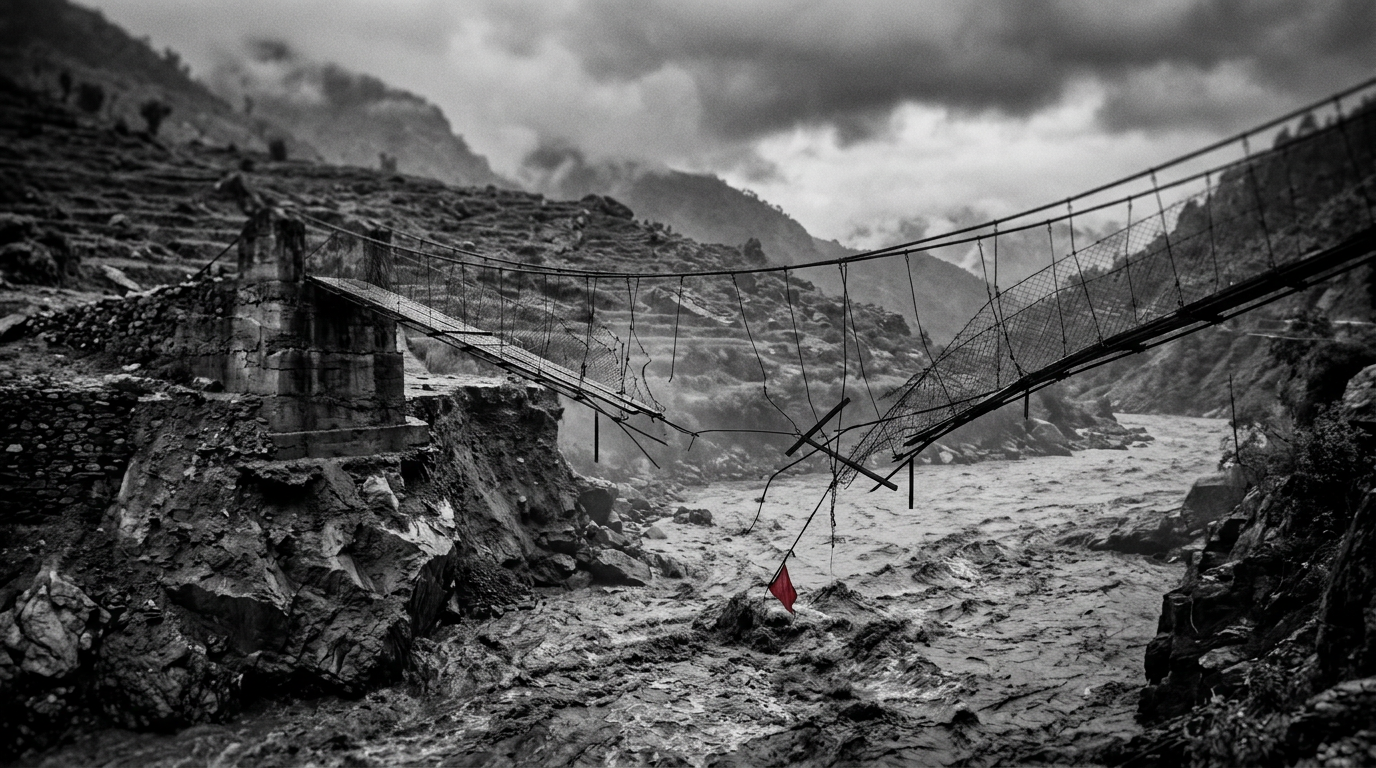
Flash floods, caused by glacial lake outbursts in the Himalayan region, have led to the deaths of over 633 individuals, with Nepal accounting for 626 fatalities and Tibet reporting seven. Around 3,000 people remain missing across the affected border areas, prompting concerns as search operations continue.
The disaster has severely impacted vital infrastructure, including the complete destruction of the Gyirong border crossing complex. This damage has significantly hindered cross-border movement and the distribution of aid, exacerbating humanitarian challenges in the remote mountainous terrain.
Nepal Seeks International Assistance
Following the catastrophic events, Nepal has formally requested international technical support for infrastructure rebuilding. The nation specifically seeks aid for bailey bridges to restore essential transportation and communication links severed by the floodwaters. While Kathmandu initially declined foreign search and rescue teams, the government is now actively soliciting international assistance for specialized operations.
These operations include advanced DNA identification of victims, efficient body storage solutions, and complex tunnel rescue missions, highlighting the challenging nature of the ongoing recovery efforts. Neighboring India has responded by deploying 60 tons of relief supplies and expert personnel specializing in tunnel rescue techniques to assist the affected regions.
Ongoing Geological Risks and Regional Response
The geological instability of the Himalayas remains a significant concern for authorities. Two upstream barrier lakes are under continuous monitoring due to their potential for further destabilization. Experts have warned that over 100 other glacial lakes across the vast Himalayan range pose similar potential hazards, underscoring the long-term risk of such environmental events.
Officials in Beijing have designated the disaster as a national priority. Senior leadership has called for intensified monitoring of landslide risks across the region and emphasized the importance of increased international collaboration on comprehensive disaster management strategies.
The extensive damage and high casualty count highlight the urgent need for coordinated efforts to address the complex challenges presented by climate change and geological vulnerabilities in high-altitude environments.
Long-Term Climate Change Impact
The recent events underscore a growing concern among scientists regarding the impact of climate change on high-altitude regions. Rising global temperatures contribute to glacial melt, increasing the volume of water in glacial lakes and the likelihood of glacial lake outburst floods (GLOFs). Experts have long warned that the Himalayan region, home to some of the world's largest glaciers outside the polar regions, is particularly vulnerable to such phenomena.
Historically, the region has experienced various forms of natural disasters, but the frequency and intensity of events like the recent flash floods are prompting calls for more robust early warning systems and preventative infrastructure development. International bodies and local governments are increasingly focused on developing sustainable strategies that account for both immediate disaster response and long-term climate adaptation.