China AI Push Speeds Integration Into Electric Vehicles
China AI push is accelerating AI features in EVs under the “AI Plus” plan, with firms rolling out new models, chips, and investment.
Jason Kwon ·
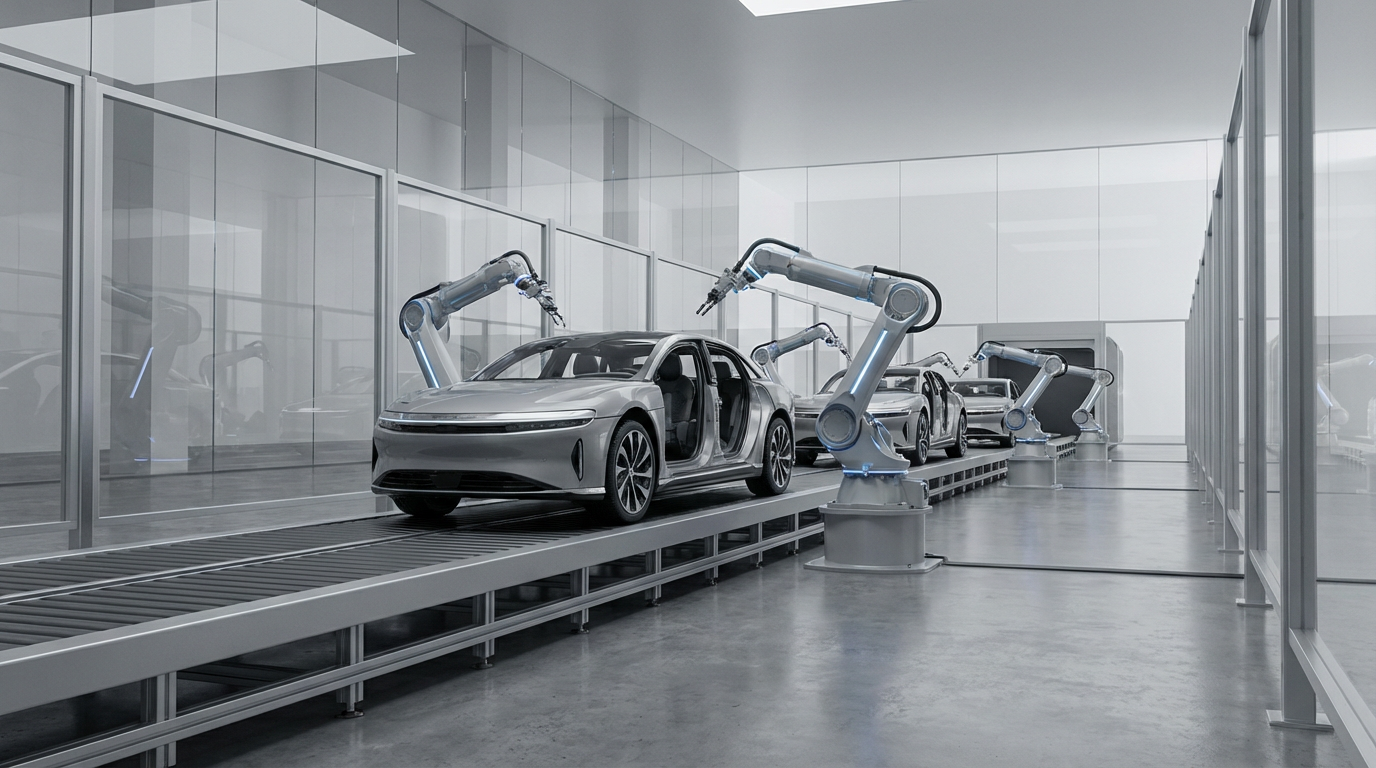
China’s automotive sector is moving quickly to embed artificial intelligence into electric vehicles, as companies align product roadmaps with a national directive to build self-reasoning machines that run on domestic chips and software. The effort is tied to China’s latest five-year plan through the “AI Plus” project, which sets out to spread AI across the economy while cutting dependence on foreign high-end semiconductors.
In the EV market, the policy drive is accelerating a shift in what vehicles are expected to do and how they are built. As AI features expand, the boundary between established automakers and technology firms is becoming less distinct, with software, computing power, and on-device intelligence increasingly central to competition.
Several companies have highlighted new capabilities that rely on AI models and integrated operating systems. Xpeng has rolled out an updated AI model that supports voice commands for more complex navigation tasks, including requests such as parking near a specific location without relying on pre-designated maps.
Xiaomi, which entered the EV market three years ago, has introduced an AI-enabled HyperOS operating system that lets drivers handle tasks such as making restaurant reservations and ordering coffee from inside the vehicle.
Hardware and platform investment is also rising as firms seek to support more advanced smart-driving functions. Huawei said it will invest over $10 billion in the next five years to strengthen computing power for smart driving systems. Separately, chipmaker Horizon Robotics has released its Starry 6 processor, which combines cockpit and driving functions into a single chip.
Automakers are also signaling that the AI agenda is becoming a core part of their strategy. Dongfeng Motor has publicly committed to developing cars with “embodied AI technology,” presenting the approach as consistent with national objectives set out under the current planning framework.
Beyond China, industry figures say the shift has implications for how the global car business evolves as vehicles become more software-defined. Francois Roudier of the International Organisation of Motor Vehicle Manufacturers described the change as a “revolution” that is reshaping the industry’s direction, reflecting how AI integration is influencing product design, supply chains, and the competitive balance between automakers and technology providers.
What remains uncertain is how quickly these AI-driven functions will standardize across models and brands, and how the push to rely on domestic chips and software will affect the pace and breadth of deployment. Even so, the combination of national policy, corporate investment, and new in-vehicle capabilities is positioning China’s EV market as a major arena for the next phase of automotive technology development.