China constructs massive artificial island at Antelope Reef in disputed Paracel Islands territory
China builds Antelope Reef island after dredging began in October 2025; Vietnam protested in March 2026 as facilities remain uncertain.
Lauren Collins ·
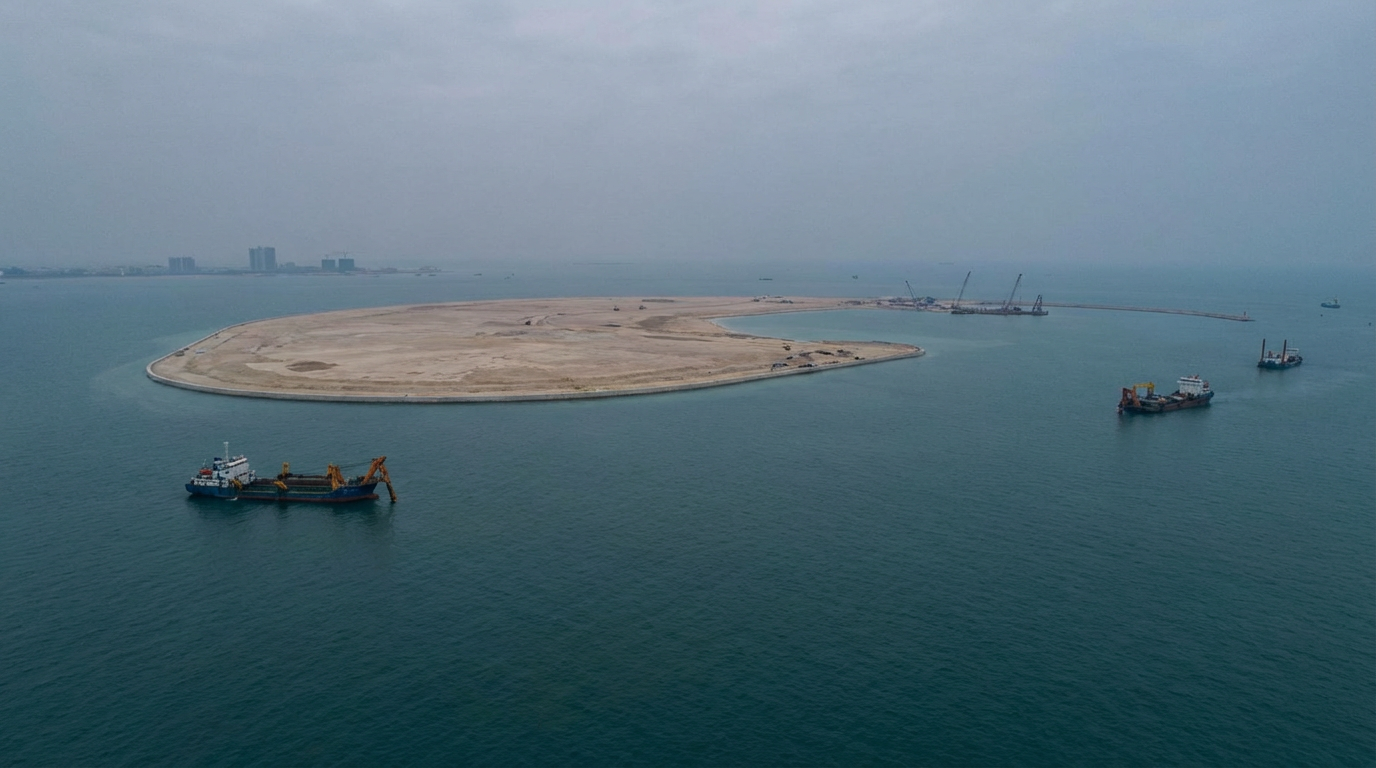
China has carried out large-scale land reclamation at Antelope Reef in the disputed Paracel Islands, creating a new artificial island in waters contested in the South China Sea. Dredging began in October 2025 and produced several square kilometers of new land roughly 400 kilometers off Vietnam’s coast. By February 2026, observers reported activity spanning more than 15 square kilometers of the reef, underscoring the speed and scale of the work.
Officials and reports described the construction as moving quickly and appearing intended to support sizable facilities. Potential infrastructure cited in those accounts includes a 9,000-foot airstrip, a helipad, a concrete plant, and a causeway. The ultimate layout and operational purpose remain uncertain because these elements have been described as possible rather than confirmed.
The project was reportedly carried out by subsidiaries of China Communications Construction Company, which is under U.S. sanctions. A fleet of 22 cutter-suction dredgers was said to have been used. According to officials and reports, the vessels switched off their automatic identification signal (AIS) transponders before arriving at the site, a practice described as breaching international maritime safety rules.
Vietnam filed a formal protest in March 2026, more than five months after dredging started. The timing was presented as evidence of a lagging response to the construction. China has maintained that the Paracel Islands are its “inherent territory,” and said the work is meant to improve living conditions and protect its territorial sovereignty.
The Antelope Reef activity has been compared to China’s earlier island-building in the Spratly Islands from 2013 to 2015. Those efforts were later found unlawful by an arbitral tribunal in 2016, which said they violated UNCLOS Part XII on marine environmental protection. Legal interpretations under UNCLOS also indicate that a maritime feature’s status is assessed based on its condition before any reclamation, a point that can shape how competing claims are argued.
Beyond Vietnam’s March 2026 protest, it remains unclear how other regional governments and external stakeholders will respond, particularly given the time between the start of dredging and the diplomatic objection. The development adds pressure to already fraught South China Sea disputes, where overlapping claims and differing legal readings continue to affect regional security and maritime governance.