Merz Affirms Ukraine Military Aid Amid Domestic Political Pressure
Chancellor Friedrich Merz confirmed Germany's ongoing military support for Ukraine, addressing allied concerns amidst domestic political pressures and rising…
Lauren Collins ·
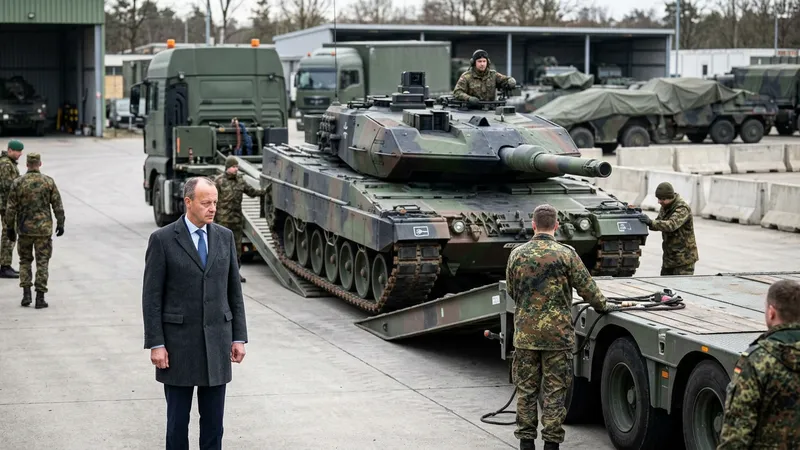
Chancellor Friedrich Merz affirmed Germany's unwavering commitment to providing military aid to Ukraine, seeking to reassure European and NATO allies of his government's resolve. This comes despite mounting domestic political instability and increased public opposition to current aid levels, as Germany approaches the fifth winter of the conflict.
The German government intends to maintain its current level of assistance to Kyiv, even as the Alternative for Germany (AfD) party, which advocates for ending military support, gains electoral traction. Recent surveys indicate that the AfD is the most popular party in the country, polling ahead of Merz's conservatives.
Security Implications and Domestic Challenges
Merz framed the conflict in Ukraine as an Merz framed the conflict in Ukraine as an immediate security risk to Germany and the broader NATO alliance. He warned that an inability to curb Russian military ambitions could result in direct aggression against European territory, potentially including ballistic missile threats targeting major European cities.
Domestically, the government faces significant internal political pressure. The Christian Democratic Union, Merz's party, has experienced notable electoral setbacks in recent regional votes, contributing to political instability.
Senior party figures have publicly expressed support for the Chancellor in an effort to project unity, despite a growing disparity between the government's foreign policy goals and public sentiment. Public Opinion Shapes Policy Landscape Domestic polling data suggests that 42 percent of German respondents now believe military support for Ukraine goes too far, marking the highest proportion recorded to date.
This opposition is particularly prevalent in eastern Germany, where the AfD holds its strongest support.
Chancellor Friedrich Merz
Merz's statements aim to mitigate concerns among international partners regarding Germany's consistency in foreign policy. The Chancellor also sought to convince the German electorate that continued military support for Ukraine serves their direct interest, asserting that failure to remain united could invite a Russian military attack on Germany.
The focus remains on demonstrating unwavering solidarity with Ukraine and the NATO collective. The open question is whether Merz can sustain his government's policy in the face of rising public discontent and strong electoral performance from opposition parties.