
Hong Kong Stainless Steel Lowers Green Hydrogen Costs
Hong Kong researchers developed a new stainless steel for green hydrogen production, offering superior corrosion resistance and cost reduction.
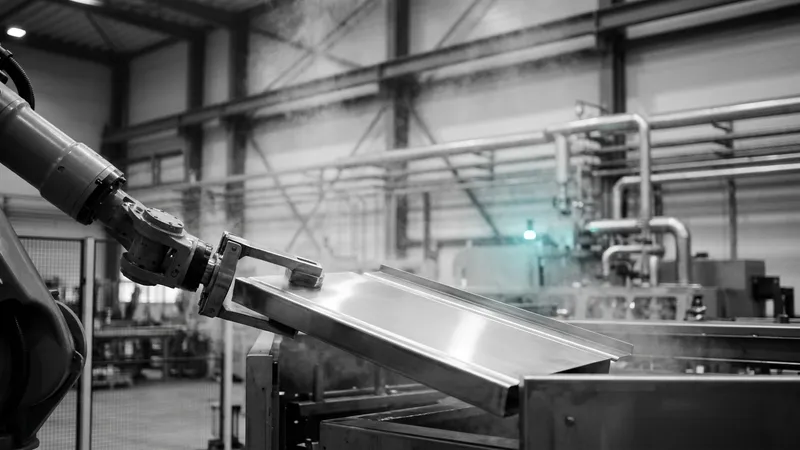
A research team at the University of Hong Kong (HKU) announced on May 10, 2026, the development of a novel stainless steel, designated SS-H2, designed to withstand the corrosive conditions of green hydrogen production from seawater. This material utilizes a unique dual-passivation mechanism, enabling it to resist corrosion at electrochemical potentials up to 1700 mV, significantly higher than the approximately 1000 mV limit of conventional stainless steels.
The innovation aims to reduce the cost of structural components in electrolyzers, which currently rely on more expensive materials like titanium.
Professor Mingxin Huang's team engineered SS-H2 to form a secondary manganese-based protective layer over the traditional chromium oxide film. This sequential dual-passivation strategy allows the steel to operate effectively in chloride-rich environments, such as seawater electrolysis, where standard stainless steels would fail due to transpassive corrosion.
The discovery challenges existing corrosion science, as manganese is typically considered detrimental to stainless steel's corrosion resistance.
This development could substantially lower the capital expenditure for green hydrogen infrastructure. The HKU team estimates that replacing costly titanium-based structural materials with SS-H2 could reduce structural material costs by approximately 40 times in a 10-megawatt PEM electrolysis tank system. The research, detailed in Materials Today , represents a six-year effort to understand and apply this counter-intuitive corrosion resistance mechanism, potentially accelerating the commercial viability of seawater-based green hydrogen production.
More stories
- XRP Ledger Developers Deploy Emergency Patch to Fix Nine-Year-Old Token Minting Flaw
- Bandai Namco sets 2027 cross-play test for Sparking Zero
- Deadlock’s Solomon hides 8-to-32 chess reload boards
- Nintendo Life polls 673 readers on Ocarina pronunciation
- Bandai Namco says Ace Combat 8 sells over 1 million copies
- Kingdom Hearts holds No. 1 on Switch 2 eShop chart
- Microsoft patches three critical information-disclosure flaws in Copilot
- Takashi Tezuka reshaped Zelda by reinventing Link's Awakening
- Artemis II Crew Returns Safely After Lunar Orbit Mission
- YouTube Premium prices will rise to $15.99 for US subscribers
Latest news
- KampoBench tests LLMs on 74 Japanese medicine cases
- Houthis hit Riyadh airport after 12 killed
- Yemen Cabinet backs Houthi terrorist label after 12 deaths
- Zelensky seeks 60-day ceasefire after Trump claim
- Washington weighs a harder bargain for Israel’s next defense aid pact
- Turkey-Israel spat puts Washington’s Gaza diplomacy in a tighter corner
- Bangladesh MICS7 shows high lead in 38.5% of children
- Mashreq CEO Abdelaal joins 15-member Swift board