Canada’s Europe Pivot Tests Washington’s Tariff Leverage Over Supply Chains
Ottawa is using Prime Minister Mark Carney’s investment summit and Europe trip to signal that U.S.
Lauren Collins ·
Canada’s Europe Pivot Tests Washington’s Tariff Leverage Over Supply Chains
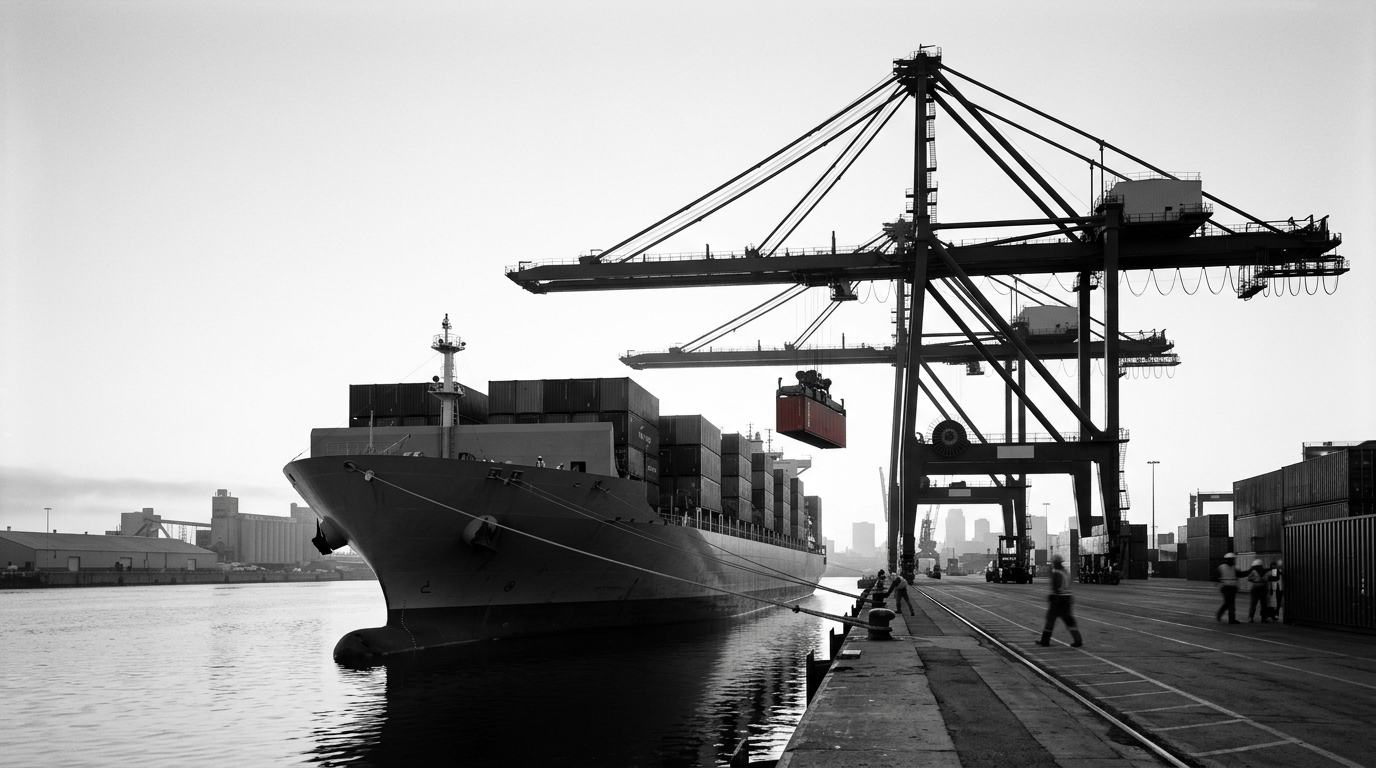
Washington’s 50% tariffs on Canadian goods took formal effect as Prime Minister Mark Carney opened a Toronto investment summit built around 1 trillion Canadian dollars in planned investment over five years. The timing gives Washington a clearer test of whether tariff pressure can extract concessions from Ottawa, or push a close ally to deepen commercial and security ties with Europe and Asia.
Carney is using the week to court global capital at home before traveling to Europe, where he is expected to address the European Parliament and meet British and French leaders. For U.S. officials, the issue is no longer only a bilateral trade fight; it is whether North America’s supply-chain map starts to look less U.S.-centered.
Canada’s investment push is built around a government catalog of priority projects in energy, critical minerals, advanced technologies and major infrastructure. The summit brings together roughly 300 business leaders, including executives from major asset managers, and the package reportedly includes more than 160 projects across eight sectors.
The sector mix matters in Washington because several of the listed areas sit directly inside U.S. strategic planning. Conventional energy, clean power, mining and metals all feed into defense production, electric vehicles, grid security and the broader race to reduce reliance on China-dominated supply chains.
Carney has framed the effort as a correction to Canada’s underused access to Europe and Asia. He said Canada has “immense opportunities” in both markets and has not fully realized them, a message that lands differently now that U.S. tariffs have moved from threat to implementation.
The immediate Washington concern is leverage. The United States remains Canada’s dominant export market, and U.S. tariff policy has long assumed that geographic dependence gives Washington unusual bargaining power over Ottawa. If Canada can credibly attract European and Asian capital into projects that serve non-U.S. buyers, that assumption weakens at the margin.
The White House will still see Canada through the lens of jobs, border security, energy flows and trade deficits. The State Department and National Security Council, by contrast, have to weigh whether punishing tariffs on Canada complicate broader allied strategy at a time when Washington wants partners to spend more on defense, diversify minerals supply and expand energy resilience.
The Pentagon has a narrower but important stake. Critical minerals and advanced manufacturing affect defense-industrial supply chains, and Canada is one of the few U.S. allies with both resource depth and geographic proximity. A tariff fight that drives Canadian suppliers to lock in European customers could make procurement coordination more complicated, even if it does not break the bilateral defense relationship.
Congress will also shape the U.S. response. Lawmakers from border states and manufacturing regions are likely to measure the tariffs through local employers, input costs and export retaliation risks. National security hawks may back pressure on Ottawa in some sectors, but they also have an interest in keeping Canadian materials and energy aligned with U.S. defense needs.
Carney’s Europe schedule adds a diplomatic layer to the investment pitch. An address to the European Parliament and meetings with British and French leaders allow Ottawa to present diversification as allied resilience rather than an anti-American turn. That distinction is important: Canada can seek more options without abandoning the U.S. market, but the optics still reduce Washington’s monopoly on Canadian strategic planning.
For Europe, Canada offers assets that fit current policy priorities: energy security, minerals access, Arctic geography, NATO alignment and a stable legal environment for long-horizon infrastructure capital. If European investors move from expressions of interest to signed commitments, the commercial effect would be to pull more Canadian project finance into transatlantic channels.
For global markets, the macro signal is modest but relevant. Tariffs between two advanced economies increase costs for firms that built production around integrated North American supply chains. If Canada responds by building alternative export corridors and investor relationships, some capital allocation may shift from efficiency inside North America toward resilience across allied blocs.
The biggest uncertainty is scope. The available account identifies a 50% U.S. tariff but does not spell out the product coverage, legal trigger, exemption process or expected duration. Those details will determine whether companies treat the measure as a short-term negotiating tool or a structural risk to investment plans.
By December 14, the clearest test will be whether Ottawa can convert this week’s diplomacy into announced Europe-Canada investment deals, procurement agreements or policy statements that change corporate behavior. If signed commitments emerge in energy, minerals or infrastructure and Washington responds with waivers, tariff phasing or a softer diplomatic line, Carney’s pivot will look like a successful diversification hedge that changes U.S. risk calculations. If no tangible deals follow and U.S. tariff policy remains focused only on the bilateral fight, the week will read more as political signaling than a durable shift in North American supply chains.