Canada to Impose Tariffs on US Imports from September 8
Canada will implement retaliatory tariffs on a range of US imports starting September 8, targeting $20 billion in goods, following US duties.
Atlas Newsdesk ·
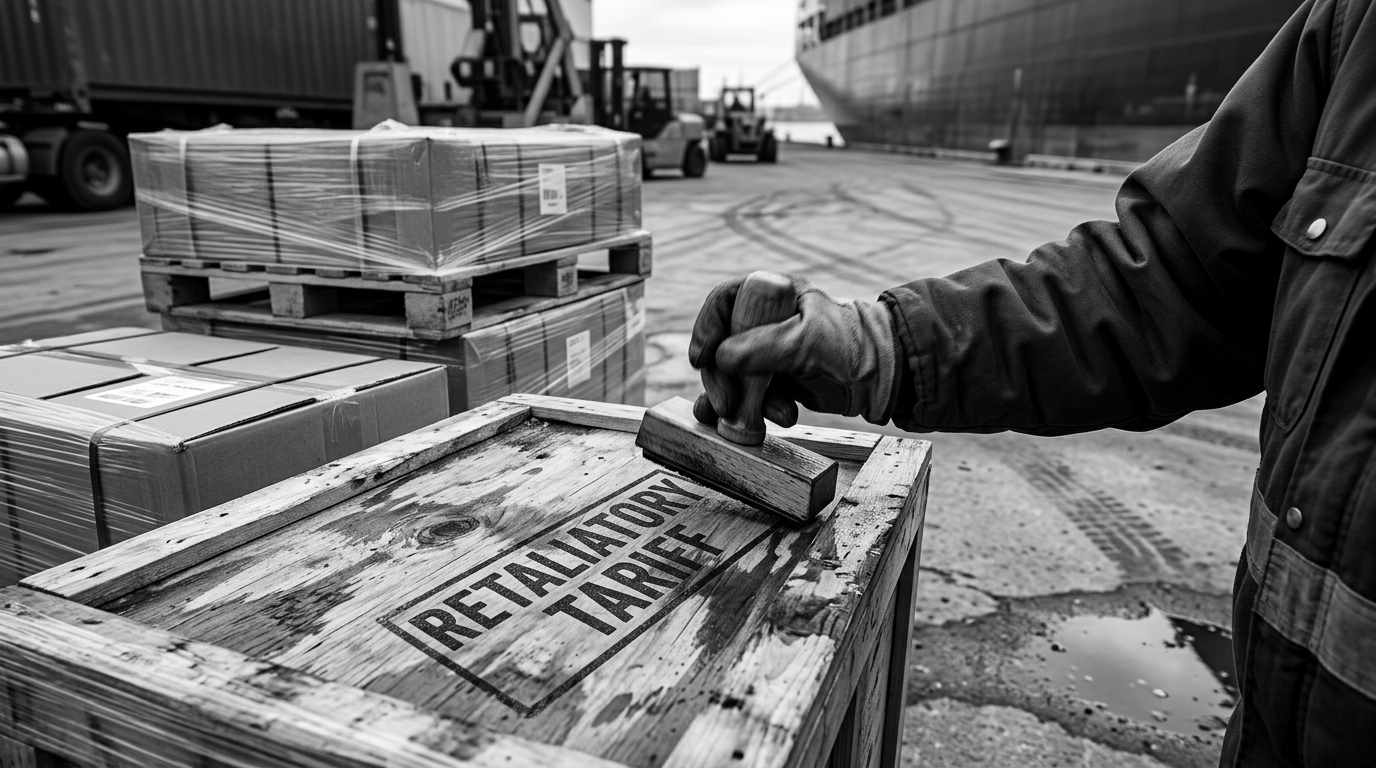
Canada announced plans on Saturday to impose retaliatory tariffs on various imports from the United States, effective September 8. The measures come in direct response to the US administration's earlier decision to levy a 50 percent tariff on Canadian goods worth $20 billion. Prime Minister Mark Carney indicated that this action follows the complete breakdown of recent trade negotiations between the two neighboring nations.
The Canadian tariff strategy is designed to counteract the economic effects of the US actions. It will target American products such as steel, dairy items, electronic equipment, and agricultural machinery, applying duties on a dollar-for-dollar basis to match the value of the US tariffs. This move signals a significant escalation in trade tensions between countries that have historically maintained close economic ties.
Escalating Trade Tensions
The initial US tariffs impact approximately 5.5 percent of Canada's total exports to the United States, highlighting the extensive reach of the current dispute. Prime Minister Carney stated that demands from the US were deemed unacceptable by Canada. These demands reportedly included restrictions on Canada's ability to pursue independent trade agreements with other global partners, a condition Canadian officials viewed as an infringement on national sovereignty.
Analysts project that this trade dispute will immediately pressure the Canadian economy. Forecasts suggest a probable increase in consumer prices across multiple sectors and a potential rise in business insolvencies, particularly for industries heavily reliant on cross-border trade. To mitigate these economic challenges, the Canadian government has pledged to introduce support measures for domestic industries adversely affected by the new tariffs. Details of these support programs are anticipated to be released in the coming week.
Uncertainty and Historical Context
US Trade Representative Jamieson Greer confirmed that no further negotiations are presently scheduled between the two countries. This lack of upcoming dialogue suggests that the period of trade friction could extend, carrying substantial implications for both economies. The absence of a clear path to resolution increases uncertainty for businesses and consumers in both Canada and the United States.
The trade relationship between Canada and the United States is one of the world's most extensive, with billions of dollars in goods and services crossing the border daily. While previous trade disputes have occurred, they were typically resolved through negotiation. The current situation deviates from this historical pattern, with both sides adopting firm positions that have led to direct tariff imposition rather than a return to the negotiating table.
Sectors like steel and agriculture, often flashpoints in international trade disagreements due to their strategic importance and employment figures, are again central to this dispute. The current impasse underscores the complexities of modern trade policy, where national interests frequently intersect with global supply chains. Policymakers and economists monitoring the situation remain concerned about potential higher costs for manufacturers and consumers, alongside reduced competitiveness for exporters.