USTR Weighs Section 301 Tariffs Projected at $169 Billion
The U.S. government aims to collect up to $169 billion in new tariff revenue by 2025 through expanded Section 301 investigations.
Atlas Newsdesk ·
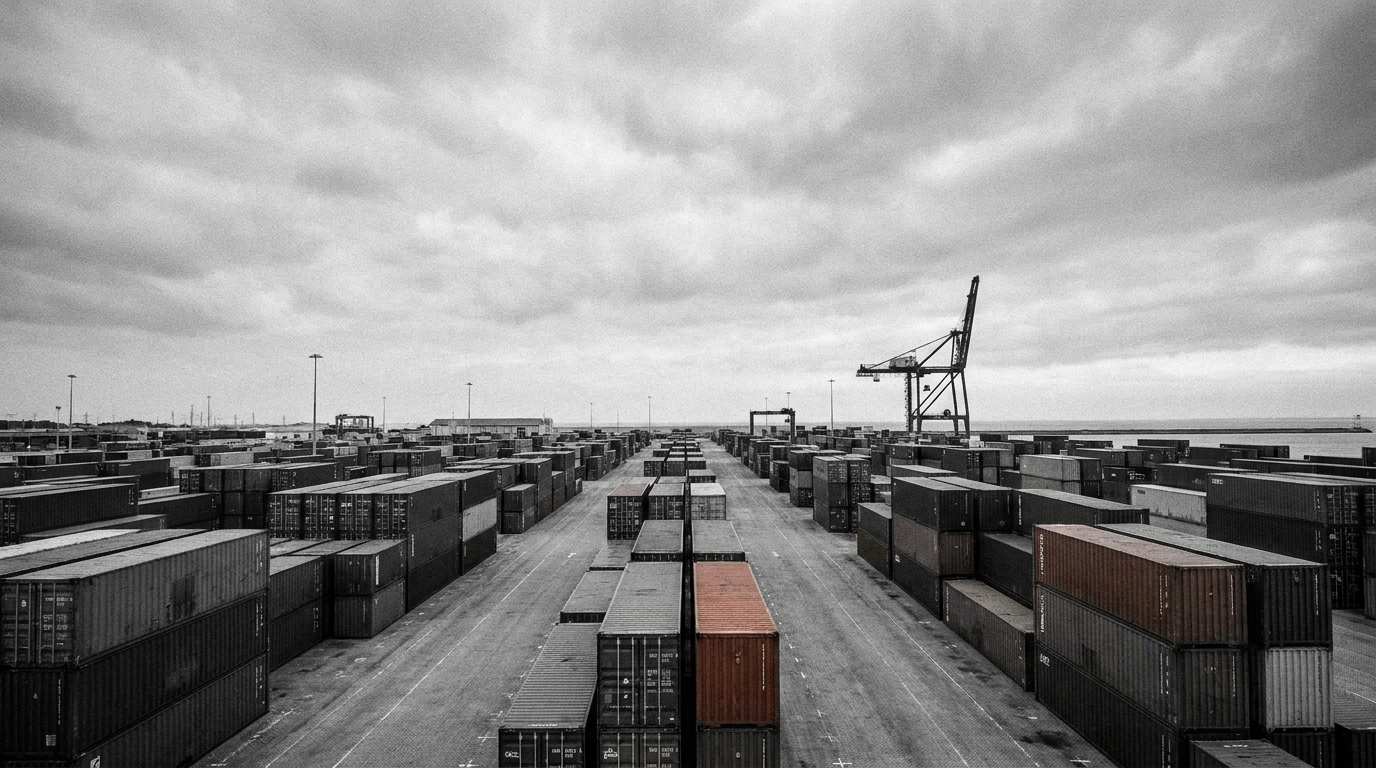
The United States could collect up to $169 billion in tariff revenue in 2025 if it broadens the use of Section 301 of the Trade Act of 1974, according to an analysis of proposed remedies released by the Office of the U.S. Trade Representative (USTR) on June 2.
The model follows the Supreme Court’s February decision invalidating tariffs imposed under the International Emergency Economic Powers Act (IEEPA). USTR’s proposals cover 60 economies and focus on forced labor and concerns about structural excess capacity.
The projections described in the analysis assume 2025 import levels and reflect a restructuring of U.S. tariff policy after the court ruling. The underlying premise is that Washington will attempt to rebuild a broad tariff regime through multiple Section 301 investigations, starting with remedies tied to the forced labor inquiry.
Under the proposed approach, USTR distinguishes between economies that have taken steps to prohibit the importation of forced labor and those that have not enforced such prohibitions. The analysis also distinguishes between economies that have made commitments in existing agreements and those without reciprocal frameworks.
In the proposals described, economies including Canada, Ecuador, the European Union, Indonesia, Mexico and the United Kingdom are treated as having taken steps to prohibit forced labor imports and would face a proposed 10% Section 301 tariff on most imports. Economies that have failed to enforce forced labor prohibitions would face a proposed 12.5% tariff.
How USTR’s proposal separates countries and rates
A subset of economies — including the United Kingdom, Ecuador, Guatemala, Argentina and El Salvador — are treated as being subject only to the forced labor Section 301 investigation and would face a proposed 10% tariff. Those economies previously negotiated IEEPA-related agreements that set a 10% duty rate, and the analysis estimates imports under this scenario could generate an additional $3.5 billion in revenue.
For economies with previously negotiated reciprocal deals, the analysis cites USTR proposals of 10% for the European Union and 12.5% for Korea, Japan and Switzerland. It assumes total tariffs will not exceed 15% when Section 301 duties potentially stack with most-favored-nation (MFN) rates, reflecting the risk that higher totals could disrupt existing arrangements and provoke retaliation.
Using that assumption, the analysis estimates tariff revenue of $34 billion from EU imports, $6.3 billion from Japanese imports, $4.3 billion from Korean imports and $3.2 billion from Swiss imports at 2025 import levels.
Additional investigations and what could come next
About 40 economies without reciprocal frameworks, including Australia, Turkey and Chile, could face a 12.5% tariff under the forced labor investigation, generating an estimated $13 billion in revenue, the analysis said. It adds that Canada and Mexico are excluded from that particular scenario on the assumption that goods covered by the United States-Mexico-Canada Agreement would continue to avoid IEEPA-style tariffs.
The analysis also points to other potential tariff actions. A separate Section 301 investigation into Vietnam related to intellectual property could lead to additional tariffs, and Brazil faces a proposed 25% tariff following a July 2025 investigation.
USTR is expected to release additional proposed remedies from other Section 301 investigations in the coming days, and the resulting tariff structure will depend on whether and how new duties stack with existing rates.