BYD sales rise 18% as exports lift August tally to 440,000
BYD sales rose 18% in August to just over 440,000 vehicles as exports doubled, but the pace remains below its annual target.
Mei Lin ·
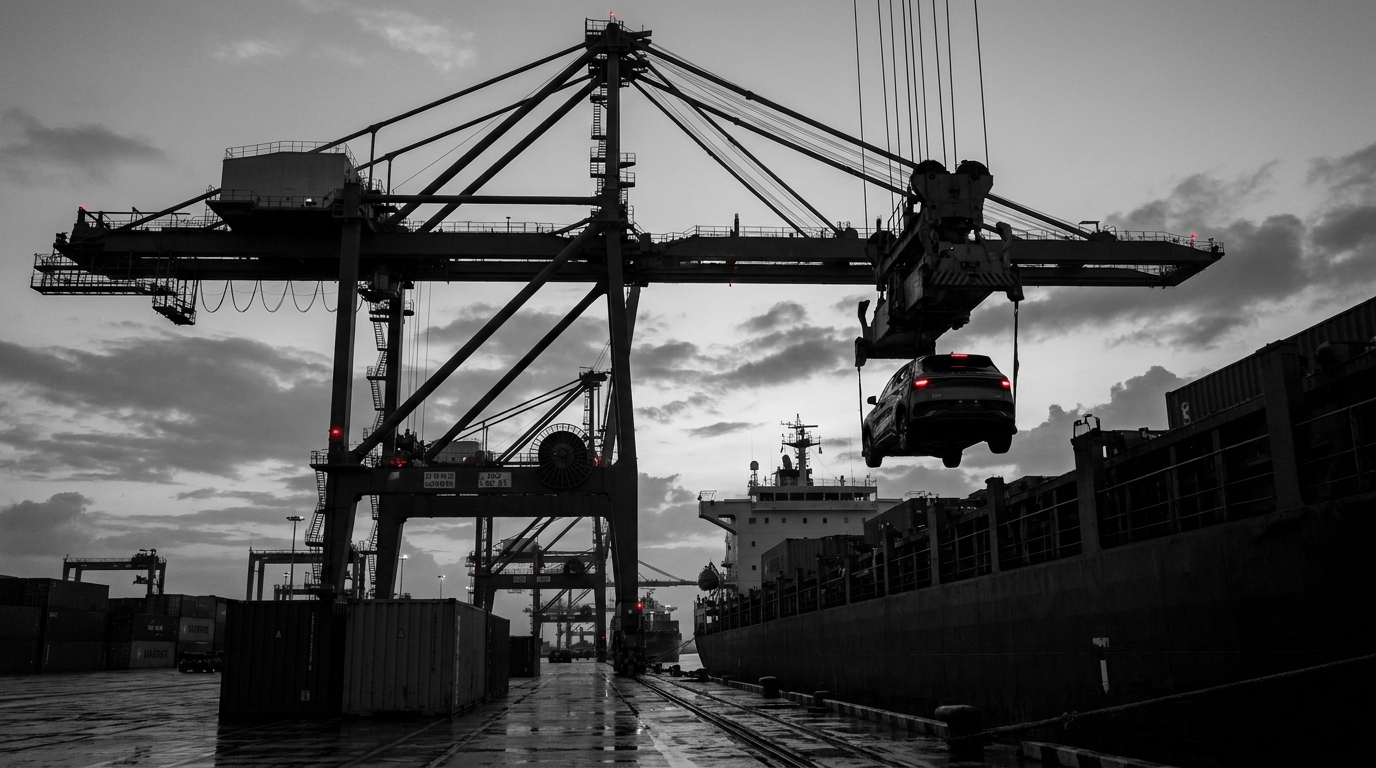
BYD sales rose 18% in August to just over 440,000 vehicles, with record exports offsetting softer Chinese demand. The pace still trails its annual goal.
The figures, released Tuesday by BYD, also showed an increase from July. Even with that month-to-month gain, the company would need a faster run rate to reach the low end of its stated 5 million to 5.5 million vehicle target for the full year.
Exports take 43%
Exports more than doubled from a year earlier and accounted for 43% of August deliveries, the largest export contribution in the company’s reported monthly figures. That mix shows how much of BYD’s near-term growth is now tied to markets outside China.
The company has been expanding in Southeast Asia, Europe and South America, where it is competing with Toyota Motor Corp., Volkswagen AG and other established automakers. Those markets give BYD a way to add volume while price competition and softer consumer demand weigh on its home market.
China slump pressures target
BYD’s August performance improved on a first half affected by assembly-line changes made to prepare for upgraded batteries. The rebound gives the company a stronger base for the second half, but the annual target still implies sustained monthly volumes above the latest reported level.
The domestic backdrop remains a constraint. China’s auto market has been in decline as consumer spending weakens, leaving manufacturers with less room to rely on local demand for volume growth.
International sales surpassed 50% of BYD’s group revenue in the first half for the first time. That threshold gives the export strategy financial weight beyond monthly delivery totals and makes overseas execution more central to the company’s earnings profile.
Europe risks meet expansion
The export push carries execution risks. BYD’s flagship factory in Hungary has faced scrutiny over alleged labor abuses by subcontractors; the company has said it complied with local laws and regulations.
Trade policy is another pressure point for Chinese automakers selling into Europe. If tariffs are applied to Chinese hybrids, BYD’s price advantage would depend more heavily on local production, supply-chain costs and the speed at which it can shift output closer to end markets.
If overseas demand holds and exports remain above 40% of deliveries, BYD would have a clearer path toward narrowing the gap with its annual sales range. At the macro level, that would keep China’s auto capacity flowing into foreign markets; for the industry, it would add pressure on incumbents to defend lower-priced segments with refreshed models.
If export growth slows instead, from tariffs, local scrutiny or stronger models from Toyota and Volkswagen, BYD would have to lean harder on China at a time when demand is weaker. That path would make the 5 million to 5.5 million target harder to reach and could intensify price competition among Chinese electric-vehicle and hybrid makers.
The main open question is whether record exports can remain above the 43% August share while BYD raises total monthly volumes toward its annual range. The second is whether overseas capacity can reduce trade exposure before policy barriers change the economics of Chinese-made vehicles.