AI's $7 Trillion Data Center Funding Gap Looms
AI data center funding needs could total $4T–$7T as firms plan 110 GW of new capacity over about five years, straining private capital.
Atlas Newsdesk ·
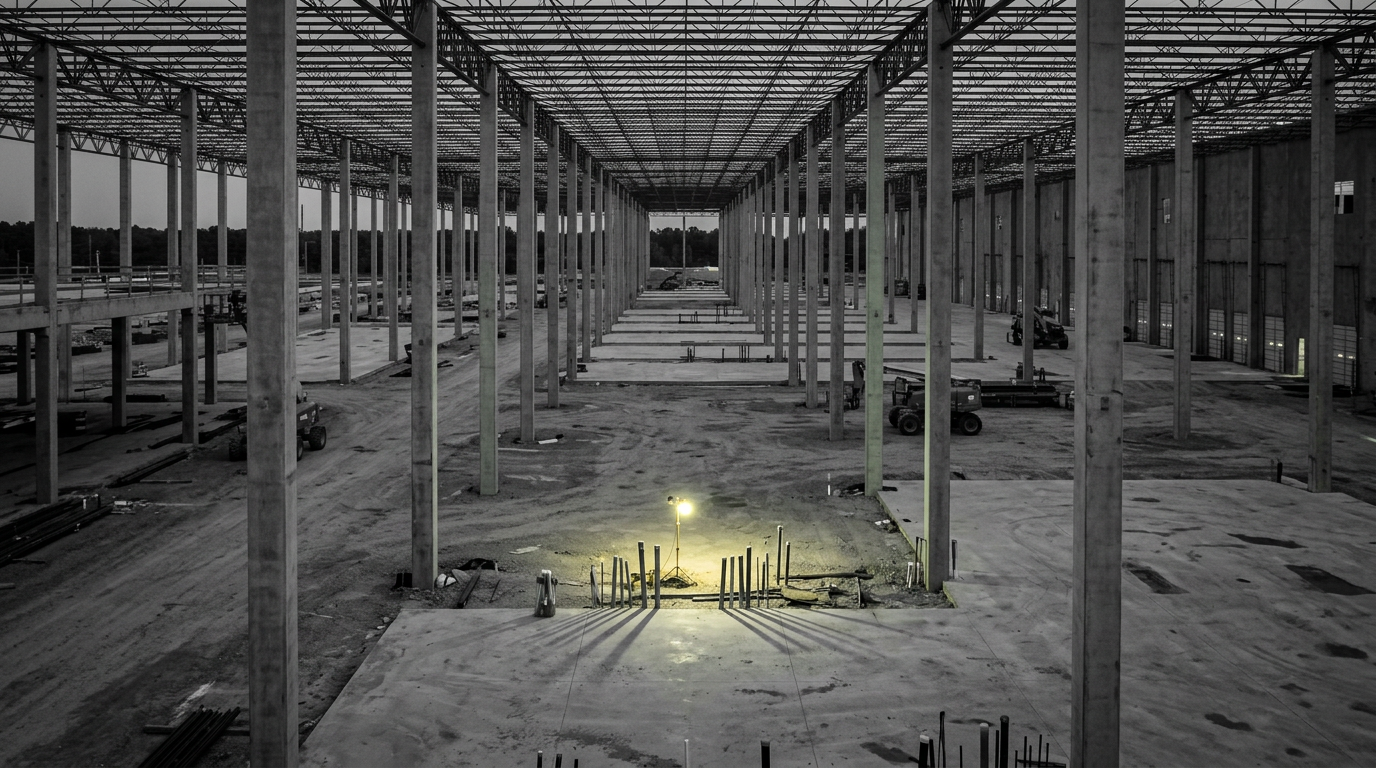
Global plans to expand artificial intelligence infrastructure are running into a major financing challenge as companies outline a rapid buildout of new data centers. Industry projections put the potential price tag as high as $7 trillion, reflecting the scale of investment required to support the next wave of AI computing demand.
Officials and industry participants have pointed to large language models such as OpenAI's ChatGPT and Google's Gemini as key drivers of the surge in computing needs. In response, AI-focused companies and major cloud providers are planning more than 110 gigawatts (GW) of additional data center capacity, with much of that buildout targeted for roughly the next five years.
Cost estimates vary widely, underscoring uncertainty around how expensive the expansion could become. Bernstein analysts have estimated that building 1 GW of data center capacity could cost about $36 billion, while Nvidia CEO Jensen Huang has cited a higher figure of $80 billion for 1 GW. Using those benchmarks across the 110 GW of announced projects implies a total investment requirement of roughly $4 trillion to $7 trillion.
The projected spending would be unusually large compared with past infrastructure efforts. For reference, the U.S. Interstate Highway System is estimated to have cost about $500 billion in today’s dollars, spread over three decades. By contrast, the AI data center buildout described by industry plans would concentrate far larger sums into a much shorter window, intensifying the need for financing capacity from private markets.
Major technology companies including Alphabet, Amazon, Meta, Microsoft, and Oracle have been committing capital and tapping debt markets as they position for AI-related demand. Even with those firms’ balance sheets and access to financing, the combined funding requirement implied by the announced capacity targets would test existing financial channels, given the speed and magnitude of the buildout.
For global markets, the scale of the proposed investment highlights how AI infrastructure is becoming a capital-intensive theme that can influence corporate spending priorities and funding conditions. The wide range of cost estimates also signals that final totals remain uncertain, even as the headline capacity plans point to a multi-trillion-dollar requirement over a relatively short period.