Bond selloff hits global stocks as Brent crude nears $100
A bond selloff lifted long Treasury yields to a 2004 high, weighing on global stocks as oil traded near $100 a barrel.
Jurgen Goldmeier ·
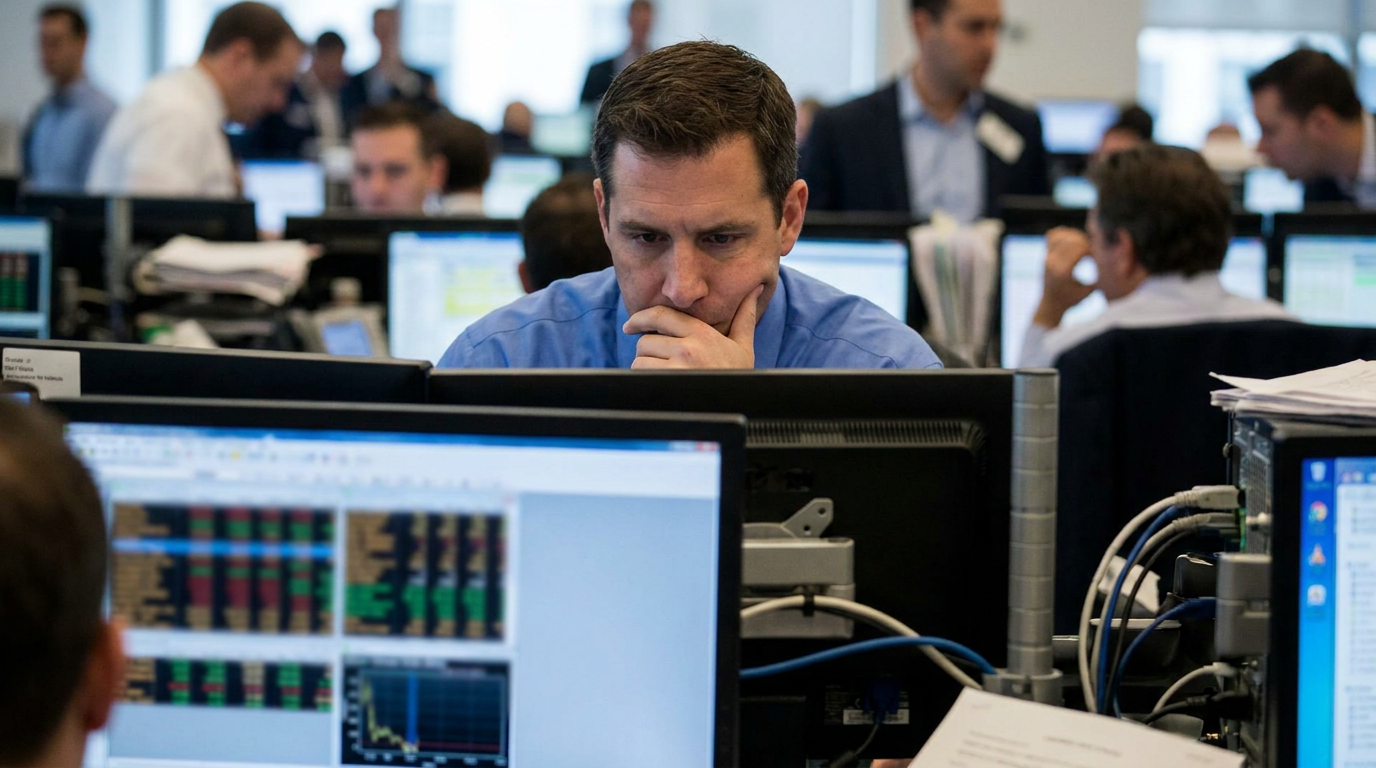
The bond selloff left the 30-year Treasury yield at its highest level since 2004 as global stocks fell and Brent neared $100.
The latest market figures showed the Nasdaq down 172.32 points, or 0.64%, at 26,763.71, a larger percentage decline than the S&P 500 and Dow Jones Industrial Average. The S&P 500 fell 31.54 points, or 0.41%, to 7,674.49, while the Dow dropped 236.78 points, or 0.46%, to 51,274.81.
Thirty-year yield tests 2004
Long-dated US government debt was the center of the move after the 30-year Treasury yield briefly reached a level not seen since 2004. It later stood at 5.401%, down 0.1 basis point from the prior quoted level, while the 10-year yield was at 5.101%, lower by 1.5 basis points.
Bond yields move in the opposite direction from prices, so higher yields mean lower bond prices for investors holding the debt. The repricing matters for equities because government bonds set a reference rate for other assets, including stocks whose valuations depend on future earnings.
The pressure was not confined to the US. Japan's 10-year government bond yield rose 9.5 basis points to 3.084%, while market indicators in Europe also pointed to higher borrowing costs during the session.
Oil near $100 adds pressure
Energy prices added another reference point for traders already focused on rates. The December Brent crude contract traded at $99.91 a barrel, up $1.79, or 1.82%, and remained close to the $100 threshold watched by inflation-sensitive markets.
Market watchers cited several possible triggers for the latest yield moves: higher oil prices, comments from Federal Reserve Governor Michael Barr, stronger economic growth data and a weak Treasury auction. Those explanations were framed as contributing factors, while several strategists pointed to forced selling in crowded fixed-income trades.
Steepener bets unwind
A common trade in recent weeks had been the so-called steepener, a wager that the gap between short- and long-dated bond yields would widen. Instead, the gap narrowed as traders adjusted interest-rate expectations, forcing some investors to cut positions.
“The move has the hallmarks of a pain trade and forced selling by investors at these more elevated levels and could have further to run,” Derek Halpenny of MUFG Bank said in a note. Mohit Kumar, chief European economist at Jefferies, said, “The main driver was likely stop outs and position unwinds. There appears to be a lot of pain on the street in fixed income.”
Trump-Xi talks enter frame
Traders were also watching a summit between President Trump and Chinese leader Xi Jinping. Treasury Secretary Scott Bessent said the US and China would extend a bilateral trade truce until mid-January, avoiding higher levies that had been scheduled for November if no agreement was reached.
If long-term yields hold near current levels and oil remains near $100, the mechanism is tighter financial conditions: higher borrowing costs for governments and companies, lower present values for future earnings and weaker demand for rate-sensitive shares. That path would weigh on global risk appetite, leave Treasury markets at the center of cross-asset pricing, and keep technology and other growth sectors under pressure.
If yields retreat and oil prices ease, the immediate strain on equity valuations would fade, though investors would still need evidence that forced selling has run its course. The main open question is whether the bond move reflects temporary position unwinds or a more durable repricing of inflation, growth and government borrowing costs.