BlackRock sees Gulf defense spending at $95 billion by 2030
BlackRock estimates Gulf defense spending-related capital outlays at roughly $95 billion through 2030, pointing to deeper localization of military…
Omar Farouk ·
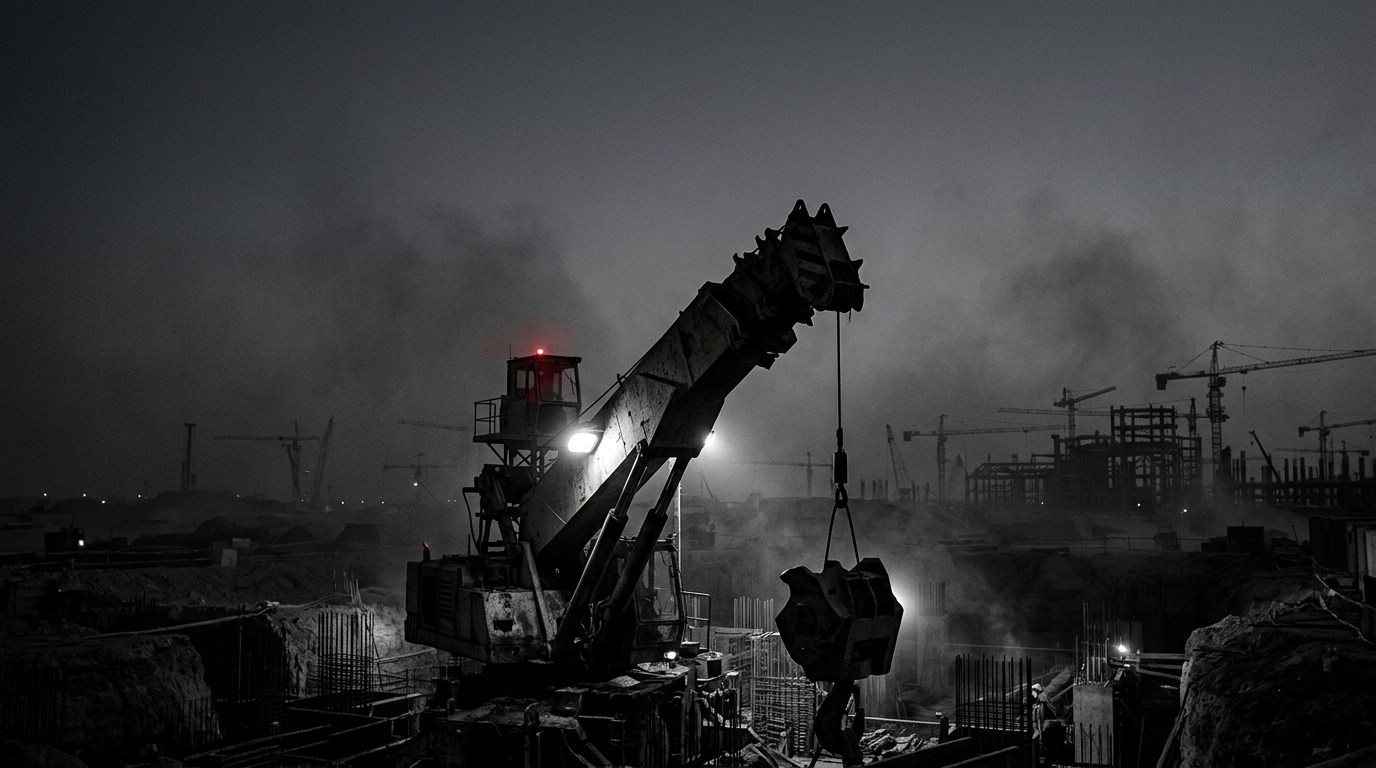
Gulf defense spending tied to factories and security infrastructure is set to reach about $95 billion through 2030, BlackRock said.
The estimate sits within a wider $2.1 trillion capital expenditure map for the next four years, according to the BlackRock Investment Institute report. The total spans defense, aerospace, security infrastructure, ports, electricity grids and data centers, putting military-linked investment inside a broader regional push to harden strategic assets.
BlackRock's $95 billion estimate
BlackRock said its figures cover capital spending by private companies and state-owned enterprises, rather than government budget lines. That distinction matters because the estimate is not the same as a defense procurement total for weapons purchases, contracts or annual ministry allocations.
The spending category points instead to the industrial base behind defense: factories, maintenance sites, aerospace facilities, security systems and sustainment networks. Those are the areas Gulf governments have tried to localize as they seek to keep more defense production, servicing and technology development inside the region.
Saudi Arabia's SAMI and the UAE's EDGE Group are central examples of that shift. Both were created to move parts of the military-industrial supply chain closer to domestic buyers, reducing reliance on foreign contractors for selected systems, services and upgrades.
Strategic redundancy takes priority
The larger $2.1 trillion map includes projects that were planned before the US-Iran conflict, according to the report. BlackRock's point is that the conflict has changed the order and urgency of some spending, rather than creating the entire investment pipeline from scratch.
The report groups $660 billion of the total under “strategic redundancy,” a category covering export routes, ports, power projects and water infrastructure. BlackRock described that segment as the part of the capital plan most affected by the war, linking it to the need for backup capacity in systems that keep trade, energy and basic services running.
For Gulf economies, redundancy spending is not limited to military readiness. Ports and export corridors determine how hydrocarbons, manufactured goods and imported supplies move; power and water systems shape the resilience of cities, industrial zones and energy facilities.
The defense and aerospace component therefore sits beside civilian infrastructure with national-security value. A maintenance facility, a data center and a port expansion serve different markets, but each can reduce exposure to external disruption if regional tensions interrupt normal routes or suppliers.
Localization reshapes defense suppliers
The company-level effect is clearest for Gulf defense groups built around domestic capacity. If the $95 billion pipeline is allocated toward local facilities and sustainment, companies such as SAMI and EDGE could gain a larger role in assembly, maintenance and integration work that foreign primes have historically dominated.
The effect on international suppliers would be more mixed. If Gulf buyers require more local content, overseas defense and aerospace companies may need deeper partnerships, technology-transfer arrangements or regional production footprints to preserve access to large programs.
The industry-wide mechanism is straightforward: capital spending on factories and infrastructure changes where value is captured. Procurement buys equipment; industrial investment builds the sites, skills and service networks that determine who maintains and upgrades that equipment over time.
The macro link is also larger than the defense sector. If strategic redundancy remains the priority, Gulf capital spending would support demand for construction, engineering, grid equipment, port systems and data-center services, while tying more investment to national-security planning.
Three paths through 2030
If regional tensions stay elevated, the $660 billion redundancy category could remain near the front of the queue, with global effects through higher demand for infrastructure inputs and logistics capacity. For Gulf defense groups, that path would favor facilities and sustainment; for the wider sector, it would reward suppliers able to operate inside local industrial ecosystems.
If tensions ease and fiscal priorities shift, the same $2.1 trillion map could tilt more toward commercial infrastructure already in planning. That would still leave defense and aerospace investment in place, but the pace of localization could depend more heavily on project economics and execution capacity than on immediate security concerns.
If financing costs, oil revenue or implementation bottlenecks slow delivery, the main effect would be sequencing rather than cancellation, based on the report's framing of long-term capital needs. The open question is how much of the $95 billion becomes physical capacity by 2030, and how much remains a planned pipeline for later years.