Japan’s Currency Intervention Sparks Global Scrutiny Over Future Market Stability
Yen intervention questions rose after a photo showed Scott Bessent with a note citing a $5B–$10B yen purchase; Treasury has not confirmed it.
Atlas Newsdesk ·
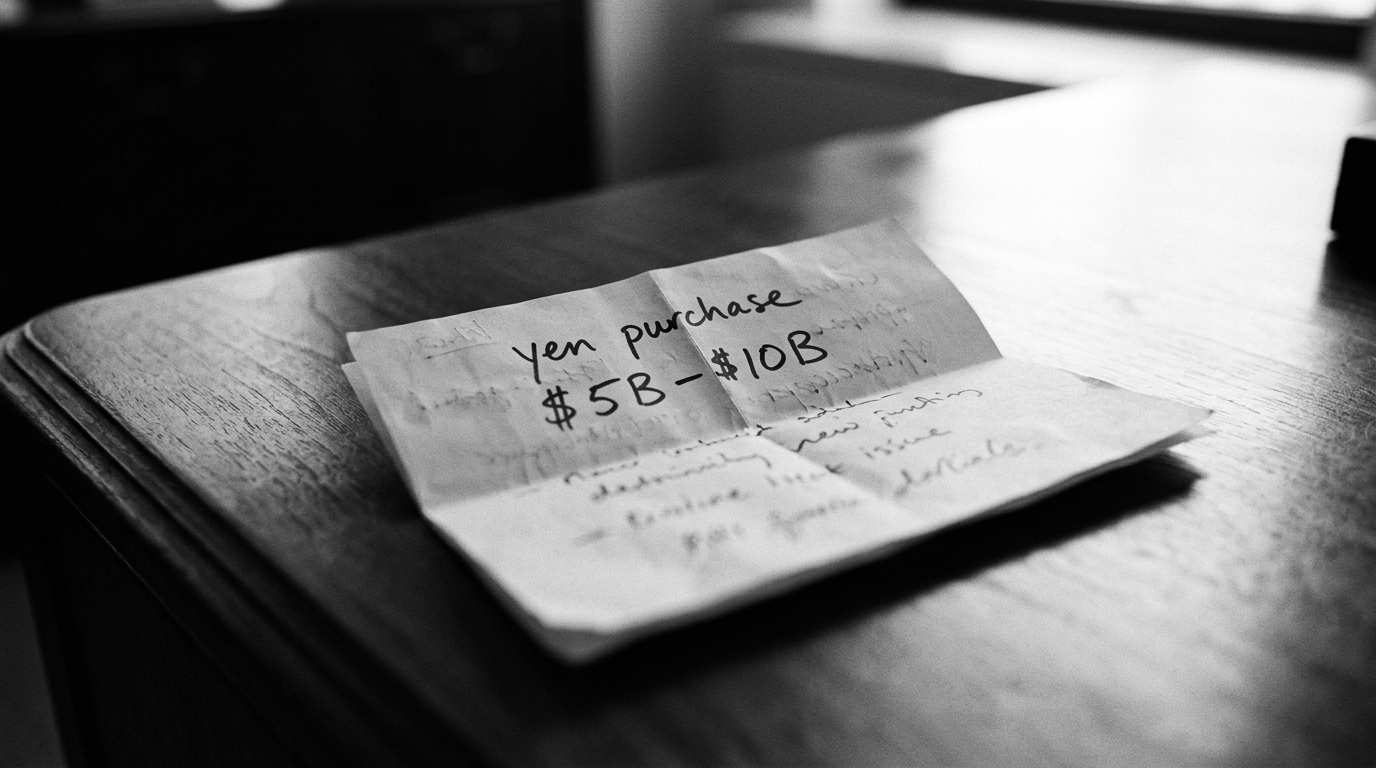
US Treasury Secretary Scott Bessent was photographed on Friday at Camp David carrying a handwritten note that appeared to outline a plan to buy between $5 billion and $10 billion in Japanese yen. The photo, taken at 11:33 a.m. local time, quickly drew market attention because it suggested possible US involvement aimed at affecting the yen-dollar exchange rate.
Officials have not confirmed the note’s contents, and the Treasury Department has not announced any policy change. Even so, the visible reference to a potential purchase range prompted questions about whether US authorities were preparing to support the yen directly through the currency market.
Photo triggers focus on potential dollar-yen intervention
The handwritten proposal described a mechanism that would rely on direct capital deployment to strengthen the yen against the dollar. If carried out, such an operation would represent the first comparable US move in currency markets since 2011, according to the material described in the image.
The episode also revived scrutiny of how US actions, if any, might align with Japan’s approach. Japanese officials had already begun independent efforts to support the yen earlier in the same session, according to the information in the source material.
Market reaction and bank notifications reported earlier in the day Market data from LSEG showed the dollar weakening against the yen later on Friday. The dollar fell 0.8% versus the yen, moving from 158.9 to 157.6 between 4:14 p.m. and 5:00 p.m. ET.
US Treasury Secretary Scott
The market move followed reports that the Treasury Department had informed several financial institutions earlier on Friday about the possibility of intervention. The Treasury has not confirmed those reported notifications, and it has not validated that the notepad reflected an approved plan rather than an internal proposal.
What is known, what is not, and why markets are watching Based on the photo and the subsequent reporting, the key confirmed facts are limited to the existence of the image, its timestamp, and the described dollar figures written on the note. There is no official confirmation that an operation was authorized, executed, or coordinated with Japanese authorities.
Still, the situation matters for currency traders and institutions managing dollar-yen exposure because even the perception of official participation can draw scrutiny to the exchange rate and to official communications with major market participants. The immediate uncertainty is whether the note reflected a tentative idea, a contingency option, or a decision already taken but not publicly communicated.
Implications
Country Impact: For the United States, the episode centers on whether the Treasury would take direct steps in currency markets, something not confirmed by officials. For Japan, it intersects with efforts described as already underway earlier in the session to strengthen the yen.
Industry Impact: Banks and currency market participants are watching for clarity because reports said several financial institutions were notified about possible intervention. Uncertainty over official intent can affect how firms manage dollar-yen risk and short-term liquidity decisions.
Market Impact: The dollar weakened against the yen following the reports and the photo’s circulation, with LSEG showing a 0.8% move in a defined period. Without official confirmation, markets are left to weigh the significance of the note versus the absence of a stated policy shift.