Beijing Reaches Across Borders to Kill Meta's Manus Purchase
Meta ordered by China's NDRC to unwind $2B Manus AI acquisition. This extraterritorial intervention sets a precedent for Beijing's tech transfer policing.
Atlas Newsdesk ·
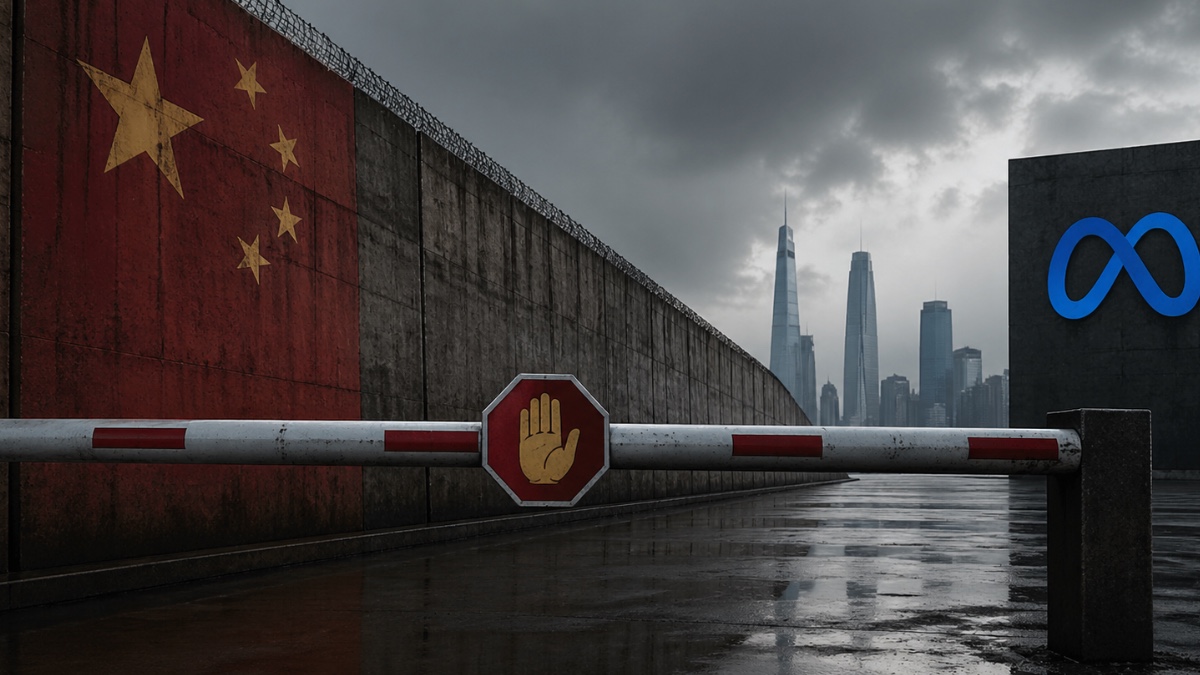
China's top economic planner ordered Meta Platforms to reverse its $2 billion purchase of Manus, an agentic AI startup whose technology was meant to close Meta's gap with OpenAI and Google. The National Development and Reform Commission issued the cancellation in a one-line notice on Monday, citing only compliance with laws and regulations. The deal had been largely completed since December. Meta said it believed the transaction followed applicable rules and expected a resolution.
Deal Reversal Order
What changed is timing, not the facts of the deal. Manus engineers already work inside Meta's Singapore offices, capital has moved, and existing backers including Tencent, ZhenFund, and Hongshan have collected their proceeds, according to people familiar with the transaction. Beijing now wants all of that reversed, with no public guidance on how an unwind would actually function. The order arrives roughly two weeks before President Trump is scheduled to meet Xi Jinping.
Jurisdiction Challenge
Manus was founded in China but moved its headquarters and core team to Singapore last year, a structure designed in part to sidestep exactly this kind of intervention. When Meta announced the acquisition in December, the open question was whether China would treat a Singapore-incorporated company with relocated founders as still within its jurisdiction. The Monday ruling answers that question. "Manus was Singapore-incorporated with founders based here, and it still got pulled back," said Ke Yan, a tech analyst at DZT Research in Singapore. "Beijing's signal is that what matters isn't where the legal entity sits.
Meta's AI Setback
For Meta, the order strips away a piece designed to leapfrog rivals in agentic AI, the category of services that use models to execute multi-step tasks rather than just answer prompts. Manus founders and staff had already been folded into Meta's expanding AI organization, making the personnel question as messy as the financial one. Microsoft, Google, OpenAI, and Anthropic remain ahead in agent deployment, and Meta now faces a rebuild on a tighter clock. The company has not said whether it will contest the ruling or attempt a structural workaround.
Chilling Effect on Deals
The decision will reshape how Chinese-origin startups approach foreign buyers and how those buyers price the regulatory risk. Founders who relocated abroad assuming legal distance from Beijing now have to weigh whether moving the entity is enough or whether nationality of personnel is the binding constraint. Investors who backed Manus collected on this deal, but the next syndicate facing a similar exit will likely demand discounts or escape clauses. Beijing has already moved to discourage repeat maneuvers, opening a probe into illegal foreign investment and tech exports shortly after the December announcement.
US-China Tech Rivalry
The order lands at a charged moment in US-China technology rivalry. Last week DeepSeek unveiled its V4 model with deeper integration into Huawei chips, a release that looked engineered to project self-sufficiency before Trump's arrival.
"Beijing likely views this move as a justified tit-for-tat and mirroring of the export controls, investment restrictions, and counter-tech transfer probes by American authorities over the years," said Brian Wong, an assistant professor at the University of Hong Kong. Both governments are stacking chips before they sit down.
Unwinding a Completed Acquisition
How a completed acquisition gets reversed in practice is the part no one has explained. Employees cannot be un-hired, transferred capital cannot be clawed back without litigation across multiple jurisdictions, and intellectual property already integrated into Meta's stack cannot be surgically removed. Whether Beijing's order translates into a real reversal, a negotiated settlement, or a symbolic statement aimed at the summit will determine whether this is a one-off or the template for a new enforcement regime.