Guinea's Bauxite Boom Raises Local Concerns
Guinea's bauxite boom meets global demand but displaces farmers & damages environment, raising concerns about equitable benefit distribution.
Lauren Collins ·
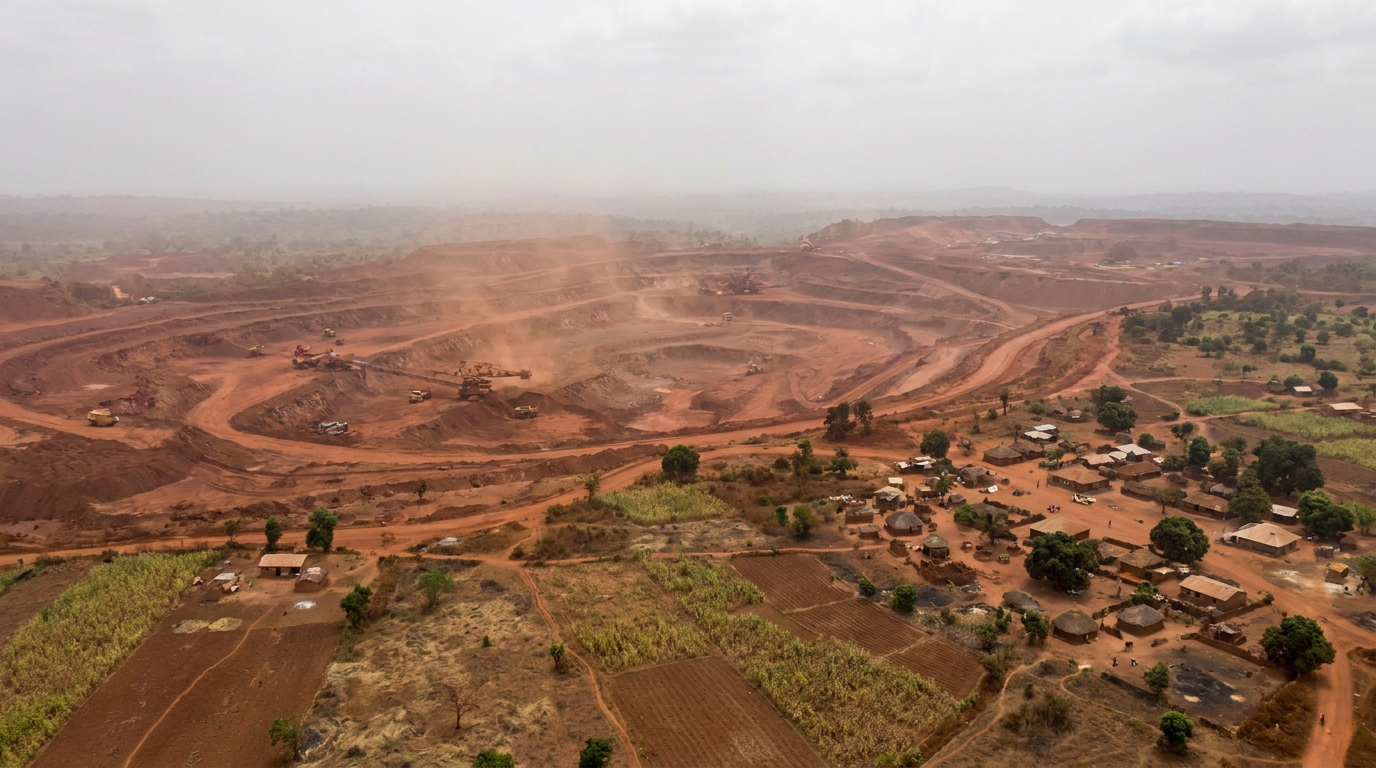
Guinea's increased bauxite production, driven by global demand for aluminum, has led to significant economic activity but also environmental and social challenges for local communities. Since 2019, an Indian mining company operating in Bembou Silaty, Telimele prefecture, has held an exploitation concession until 2034, contributing to a tenfold increase in Guinea's bauxite output over the past three decades. This expansion positions Guinea, holding the world's largest bauxite reserves, as a critical supplier for the global energy transition, with approximately 75% of its bauxite exports over the last decade going to China.
The mining operations have resulted in contaminated water, loss of agricultural land, and declining crop yields in areas like Bembou Silaty. While some Guineans have secured technical or logistical jobs paying up to $300 monthly, many farmers, who constitute half the population, face displacement and inadequate compensation. For instance, compensation payments ranging from $5,700 to $11,400 for land are often quickly depleted, leaving residents without land or sustained income. Guinea imported over $500 million in rice in 2024, highlighting the impact of reduced agricultural capacity.
The economic benefits of bauxite extraction are evident in improved infrastructure in traditional mining heartlands like Kindia and Boke. However, villages directly impacted, such as Bembou Silaty, often lack basic amenities like electricity. The long-term sustainability of these operations is questioned by residents who report that the land, once their primary source of livelihood, is now registered to mining companies, leading to a cycle of dependency and economic instability for many.