Illinois budget takes priority over Chicago Bears stadium financing talks
Illinois lawmakers deferred a Chicago Bears stadium deal, prioritizing the state's $55 billion budget, leaving the team's future location uncertain.
Mehmet Şahinoğlu ·
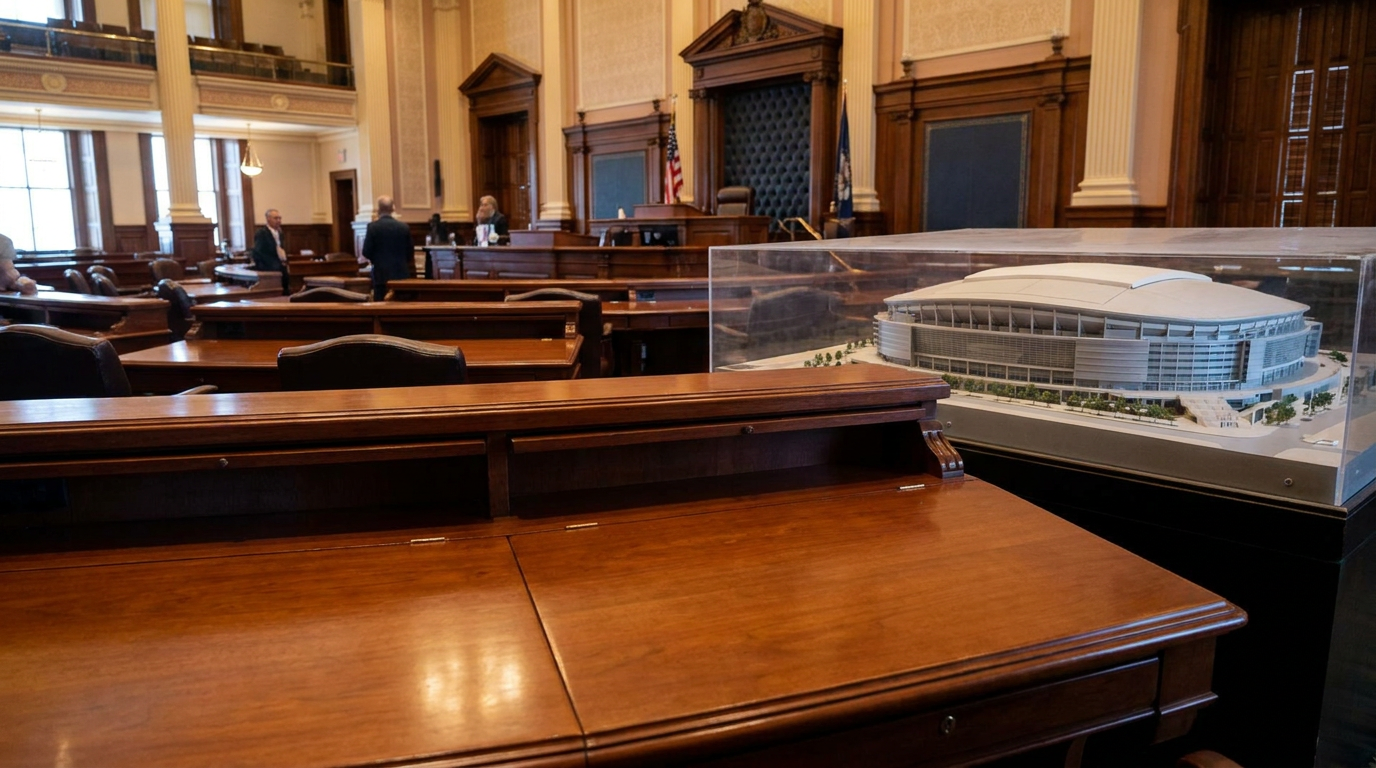
Illinois lawmakers have put talks on a new Chicago Bears stadium on hold to finalize the state’s roughly $55 billion budget before the legislative session adjourns on May 31. While discussions on public financing have continued in the background, budget work has taken precedence, leaving the franchise’s venue plans unresolved in the near term. The pause keeps multiple scenarios in play for where the Bears could ultimately play home games.
Officials have focused this week on closing the budget, pushing any stadium legislation or financing framework to a later date. Without a near-term vote or agreement, there is no immediate path to a state-backed deal intended to keep the team in Illinois. That uncertainty sustains questions about timelines, partners and potential sites.
The Bears have been linked to options both inside and outside the state. A proposal tied to Hammond, Indiana, has been floated as an alternative if Illinois support does not materialize. At the same time, conversations have centered on whether any eventual Illinois package would back a new stadium project in Arlington Heights.
With the session scheduled to end at midnight on May 31, any stadium breakthrough would require an eleventh-hour resolution. Absent that, attention is likely to shift to what steps—if any—remain available to advance negotiations after the budget is approved. For now, the team’s long-term stadium direction remains open.
Budget work sidelines stadium legislation
Balancing the state’s finances has taken priority over stadium deliberations, according to officials familiar with the agenda. The emphasis on fiscal responsibilities reflects a broader pattern in which large sports infrastructure proposals are weighed against competing public needs, especially near budget deadlines.
Even so, stakeholders have kept lines of communication open around potential frameworks that could keep the Bears in Illinois. The current deferral does not end those discussions; it simply delays them until lawmakers complete must-pass fiscal work.
Hammond alternative and Arlington Heights question
The Hammond concept has injected cross-border leverage into the conversation. It is unclear whether that option is primarily a negotiating position to secure a more favorable package in Illinois or a pathway the team would seriously pursue if in-state financing stalls.
Inside Illinois, the debate has often turned to Arlington Heights as a potential site for a modern venue with adjacent development. Any state role would likely center on how to structure and repay public support, issues that typically require detailed legislative language and multi-party agreement.
Recent precedents for cross-state moves
Professional teams have crossed state lines when local funding or renovation plans fell short. In recent months, the Kansas City Chiefs secured a deal to build a new stadium in Kansas after efforts to renovate Arrowhead Stadium in Missouri did not advance. Earlier eras saw the New York Giants move to New Jersey, with the New York Jets later joining them at the same complex.
Those examples underscore how stadium economics, jurisdictional competition and legislative timing can shape outcomes. Illinois’s decision to prioritize the budget does not preclude a deal later, but it prolongs a period in which alternatives remain viable.
Lawmakers and team representatives are expected to revisit the issue once the budget is finalized. The key variables to watch are whether talks resume quickly and whether a concrete financing proposal emerges in Illinois before any out-of-state option gains momentum.