Buccaneers reshape receiving corps after Mike Evans’ 49ers move for 2026
Tampa Bay Buccaneers are adjusting their receiving strategy after Mike Evans' departure, relying on collective talent to fill the void.
Mehmet Şahinoğlu ·
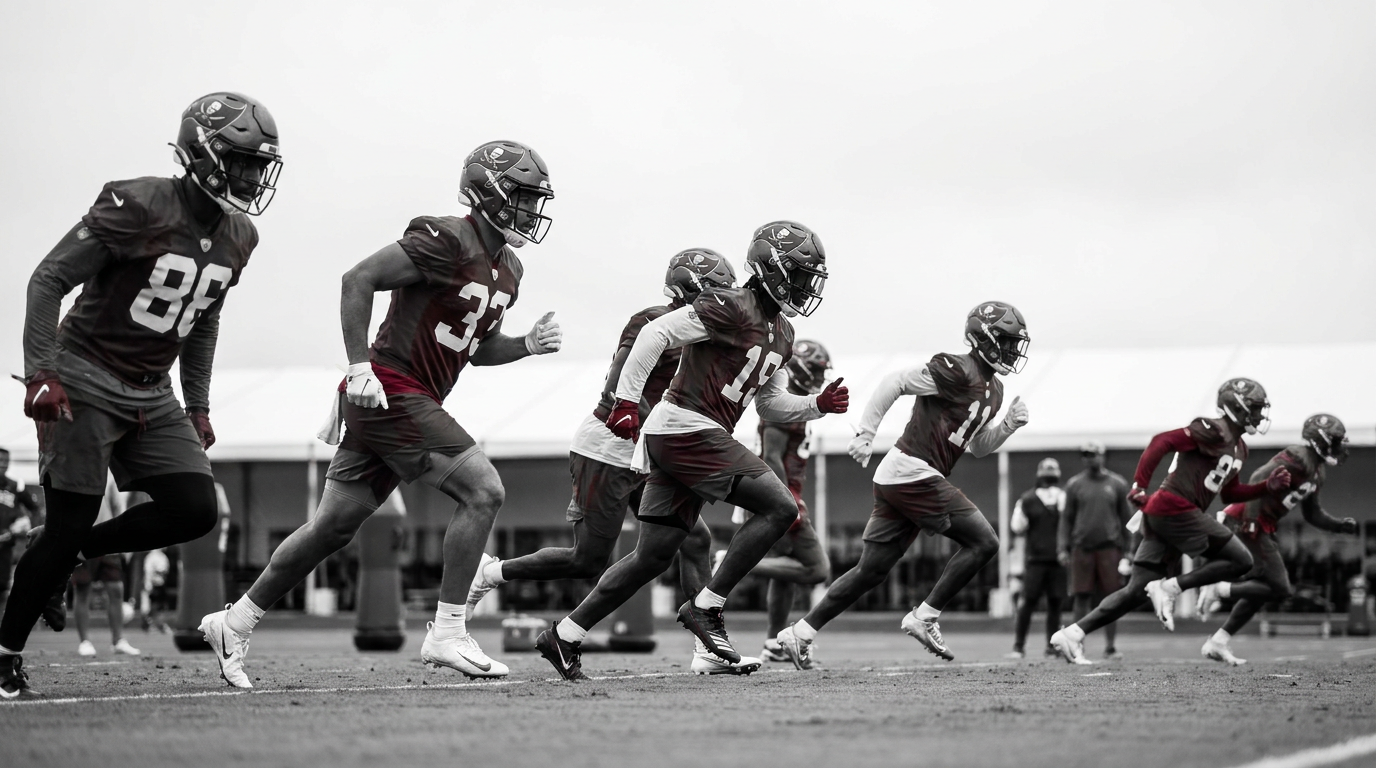
The Tampa Bay Buccaneers are reorganizing their wide receiver group after Mike Evans departed for the San Francisco 49ers as a free agent for the 2026 season. Quarterback Baker Mayfield acknowledged the disappointment of losing Evans but said he remains confident in the options on hand. He pointed to the room’s depth and leadership as reasons the offense can stay productive without a single dominant target. The team’s approach centers on spreading responsibilities across multiple receivers.
Mayfield cited Chris Godwin’s leadership and noted that Jalen McMillan and Emeka Egbuka are healthy, which he believes will help set the tone through the offseason. The depth chart also features Tez Johnson and third-round draft pick Ted Hurst. Mayfield’s message was that replacing Evans will be a collective effort and that the group has the versatility to do it.
Receiving room shifts after Evans exit
Evans’ departure creates both a production and leadership gap that the Buccaneers expect to address by committee. Instead of relying on one focal point, Tampa Bay plans to distribute targets among veterans and emerging players. Godwin’s presence offers stability, while the development of McMillan and Egbuka adds upside to the rotation. Johnson’s speed and Hurst’s integration as a rookie give the staff more combinations to evaluate as roles settle.
Mayfield emphasized that continuity and health will be key through workouts and into training camp. He referenced seeing progress from Year 1 to Year 2 for younger pieces in the room and highlighted how that growth can lift the entire unit. With several receivers capable of working different areas of the field, the expectation is to diversify alignments and responsibilities to create favorable matchups over time.
Mayfield’s outlook tied to receiver development
The performance of this reconfigured group could directly shape Mayfield’s future in Tampa. If no extension is reached before the season, how he operates with the current receiving corps will likely guide the organization’s long-term decision at quarterback. Efficient communication, timing, and situational execution with this unit will be central to that evaluation.
Coaches will monitor how quickly the younger receivers assimilate and how effectively the veterans help standardize details across the position group. The faster the room defines its pecking order and complementary roles, the smoother the offensive transition should be. Consistent availability and week-to-week reliability will matter as much as individual breakout performances.
For now, Tampa Bay is leaning into depth, competition, and internal growth to offset Evans’ exit. The coming weeks of offseason work and preseason reps will offer the clearest read yet on whether the committee approach can sustain production and, by extension, inform the club’s plans with Mayfield beyond this year.