Extreme Weather Chaos Grounds Flights Across Europe
Rising temperatures are intensifying severe weather events, posing increased risks to air traffic across the UK and Northern Europe, with disruptions already…
Atlas Newsdesk ·
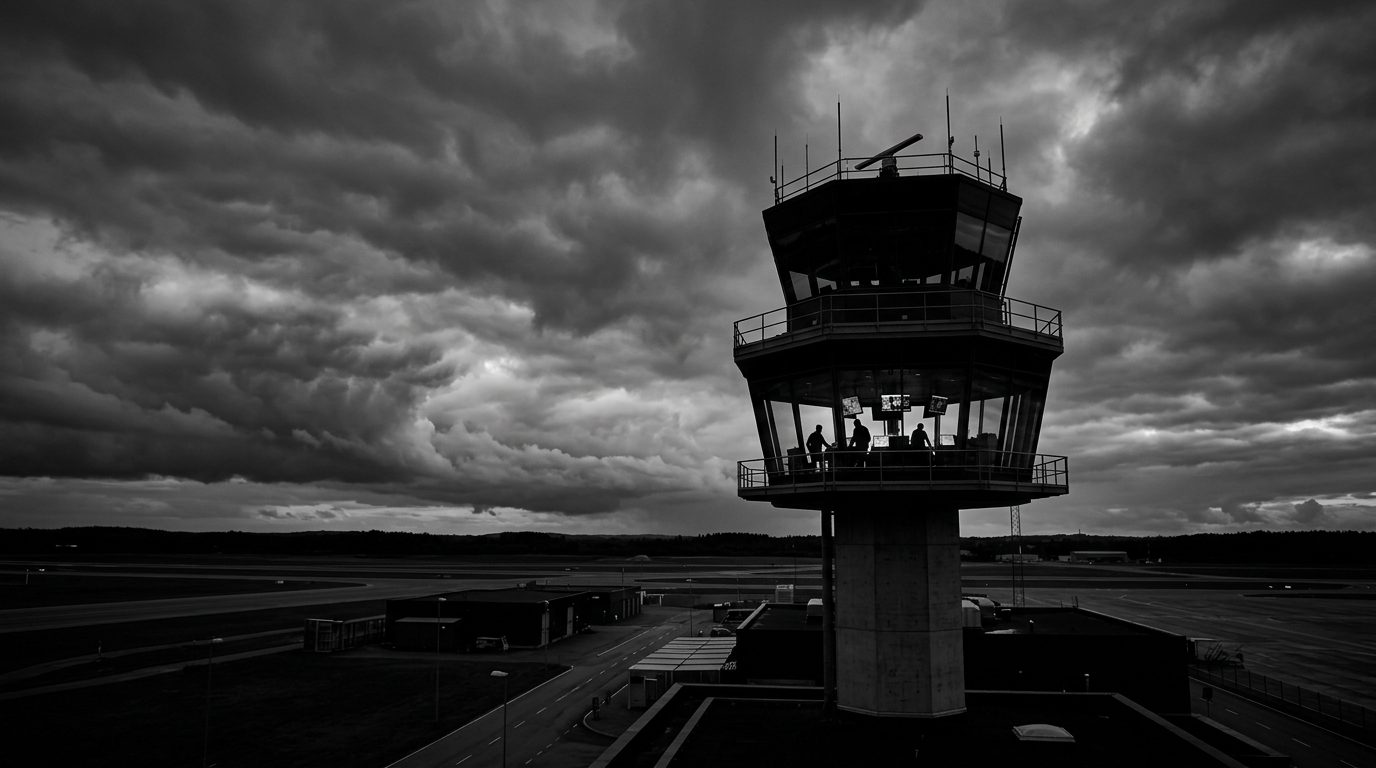
A growing frequency of severe weather occurrences, driven by increasing global temperatures, is heightening the risk of significant air traffic disruptions across the United Kingdom and Northern Europe. These weather phenomena are directly impacting aviation operations, causing delays and cancellations for passengers.
During late June, London airports experienced substantial operational challenges due to intense convective storm activity. This resulted in the cancellation or delay of approximately 900 flights, with some travelers facing prolonged waits of up to 11 hours. The underlying mechanism for these disruptions is rapid atmospheric warming, which amplifies convective energy and the atmosphere's capacity to retain moisture, leading to more powerful and unpredictable storms.
Operational Challenges from Intensifying Storms
As storm cells gain intensity, air traffic controllers are compelled to implement restrictions or reroute aircraft to ensure safety. This necessary measure significantly reduces the available airspace for flights.
The constriction of airspace subsequently triggers a cascade of issues, as diverted flights can overwhelm secondary airports that frequently lack the necessary infrastructure to manage sudden increases in traffic volume. This situation can lead to further ground delays and, in some cases, critical depletion of aircraft fuel reserves.
Industry analysts have issued warnings that the unpredictable nature of weather patterns, exacerbated by ongoing climate change, increases the likelihood of simultaneous closures across multiple airports. While certain experts maintain that existing air traffic management systems possess sufficient resilience to mitigate these emerging risks, others contend that the escalating volatility of weather systems could potentially lead to systemic failures within the aviation network.
Economic and Safety Implications for Aviation
The long-term consequences of these trends include a projected increase in operational costs for both airlines and airport authorities. This financial burden stems from managing disruptions, rerouting flights, and potential investments in more robust infrastructure or weather forecasting technologies. Concurrently, there is a heightened risk to passenger safety as the margin for error in flight planning diminishes due to extreme and unpredictable weather volatility.
The aviation sector faces a complex challenge in adapting to these changing climatic conditions. Strategies may need to evolve to incorporate advanced meteorological forecasting, enhanced air traffic control protocols, and infrastructure upgrades designed to withstand more frequent and severe weather events.
Without significant adaptation, the regularity and severity of air travel disruptions in affected regions are likely to continue to grow, impacting millions of passengers and incurring substantial economic costs.